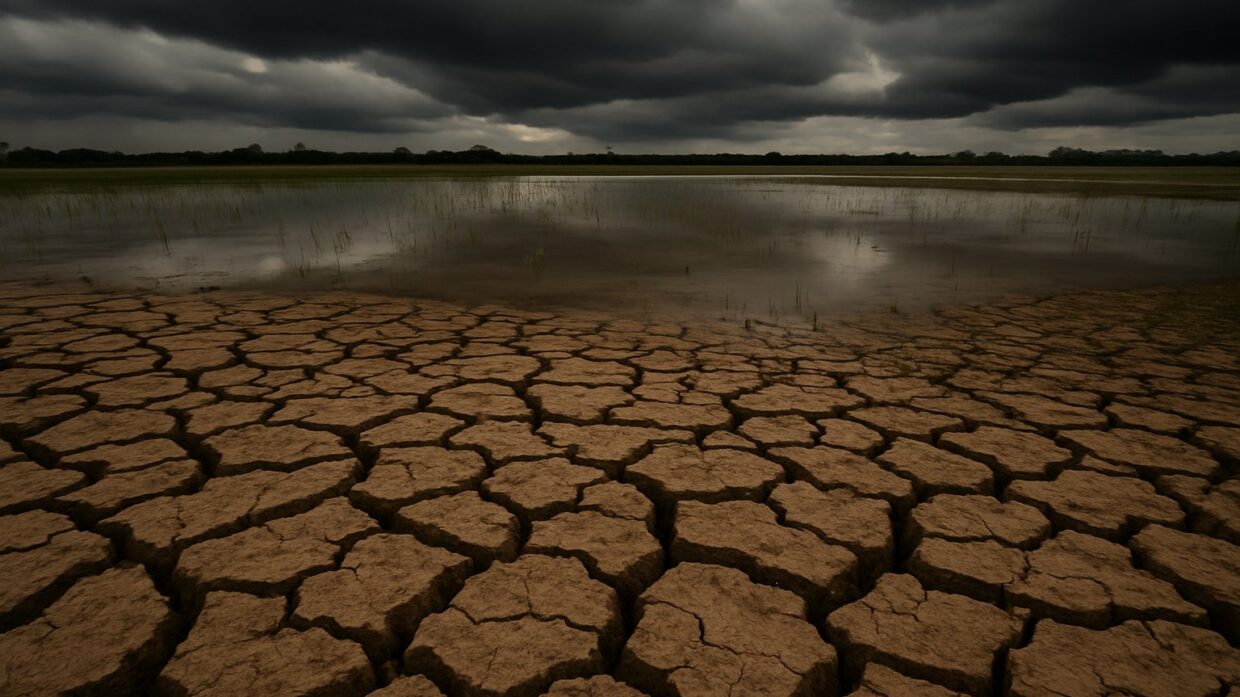
Photo: Well This Is News
Global Heating Will Hit at Least 1.8°C, UN Warns, With 'No Good Outcomes'
UN Models Show Supersized El Niño Threat to Global Economy Through Early 2027
UN Report Projects Global Warming Will Reach 1.8°C Minimum, Surpassing Paris Target
Key Takeaways
- The UN report conflates two separate problems operating on different timescales: long-term warming projections measured in decades and near-term El Niño weather risks lasting through February 2027, without clarifying which timeframe the 1.8°C figure applies to.
- The 1.8°C projection depends on unclear assumptions about whether nations will actually implement their stated climate commitments, leaving open how much of the gap between 1.5°C and 1.8°C represents policy failure versus irreversible warming already locked into the climate system.
- Neither framing addresses what portion of projected warming is still preventable through accelerated policy action versus what portion represents unavoidable heating from emissions already released into the atmosphere.
The Analysis
A UN Environment Program report released in September 2026 projects that global temperatures will rise to at least 1.8 degrees Celsius even under the most optimistic climate scenarios, according to both Mother Jones and CNBC reporting. The figure surpasses the 1.5°C warming target established by the 2015 Paris Agreement. Separately, UN modeling indicates elevated risks of El Niño-driven weather patterns persisting through February 2027, with documented consequences for flooding, drought, and heat stress across multiple regions.
The left-leaning framing, prominently featured in Mother Jones, emphasizes the phrase "no good outcomes" drawn from UN language and positions the 1.8°C threshold as a failure of global climate commitments. This framing frontloads the gap between what nations committed to achieve (1.5°C) and what climate science now suggests is unavoidable (1.8°C), treating the additional 0.3 degrees as a catastrophic overshoot. The narrative centers on the inadequacy of current efforts and the vulnerability of populations already experiencing climate impacts. What this framing leaves underscored is the distinction between what the models project under current policies versus what they project under full implementation of stated national commitments, or whether the 1.8°C figure accounts for pledged but not-yet-enacted climate measures.
The right-leaning framing, represented in CNBC's coverage, reframes the UN warning through economic consequence rather than climate targets. It names specific market and supply-chain vulnerabilities: El Niño patterns affecting agricultural output, commodity prices, and financial markets. The language shifts from "climate failure" to "economic danger zone," emphasizing the immediate financial implications through February 2027. This framing treats the UN warning as a near-term forecasting problem rather than a long-term climate trajectory problem. What remains backgrounded is whether this economic risk is presented as a reason to accelerate climate policy or as justification for market-based adaptation strategies.
What neither framing adequately addresses is the temporal distinction embedded in the UN report. The 1.8°C projection appears to represent long-term warming under current and projected policies, while the El Niño warning concerns near-term weather patterns through early 2027. These operate on different timescales and through different mechanisms, yet both are being presented simultaneously as crisis signals. The reporting does not clarify whether the 1.8°C represents warming by 2050, 2100, or another timeframe, or what assumptions about future emissions pathways the modeling incorporates.
Neither side foregrounds the gap between what models project and what the public record establishes about actual policy implementation. The Paris Agreement created commitments, not binding emissions reductions. The UN report's projections depend on assumptions about whether nations will meet announced targets. The available coverage does not establish how much of the projected 1.8°C warming reflects the gap between commitments and follow-through versus structural emissions locked into the global economy regardless of policy changes.
The underlying story is simpler than either framing suggests: climate science indicates that the warming already in the system, combined with current policy trajectories, will exceed the Paris target. Near-term weather patterns pose documented economic risks through early 2027. What remains unclear is what portion of that gap between 1.5°C and 1.8°C represents unavoidable warming versus avoidable warming, and therefore what portion of that gap is a failure of policy versus a failure of physics.
The 1.8°C projection collapses a false equivalence between two separate problems: long-term warming that reflects decades of accumulated emissions and policy failures, and near-term El Niño patterns that create immediate agricultural and financial shocks. Insurance and commodity markets now price climate risk explicitly into crop failures and supply disruptions through February 2027, which means corporations and governments will begin redirecting capital toward weather-resilient infrastructure and supply chains regardless of whether climate policy accelerates. The distinction matters because it determines whether the 0.3-degree overshoot above Paris targets represents locked-in unavoidable physics or avoidable policy choices. That ambiguity allows policymakers to treat the gap as inevitable rather than confronting how much remains within their control to prevent.