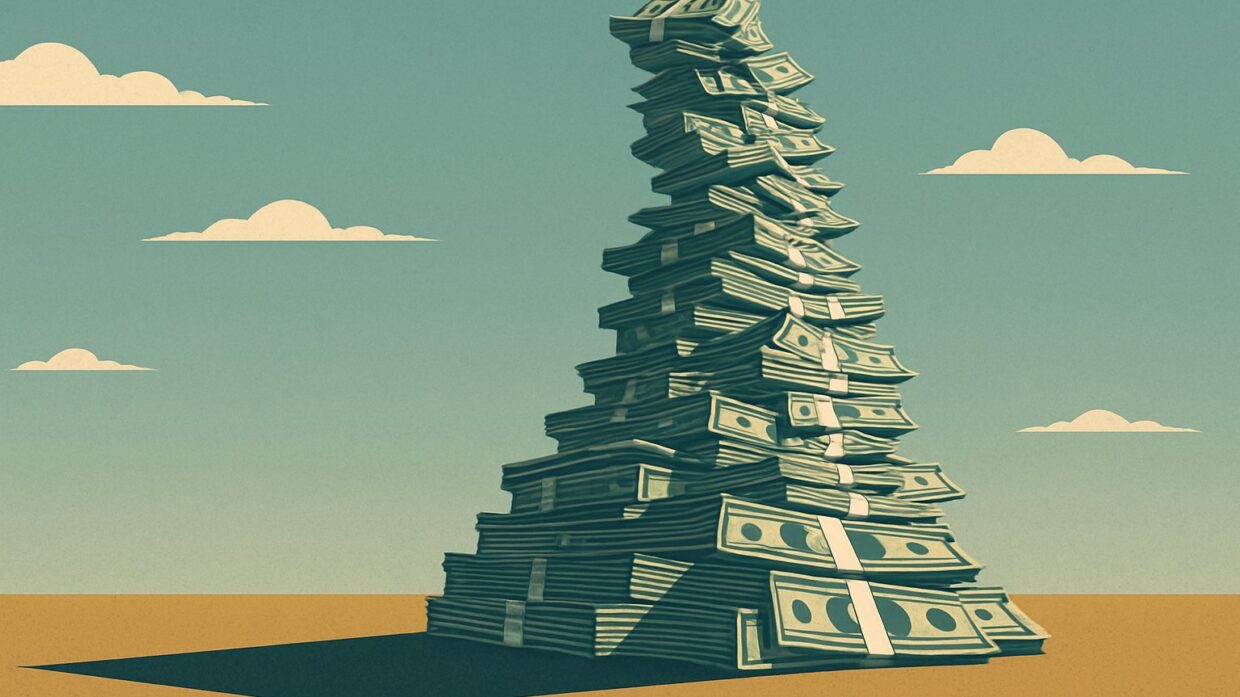
Photo: Well This Is News
Federal Debt Tops Record $40 Trillion as Interest Rates Rise for Borrowers
National Debt Crosses $40 Trillion Grim Milestone, Fiscal Reckoning Looms
U.S. National Debt Surpasses $40 Trillion for First Time
Key Takeaways
- The $40 trillion debt accumulated through specific policy choices over the past decade, including the 2017 tax cut, COVID relief packages totaling roughly $5 trillion, and growth in both mandatory entitlements and defense spending, rather than through abstract economic forces.
- Interest payments on federal debt are now the fastest-growing budget item, which means future spending on defense, healthcare, and infrastructure will be squeezed unless policymakers make deliberate choices about taxes, benefits, or services.
- Neither side is clearly identifying what spending should be cut or what revenue should be raised to address the structural deficit, instead using economic language that creates urgency without requiring specific trade-offs.
The Analysis
The U.S. federal debt crossed $40 trillion in August 2026, and what follows is neither an economic emergency nor a rounding error, but a structural fact with immediate consequences that both sides of the political debate are framing in ways that avoid its actual origins.
The documented fact: Treasury data confirms the debt hit $40 trillion on August 18, 2026. This represents a doubling from approximately $20 trillion in 2016, a 10-year increase of roughly 100 percent. The annual deficit for fiscal 2026 is running at levels that require the government to borrow roughly 3 to 4 dollars for every 10 dollars it takes in. Interest payments on that debt are now the fastest-growing line item in the federal budget, consuming resources that would otherwise fund defense, healthcare, or infrastructure.
The left framing, represented by NPR, emphasizes the immediate consequence: rising interest rates. NPR leads with nervous investors demanding higher rates, which "pushes up borrowing costs for everyone else." This framing is factually correct but narrowly scoped. It assigns primary causal weight to investor sentiment rather than to the actual structural deficit that prompted that sentiment. The language choice matters. "Record-shattering" and "adding red ink at a rapid rate" convey urgency without explaining why the government is running deficits at all, or which specific spending or revenue decisions created them. What NPR's frame leaves out is which budget items grew fastest, which revenue sources fell short, and when those gaps first emerged.
The right framing, represented by the Washington Examiner, uses language like "grim milestone" and references economists warning of "fiscal reckoning." This frame is also factually grounded but structurally inverts causality. It treats the debt itself as the problem rather than the persistent gap between what government spends and what it collects. The phrase "fiscal reckoning" implies consequence but does not specify consequence. It is a forecast framed as diagnosis. What this framing leaves underexamined is whether the reckoning is inevitable or whether it depends on specific policy choices about spending levels, revenue, or both.
What neither frame adequately addresses is the actual breakdown of how the debt accumulated. Between 2016 and 2026, federal spending increased significantly across multiple categories, including mandatory entitlements and discretionary defense spending. The 2017 tax cut, passed with Republican support, reduced revenue without corresponding spending reductions. The COVID relief packages of 2020-2021, passed with bipartisan support, added roughly 5 trillion dollars to the debt. Interest rates, held historically low by the Federal Reserve until 2022, masked the cost of borrowing during the period when most debt accumulation occurred. Each of these facts is documented in Treasury and Congressional Budget Office records, yet neither the left nor right framing foregrounds them equally.
The underlying question is not whether debt is bad, but whether the government should have made different choices about which services to fund, how to fund them, and at what point deficits become unsustainable enough to require action. That question requires naming specific trade-offs, not invoking economic metaphors like reckoning or urgency theater about nervous investors.
Interest payments on the national debt will consume $1.2 trillion annually by 2030 if current trajectories hold, crowding out discretionary spending on defense and infrastructure while narrowing Congress's ability to fund new priorities without raising taxes or cutting existing programs. The $40 trillion milestone reveals not a sudden crisis but a decade of accumulated choices: the 2017 tax cut reduced revenues by roughly $1.9 trillion over ten years without matching spending cuts, the bipartisan COVID relief packages added $5 trillion to outstanding obligations, and mandatory spending on Social Security and Medicare grew faster than GDP. These are not abstract economic indicators but concrete budget constraints that will force lawmakers to choose between military readiness, aging infrastructure, healthcare access, and deficit reduction within the next budget cycle. Avoiding that choice is no longer possible.