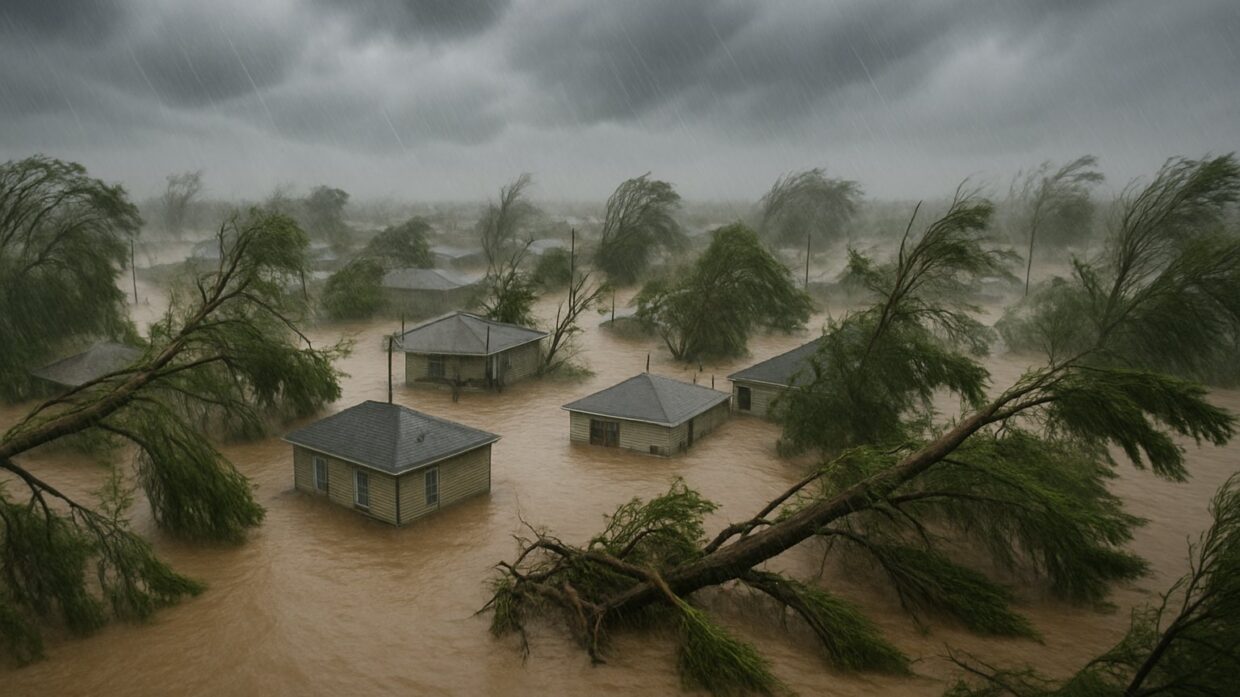
Photo: Well This Is News
Typhoon devastates China, kills 11 as climate intensifies extreme weather
Super Typhoon Bavi batters Taiwan and China with 124 mph winds
Typhoon Bavi forces Taiwan stock halt, leaves 11 dead in China flooding
Key Takeaways
- Taiwan's decision to halt stock trading on July 10, 2026, triggered by Typhoon Bavi's approach represents a specific economic threshold at which weather forces financial markets to close, but coverage does not explain what this closure costs or whether such suspensions are becoming routine.
- Neither side reported whether Typhoon Bavi was the first major storm to trigger Taiwan's market halt in 2026, how many such closures occur annually, or whether the frequency of weather-forced trading halts is increasing over time.
- The coverage establishes that Taiwan has the institutional capacity to suspend operations for typhoon risk but does not clarify whether this reflects standard contingency planning or signals an escalating pattern of disruption to regional economic operations.
The Analysis
Taiwan's suspension of stock trading on July 10, 2026, was a direct response to Typhoon Bavi's approach, making clear the operational threshold at which weather events trigger financial market closure. The Bloomberg reporting establishes the specific mechanism: Taiwan halted trading and shut schools in most areas as the storm tracked toward the island after making landfall in China. The left framing emphasizes this as evidence of climate intensification, while the right framing leads with the storm's raw physical specifications,124 mph winds, several feet of rain,and its geographic threat to both islands. Neither framing addresses what the market suspension actually signals about regional preparedness or the economic cost of the disruption itself.
The Guardian's reporting emphasizes human toll and vulnerability, naming the 11 deaths and specific hazards like snakes and building collapses. This framing positions the typhoon within a narrative of climate-driven intensification, though the reporting does not establish whether this particular storm is unusual for the season or region. Breitbart leads with the storm's classification as a "Super Typhoon" and its wind speed, using language that emphasizes magnitude rather than context. Both outlets are reporting the same event, but the Guardian's language,"leaves people stranded on rooftops," the danger of snakes,creates a narrative of helplessness and environmental crisis. Breitbart's language,"intensified over the Pacific," "bearing down",creates a narrative of meteorological drama and geographic threat.
What neither framing fully addresses is the institutional consequence of the market closure itself. Taiwan's decision to halt trading is not merely a safety precaution; it is a specific economic event with measurable costs. The reporting does not establish whether this represents standard protocol for tropical storms in Taiwan, whether it is stricter or more lenient than historical norms, or what the estimated market impact is. Bloomberg reports the fact of the closure, but not its financial implications. The left framing treats this as secondary to the human and environmental story. The right framing does not address the markets at all.
The underlying structural question the coverage leaves unexamined is how typhoon risk is already embedded in Taiwan's financial operations and whether the frequency or intensity of closures is changing. The available reporting does not establish whether Typhoon Bavi is the first to trigger a market halt this year, how many such suspensions occur annually, or what economic modeling suggests about future disruption. The fact that Taiwan can and does close its exchange for weather events suggests institutional preparedness, but the coverage does not clarify whether this is routine contingency planning or an escalating pattern.
What makes this significant is not the storm itself,typhoons are regular features of the western Pacific,but the moment at which regional economic operations pause in response to weather. That threshold is worth understanding. The reporting establishes that it was crossed, but not why it was crossed at this particular moment or what it costs.
Taiwan's decision to halt stock trading during Typhoon Bavi exposes a critical vulnerability in regional financial infrastructure that will compound with climate volatility. Market closures are not costless safety measures; they represent billions in deferred trading, disrupted hedging strategies, and capital flight timing decisions that cascade through Asian financial networks. If typhoon-triggered trading halts become routine rather than exceptional, institutional investors will restructure their Taiwan exposure or demand higher risk premiums, fundamentally altering the island's cost of capital. The reporting focuses on human casualties and storm magnitude while ignoring the economic threshold question: whether this closure reflects standard protocol or a new normal of weather-driven market disruptions. Understanding the frequency and duration of such closures matters more than the typhoon's wind speed because it determines whether Taiwan's financial markets remain stable enough for long-term capital commitments or become seasonally unreliable. Neither outlet quantified the cost or established whether these interruptions are increasing