Photo: Well This Is News
Trump's media ban backfires as awkward footage emerges from helipad ceremony
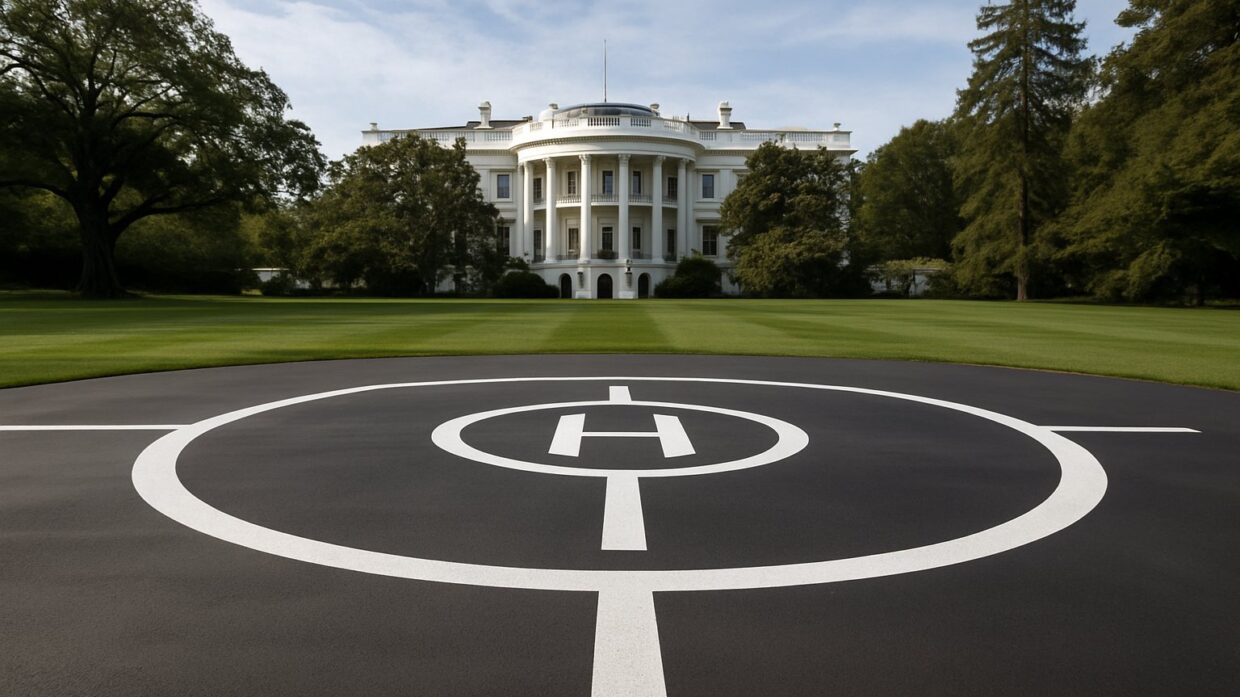
Trump inaugurates new White House helipad after ribbon-cutting on South Lawn
Trump White House helipad debuts amid press pool coverage dispute
Key Takeaways
- The helipad ceremony reveals that presidents can still execute physical actions and infrastructure projects without press pool coverage, but they lose the guaranteed channel for distributing official imagery and framing that has historically legitimized presidential announcements.
- Neither the administration's media restrictions nor the networks' coverage boycott appear to have been driven by bad faith alone; the dispute over press access and editorial judgments about newsworthiness were genuinely entangled, making it unclear whether networks declined coverage primarily for First Amendment reasons or because they deemed the helipad announcement insufficiently newsworthy.
- The absence of real-time press documentation created a vacuum where uncontrolled footage circulated without audio, leaving the public with a fragmented record that neither side fully owns or controls, suggesting that the breakdown of traditional White House press arrangements may benefit neither the administration nor the networks.
The Analysis
President Trump held a ribbon-cutting ceremony Monday for a newly installed White House helipad while major broadcast networks declined to cover the event live, creating a collision between a routine administrative announcement and an escalating conflict over press access. The incident raises a specific question: what happens to presidential messaging when the traditional infrastructure for distributing it stops functioning as designed.
The documented facts are straightforward. Trump held a ceremony on the South Lawn to dedicate the helipad. He used it immediately after the ribbon-cutting. Major networks did not provide live coverage of the event. Footage from the ceremony circulated without audio, creating an awkward visual record. The networks' decision to skip coverage occurred in the context of a stated dispute over press pool access to the White House.
The left's framing emphasizes the word "backfire." HuffPost describes the muted footage as showing the media ban "blowing up" in the administration's face, using the noun "awkward" to characterize the visual record. The framing suggests that by restricting press access, Trump has created a situation where his own messaging becomes uncontrolled and unflattering. This narrative omits what the helipad itself represents: a functional infrastructure improvement that, regardless of press coverage decisions, still occurred and is still operational. The framing also leaves unstated the question of whether the networks' decision to skip coverage reflects editorial judgment about the First Amendment dispute or editorial choice about what constitutes newsworthy infrastructure announcements.
The right's framing centers on completion and capability. Breitbart reports that Trump "made use of" the helipad and describes it as "newly installed," focusing on the functional milestone. The headline emphasizes that this was the "first time" the president used the equipment, framing the event as a genuine operational achievement. This framing omits the press access dispute entirely, treating the helipad as self-contained news rather than as one element in a larger conflict over White House media relations.
What neither side fully addresses is the underlying shift in presidential communication infrastructure. For decades, the press pool's presence at White House events served a dual function: it gave the president a guaranteed channel for imagery and messaging, and it gave the press a guaranteed presence to verify and question. When that arrangement breaks down, the president still controls the physical fact of what happens, but no longer controls the distributed record of it. The helipad operates whether the networks cover it or not. The question is whether a presidential announcement, unmediated by traditional press coverage, reaches the public with less authority or merely reaches it differently.
PBS NewsHour's framing captures this tension by pairing the helipad announcement with the "First Amendment fight," suggesting they are connected events rather than separate stories. This appears more analytically complete than either the backfire narrative or the infrastructure narrative alone, because it establishes that both things happened simultaneously and that the timing may not be coincidental.
The public record does not establish whether the timing was deliberate or coincidental, whether the networks' coverage decisions reflected editorial policy on the dispute or editorial judgment about the news value of helipad announcements, or whether the administration anticipated the networks would decline coverage. What remains clear is that the event occurred, the ceremony happened, the helipad functions, and the press largely did not document it in real time. Each side's framing is factually defensible. Neither captures the full picture of what this sequence reveals about how White House communication operates when the traditional mediation layer is absent.
The breakdown of the press pool system fundamentally alters how presidential announcements reach public consciousness. When networks decline to cover White House events due to access disputes, the president loses the distributed amplification that traditional media provides, but the physical facts of governance still proceed. The helipad exists and functions regardless of coverage. This creates a structural problem for any administration: announcements can no longer rely on journalistic mediation to reach mass audiences, forcing alternative distribution methods that lack the authority traditional journalism confers. As press relations deteriorate further, each side loses mutual dependence on the other, fracturing the single shared record of what happened. Over time, this means different populations will possess fundamentally different factual understandings of routine government operations based entirely on which information channels they trust.