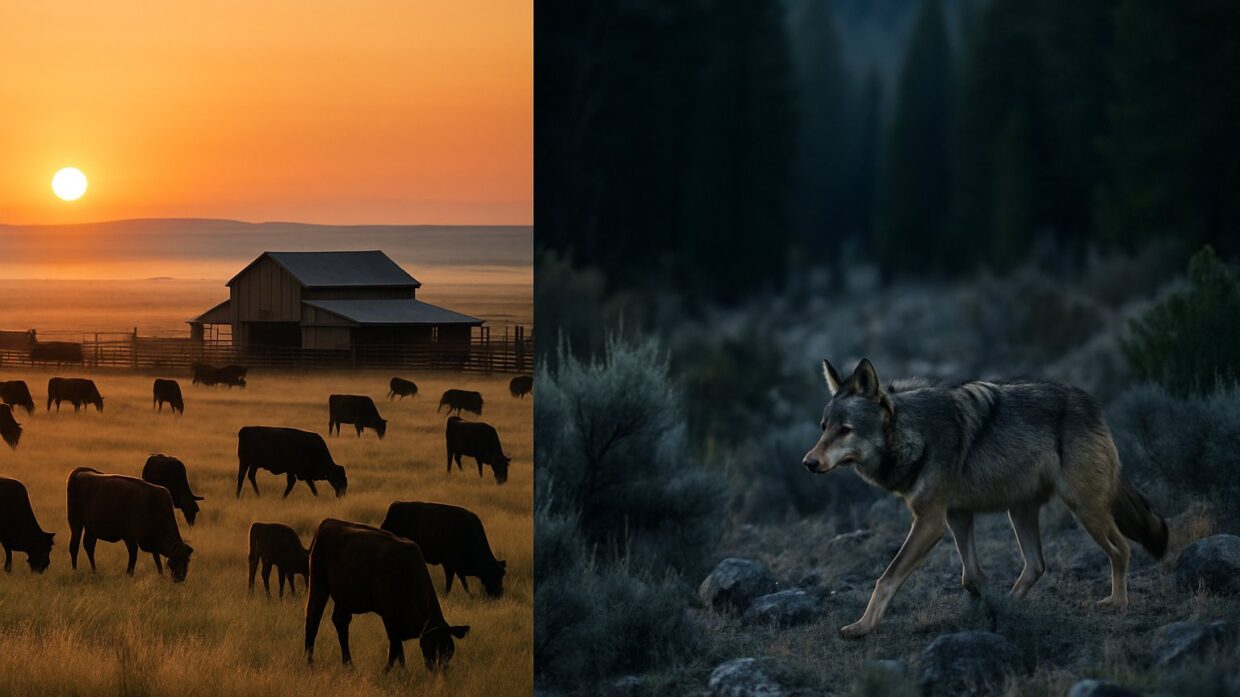
Photo: Well This Is News
Trump Moves to Strip Gray Wolves of Endangered Species Protections
Trump Empowers Ranchers with Meat Processing and Interstate Sales Authority
Trump Signs Orders on Rancher Meat Processing and Wolf Protection Review
Key Takeaways
- The executive order directs a three-month review process, not an automatic delisting; the Interior Department must still follow Endangered Species Act procedures and meet scientific criteria to remove protections.
- Wolf predation is real but not the primary driver of beef prices, which are substantially more affected by feed costs, labor, and fuel than by wildlife predation.
- The meat processing order and wolf review are two separate regulatory changes being packaged together as ranching support, despite addressing fundamentally different questions about federal oversight.
The Analysis
Trump signed two distinct executive orders Friday with overlapping political implications: one expanding rancher autonomy over meat processing and sales, another directing a regulatory review of gray wolf protections. The framing around these orders reveals what each side emphasizes and what all sides are leaving out of the conversation.
What actually happened: Trump directed the Interior Department to spend three months assessing whether gray wolves should be removed from the Endangered Species List, citing livestock losses and beef price concerns. Separately, he signed an order allowing ranchers to process and sell their own meat across state lines, removing existing restrictions on custom meat sales beyond state boundaries. The Interior review does not constitute immediate delisting; it is a directive to examine conditions and submit a recommendation.
Breitbart's framing emphasizes rancher empowerment, naming the meat processing order as the lead story and positioning both actions as liberation from federal constraint. The language used is "empower American ranchers," which casts regulatory removal as freedom granted rather than protection withdrawn. This framing leaves out any discussion of why the endangered species protections exist or what ecological function wolves serve beyond their economic impact on livestock.
The Guardian and broader environmental coverage focus on the threat to wolves themselves. The three-month timeline is presented as pressure to delist, and the framing emphasizes that wolves were "hunted to near extinction" before protection, establishing a baseline argument that delisting reverses recovery. This perspective leaves out documented cases where wolf populations have rebounded to levels some ranchers and wildlife managers argue create measurable livestock losses, and it does not quantify what those losses represent as a percentage of total ranching economics.
What neither side is addressing directly: The Endangered Species Act has specific procedural requirements for delisting. The Interior Department cannot simply remove wolf protections based on political preference; the species must meet scientific criteria for recovery. The order directs a review, not a predetermined outcome. What also goes unexamined in most coverage is the actual mechanism driving beef prices upward. Wolf predation exists, but it is not the primary cost driver in beef production; feed costs, labor, and fuel are substantially larger factors. Neither the rancher empowerment framing nor the conservation framing engages this economic reality clearly.
The meat processing order is genuinely distinct from the wolf review, yet both are being presented as a single policy package aimed at rancher benefit. The processing change addresses a regulatory barrier that has existed across administrations; removing restrictions on custom processing is economically meaningful to small operators. But the news coverage conflates two different regulatory questions: whether ranchers should process their own meat, and whether endangered species protections should change.
The public record does not yet establish whether the wolf review will recommend delisting, what scientific evidence Interior will weigh, or whether environmental groups will mount legal challenges. What it does establish is that Trump is directing a formal process, not circumventing one. The consequence depends on what Interior actually concludes and how courts treat the subsequent decision.
The more honest headline: Trump orders regulatory review of wolf protections while expanding rancher control over meat processing and sales, conflating two separate policy questions under the banner of ranching support.
The meat processing order and wolf review represent distinct regulatory questions being marketed as a unified rancher victory, obscuring what actually changes and what remains constrained by law. The Endangered Species Act requires scientific justification for delisting, meaning the Interior Department's three-month review cannot produce a predetermined outcome regardless of political preference. Beef prices rise primarily due to feed, labor, and fuel costs, not wolf predation, yet the wolf review is framed as an economic fix when it addresses ecological policy. The processing expansion genuinely removes a regulatory barrier that affects small operators' revenue, but coupling it with endangered species reconsideration suggests both operate in equivalent policy space when one involves statutory procedure and the other does not. Courts will ultimately determine whether any delisting recommendation survives legal challenge, making the actual institutional impact dependent on scientific findings Interior produces and judicial review that follows, not on the executive order itself.