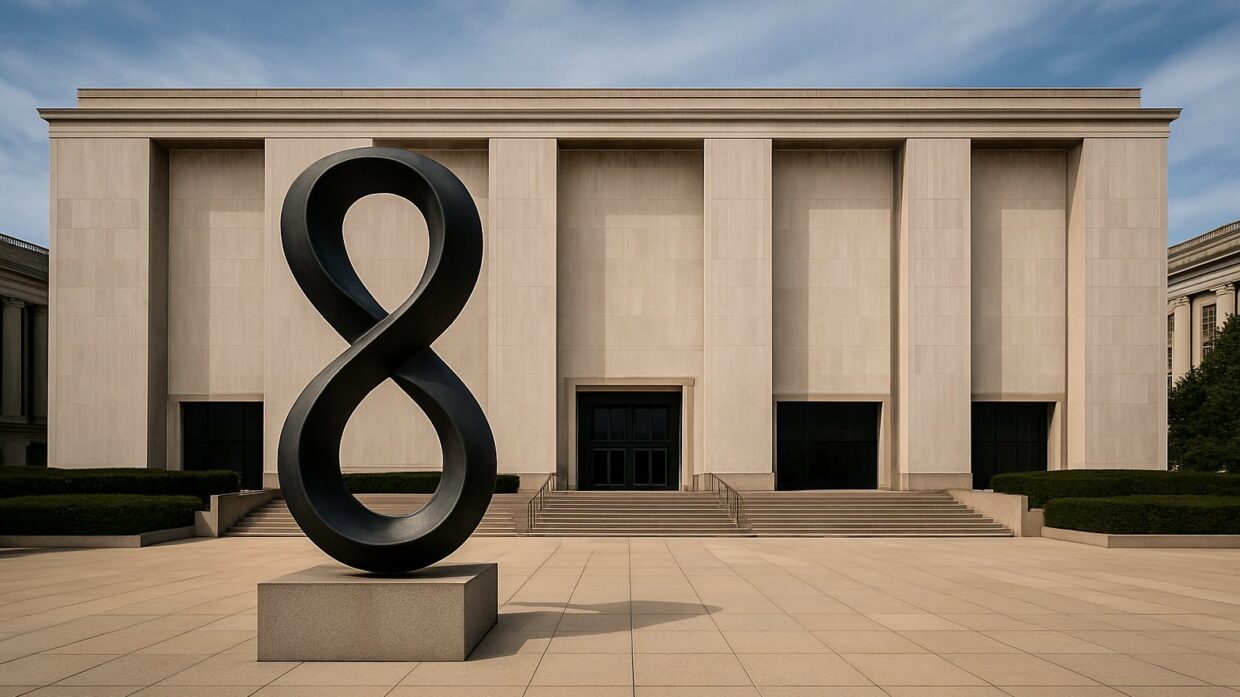
Photo: Well This Is News
Trump orders Smithsonian to rip out 'strange' modern art, replace with Washington statue
Trump demands Smithsonian replace modernist sculpture with 30-foot George Washington statue
Trump requests Smithsonian install George Washington statues and exhibit through 2032
Key Takeaways
- No reporting discloses what authority Trump actually possesses to compel Smithsonian changes or whether the Institution has formally responded to his request.
- The specific timeline extending through February 22, 2032 marking Washington's 300th birthday is unusual for museum commitments and neither outlet explains the rationale or institutional feasibility of such a long-term exhibit.
- The de Rivera sculpture being removed was installed during a previous administration and presumably passed institutional review, yet neither outlet reports whether the removal request violates Smithsonian governance documents or historical precedent for presidential involvement in curation.
The Analysis
Trump has requested the Smithsonian Institution install multiple George Washington statues and maintain a Washington-focused exhibit through February 22, 2032, the 300th anniversary of the Founding Father's birth. The specific request involves replacing the "Infinity" sculpture by New York artist Jose de Rivera outside the National Museum of American History with an 11-foot George Washington statue from the Freedom 250 IndyCar race, plus an additional 30-foot Washington statue.
The documented facts are sparse but verifiable. Fox News reports Trump characterized the existing sculpture as "strange modernist," while PBS NewsHour specifies the timeline request (Constitution Day 2024 through February 2032) and the IndyCar statue source. Neither outlet discloses the Smithsonian's response, whether the Institution has acknowledged the request, or what authority Trump believes he holds over museum installation decisions. The request appears to have been made through official channels, but the precise mechanism and whether it was formal or informal remains unreported.
The left frame, as articulated by HuffPost, emphasizes Trump's demand to remove contemporary art and replace it with traditional American imagery. This framing uses the word "tells" in the headline, implying a directive rather than a request, and contextualizes the move within Trump's broader engagement with cultural symbolism. The coverage leaves unexamined what authority Trump actually possesses to compel such changes, how Smithsonian leadership has historically managed political pressure regarding exhibits, or whether this request differs materially from previous presidential administrations' interactions with the institution.
The right frame, as Fox News presents it, leads with Trump "gives Smithsonian days," establishing an urgent timeline and presenting the replacement as correction of an aesthetic problem. Fox characterizes the existing sculpture as "strange modernist" and emphasizes the Founding Father heritage angle. The framing does not address whether the de Rivera sculpture was acquired through proper institutional process, has scholarly or artistic standing within the museum's collection, or how removing it might affect the museum's stated mission.
What neither frame foregrounds is institutional context that shapes this story. The Smithsonian is a federal entity receiving appropriations and answerable to Congress, but museums within it have historically maintained curatorial independence from executive direction. The de Rivera "Infinity" sculpture was installed during a previous administration and presumably passed institutional review. Neither outlet reports whether Trump's request violates any formal Smithsonian governance document, board policy, or whether it aligns with precedent for presidential involvement in museum curation. The absence of these details suggests the reporting focused on Trump's stated preference rather than the institutional mechanics involved.
The timeline request through 2032 is unusual enough to warrant more scrutiny than either outlet provides. A 30-year exhibit commitment is not standard practice and raises questions about what changes in museum priorities or space allocation this implies. Neither outlet explains why Trump selected that specific end date or whether the Smithsonian would normally commit resources that far forward.
A reader knowing only these headlines would understand Trump prefers Washington statuary to modernist abstract art, but would not understand whether this request carries force, how the Smithsonian has historically navigated such requests, or whether this represents a departure from precedent in presidential involvement with cultural institutions.
This request, if acted upon, establishes direct executive control over the Smithsonian's curatorial decisions in ways that fundamentally alter the relationship between the presidency and the institution's stated independence. The Smithsonian's board has historically resisted political pressure on exhibit content, treating museums as spaces where scholarly judgment guides acquisitions and removals regardless of administration preferences. Granting this request sets precedent for future presidents to demand removal or installation of specific artworks based on political or aesthetic ideology rather than curatorial merit. The 30-year commitment further locks the institution into serving a particular political narrative through 2032, converting a federal museum from an independent knowledge repository into a vehicle for executive cultural messaging. Once a president successfully compels removal of established artwork, the Smithsonian's curatorial authority becomes contingent on political alignment rather than professional standards.