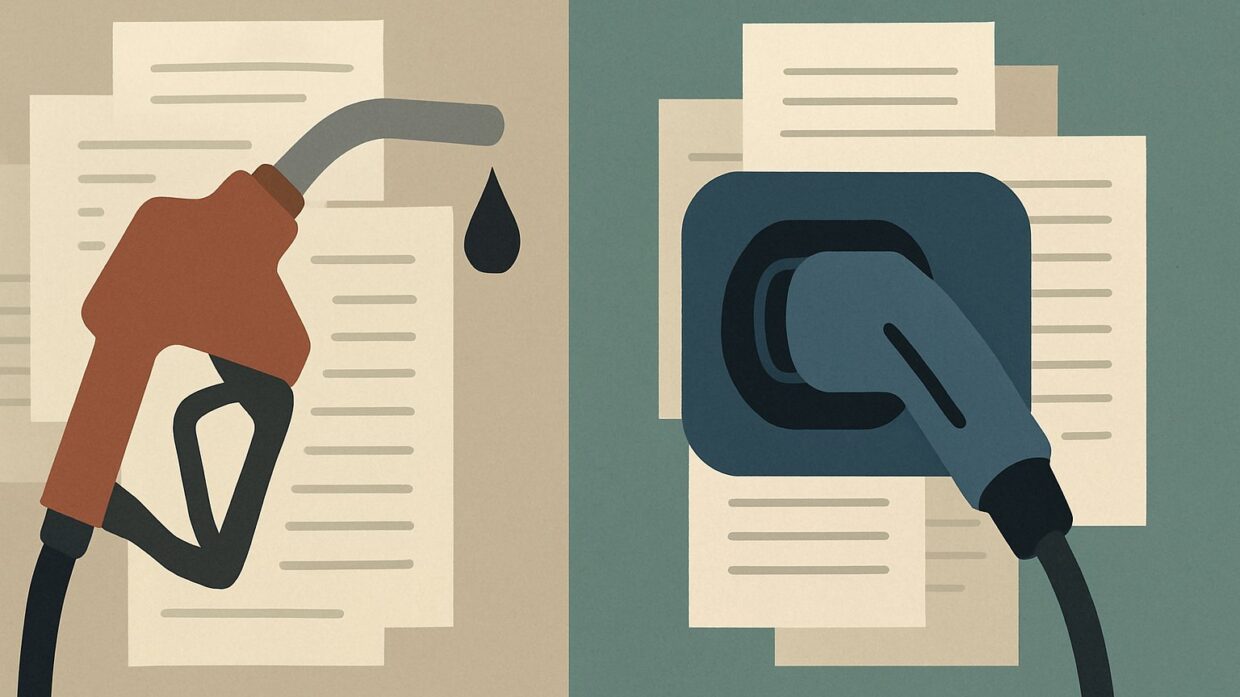
Photo: Well This Is News
Trump scraps clean air rule, shifts fuel standards away from electric vehicles
Trump approves fuel economy standards, eliminates Biden's EV mandate
Trump replaces Biden fuel economy standards with new rules favoring gas vehicles
Key Takeaways
- Trump's announcement eliminated the prior rule's incentive structure but did not publicly disclose the specific efficiency percentages, emissions thresholds, or compliance timelines his new standards require.
- The regulatory fight hinges on measurement methodology and compliance accounting rather than whether gas vehicles can be sold, yet neither administration's rule banned any vehicle type outright.
- This is the third major fuel economy revision in five years as political control has shifted, revealing a pattern of regulatory instability rather than a single Trump deregulation moment.
The Analysis
Trump announced Saturday he approved new fuel economy standards replacing Biden-era rules, but neither the available reporting nor Trump's framing discloses what the new standards actually require, how they differ mathematically from what they replaced, or what timeline applies. This matters because the headline fight is over words like "mandate" and "terminate," not over the specific regulatory text that will govern automakers' emissions and efficiency reporting.
What the record establishes: Biden's 2024 rule set pollution standards that would have required automakers' fleets to trend toward higher EV adoption to meet those targets. The rule did not ban gas vehicles or require a specific percentage of EV sales, but structured incentives so that meeting efficiency targets became easier if a manufacturer's fleet included EVs. Trump's announcement eliminates that regulatory approach. The available reporting does not specify what percentage reductions in fuel consumption his new standards require, whether they maintain Biden-era emissions thresholds, or how they measure efficiency for vehicles with different powertrains.
The right frame uses "mandate" and "terminate," language that suggests Biden imposed a hard EV sales requirement. Trump's statement called it "Sleepy Joe Biden's EV Mandate," using the word twice. This language is politically efficient: it presents Biden's rule as a forced transition rather than an incentive structure. The reporting does not challenge whether "mandate" accurately describes a rule that sets fleet-average pollution targets but does not dictate what fuel types manufacturers use. The emphasis on "workers" and "consumers" appeals to constituencies concerned about job losses in traditional auto manufacturing and those who prefer gas vehicles, but the available reporting does not quantify what labor impact either standard produces.
The left frame emphasizes that Trump "eliminated" or "scrapped" standards "designed" to reduce emissions and transition to cleaner vehicles. This language emphasizes the environmental consequence and the reversal of climate-aligned policy. What this framing leaves out is whether the new standards still require efficiency improvements, whether they maintain baseline emissions reductions, or whether they simply use a different measurement approach. The reporting does not explore whether automakers already underway with EV production will reverse course or whether the new rule simply removes the incentive structure that made EV manufacturing more economical under the prior standard.
What neither side fully addresses is the regulatory mechanism itself. Fuel economy standards are not about whether EVs exist; they are about how manufacturers are measured and incentivized. The actual consequence depends entirely on whether Trump's new rule (1) maintains or reduces overall efficiency requirements, (2) changes how compliance is calculated, and (3) removes specific EV-favorable accounting methods. The available reporting does not disclose these details. Trump used celebratory language about "approving" and "terminating," but did not announce the numerical targets, the compliance timeline, or the technical definition of his new standard. Readers cannot assess whether this is a modest adjustment to measurement methodology or a significant weakening of efficiency requirements without that information.
The prior regulatory history is also absent: this is the third fuel economy standard in five years, following Obama-era rules, Trump's 2020 rollback, and Biden's 2024 reinstatement. Each revision rewrote compliance timelines and measurement methods. The absence of that context makes this appear as a singular Trump action rather than part of a pattern of regulatory reversal that reflects shifting political control. What remains unclear is whether the new standard represents genuine deregulation or a recalibration that still requires efficiency gains, just measured differently.
Trump's announcement uses the word "mandate" to describe Biden's rule, but neither his statement nor available reporting discloses the actual numerical efficiency requirements in the new standard, how they compare mathematically to the prior rule, or the compliance timeline. Without those technical details, the political debate operates entirely on language and symbolism rather than regulatory substance. Automakers need precise efficiency targets and measurement methodologies to make production decisions; the public cannot evaluate whether this represents meaningful deregulation or technical recalibration without knowing what the new rule actually requires. The third fuel economy standard revision in five years demonstrates this is not singular policy but regulatory whiplash driven by electoral cycles, yet reporting frames each reversal as if it were independent rather than part of an established pattern of partisan oscillation.