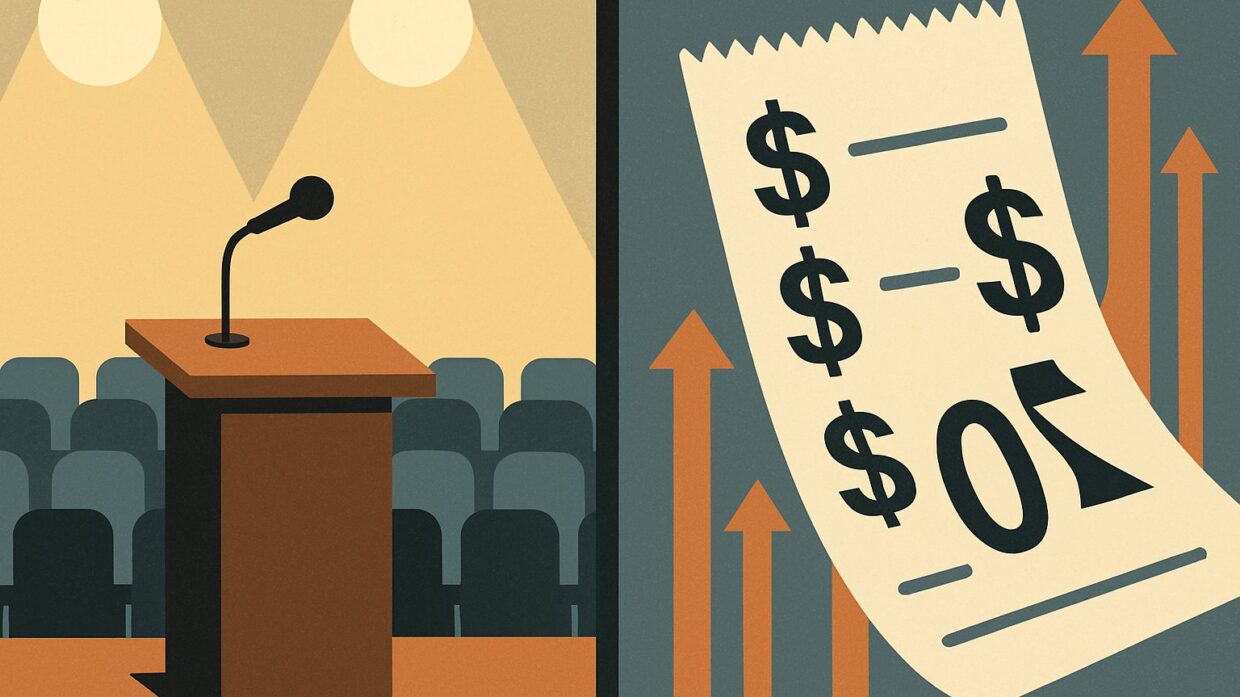
Photo: Well This Is News
Trump claims inflation under control as supporters struggle with rising costs
Trump campaigns in Montana to boost GOP ahead of midterm elections
Trump rallies Montana Republicans as inflation hits 3.7% annually
Key Takeaways
- Neither side examined whether Trump was referring to a different inflation metric, a decline from previous months, or comparison to other advanced economies when he claimed very little inflation.
- News coverage split sharply between highlighting the contradiction between Trump's statement and the 3.7% figure versus treating the rally as routine campaign news without addressing the economic messaging tension.
- The analysis revealed no reporting on what inflation rate existed during Trump's previous term or what inflation level voters considered acceptable as a baseline for evaluating his claim.
The Analysis
Trump held a campaign rally Wednesday evening in Kalispell, Montana, to support Republican House candidate Aaron Flint as the midterm elections approached. The same day, the Labor Department published inflation data showing a 3.7% annual increase. This timing created a direct collision between Trump's campaign message and recent economic indicators that voters could verify through their own household budgets.
The documented facts: Trump said at the rally, "We have very little inflation." The Labor Department's Consumer Price Index for the relevant period showed 3.7% annual inflation. Flint was running to replace retiring Rep. Ryan Zinke in a district described as Republican-leaning. NBC's reporting included interviews with rally attendees who acknowledged feeling inflation's impact on groceries, gas, and other expenses. The rally was the second stop of Trump's Western campaign swing, following Arizona.
The left-leaning framing, represented by NBC News, led with a headline that emphasized the contradiction: "Trump touts booming economy at Montana rally, but supporters feel the pinch." The word choice "touts" carries an implication of overselling or exaggeration. NBC explicitly juxtaposed Trump's claim against the inflation data and then added a second layer by reporting that actual attendees felt economic strain. This framing accomplishes two things: it documents Trump's exact words as potentially misleading, and it adds testimonial weight by showing that his audience disagreed with his assessment through their lived experience. What this framing omits is context about what inflation rate Trump faced in previous economic periods or what inflation levels exist in other advanced economies, information that would help readers evaluate whether 3.7% represents a success or failure by comparative measure.
The right-leaning framing, represented by Washington Examiner, emphasized the campaign function of the rally without foregrounding the economic messaging tension at all. The headline read, "WATCH LIVE: Trump headlines Montana rally to boost GOP in midterm elections." This framing treats the rally as a straightforward political event, a normal campaign stop in a competitive year. It names the specific arena, Majestic Valley Arena, and specifies the electoral stakes. What this framing leaves out is any acknowledgment of the inflation data released that day or any tension between Trump's economic claims and economic reality. The Examiner's approach frames the story as campaign news rather than economic messaging news.
What neither framing fully addresses is the specific context that makes this contradiction notable: Trump's political strategy depended on claiming credit for economic conditions, yet the inflation figure he was responding to contradicted his claim. Neither side examined whether Trump's 3.7% figure was lower than previous measurements, whether he was referring to a different inflation metric entirely, or what specific policies he credited for the performance he described. The framing also did not establish what inflation rate had prevailed during Trump's previous term or what rate voters considered acceptable. The real headline the evidence supports is: Trump's campaign messaging on the economy faced immediate factual contradiction from government data, and news coverage split between highlighting that contradiction and ignoring it entirely.
Trump's Montana rally exposed a fracture in how competing news outlets frame economic messaging versus economic reality. By releasing inflation data on the same day Trump claimed minimal inflation, the Labor Department created a measurable test of his claim that voters could verify against their grocery receipts and gas pump visits. NBC's coverage documented this collision directly, quoting Trump's statement and then reporting that his own supporters felt the economic squeeze he denied. The Washington Examiner's silence on the inflation figure allowed Trump's claim to stand unchallenged in that account. This split matters because it determines whether voters encounter a politician's economic claims alongside immediate factual verification or in isolation. When major outlets diverge this sharply on whether to mention the same-day government data, they're not just choosing emphasis; they're constructing entirely different informational universes about what the economy actually is. That gap between the two versions of the Montana rally becomes the mechanism through which voters in different media environments develop fundamentally different