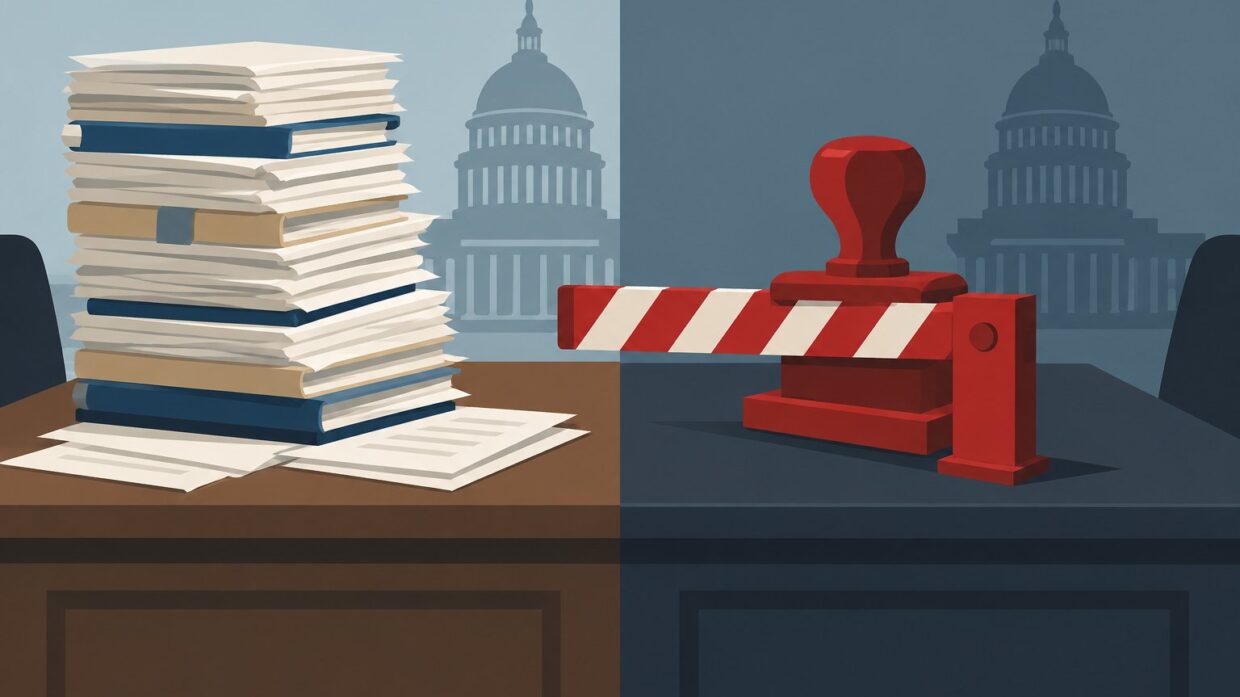
Photo: Well This Is News
Trump threatens blanket vetoes against Democratic Congress, signaling partisan gridlock
Trump vows to block Democratic agenda as 'Mr. Veto' if GOP loses Congress
Trump pledges veto strategy if Democrats win congressional majority in midterms
Key Takeaways
- Trump had already governed through divided government from 2019 to 2020 with a Democratic House and Republican Senate, vetoing bills without major congressional override.
- Presidential vetoes in divided government are routine constitutional practice, not unusual obstruction: George H.W. Bush issued 44 vetoes against a Democratic Congress in four years.
- Trump's pledge signals he would govern through executive power rather than legislative negotiation, but neither side examined whether this governing style would work or risk total gridlock.
The Analysis
Trump's pledge to become 'Mr. Veto' if Democrats win the midterms establishes a confrontational baseline for divided government, but the framing from each side obscures what actually happens when a president faces an opposition Congress and what historical precedent shows about veto strategy itself.
The documented facts are straightforward. Trump told Fox News and the New York Post that if Republicans lose the House and Senate, his strategy would be vetoing Democratic legislation. He used the phrase 'Mr. Veto' explicitly. The context matters: these statements came before the 2022 midterms, when control of Congress was genuinely uncertain. Trump was signaling to his base what he would do if the worst-case scenario occurred.
The left frames this as a threat to obstruct and a renunciation of governing responsibility. The Washington Examiner's framing emphasizes that Trump would 'not let them through,' language that casts the posture as blanket obstruction rather than selective pushback. This language choice serves a narrative: Trump as willing to prioritize partisan victory over legislative function. What this framing leaves out is the historical reality that divided government regularly produces divided outcomes, and that sitting presidents have routinely used veto power against opposition Congresses.
The right presents this as a defense mechanism and executive power preservation. Trump would use his constitutional tool to 'halt' or 'block' a Democratic agenda. This framing treats the veto as legitimate guardrail rather than obstruction. The Hill's reporting, while factual, similarly neutralizes the language by treating veto strategy as a standard executive response. What this framing underplays is that naming yourself 'Mr. Veto' before taking office signals intent to maximize confrontation, not minimize it.
What neither side addresses is the actual record of presidential vetoes in divided government. From 1989 to 1992, when George H.W. Bush faced a Democratic Congress, he issued 44 vetoes, with Congress sustaining most of them. From 2007 to 2008, George W. Bush vetoed Democratic bills regularly, and Democrats lacked the votes to override. The veto is not a bluff; it is constitutionally guaranteed power. Trump's statement was not announcing something unusual. He was naming a tool that any president automatically possesses.
The omission that matters most: neither the left nor the right noted that Trump had already experienced this scenario. From 2019 to 2020, Trump faced a Democratic House and Republican Senate. He did, in fact, veto bills. He threatened vetoes. Congress did not override him substantially. The precedent existed in his own record.
What Trump's statement actually signals is willingness to lean hard on executive authority as compensation for legislative losses. Whether that constitutes obstruction or legitimate constitutional defense depends on which bills are vetoed and why. The headlines suggest gridlock. The evidence suggests a president preparing to govern through presidential power rather than legislative compromise.
The real headline is this: Trump signaled that if he lost Congress, he would govern through the veto, not through negotiation. That is a choice about governing style, not an innovation in presidential power. The question neither side addressed is whether that style would work, or whether it would paralyze the government entirely.
Trump's veto pledge, if executed, would institutionalize executive obstruction as the primary governing tool for any opposition Congress he faces, fundamentally reshaping how divided government operates. Unlike past presidents who used vetoes selectively alongside negotiation, Trump framed the veto as a primary strategy before taking office again, signaling intent to maximize confrontation rather than minimize it. This approach would eliminate the legislative compromise that has historically allowed divided governments to function, replacing it with sustained executive blockade. The consequence extends beyond 2024: it establishes a precedent that opposition-controlled Congresses can be rendered largely powerless through systematic veto use, which future presidents across both parties will cite to justify abandoning negotiation entirely. Congressional authority weakens institutionally when a president preemptively commits to obstruction rather than selective resistance.