Photo: Well This Is News
Trump sends envoy to Putin with Ukraine proposal while Pentagon announces North Carolina chip investment
Trump pursues diplomatic solution with Russia as administration boosts domestic semiconductor manufacturing
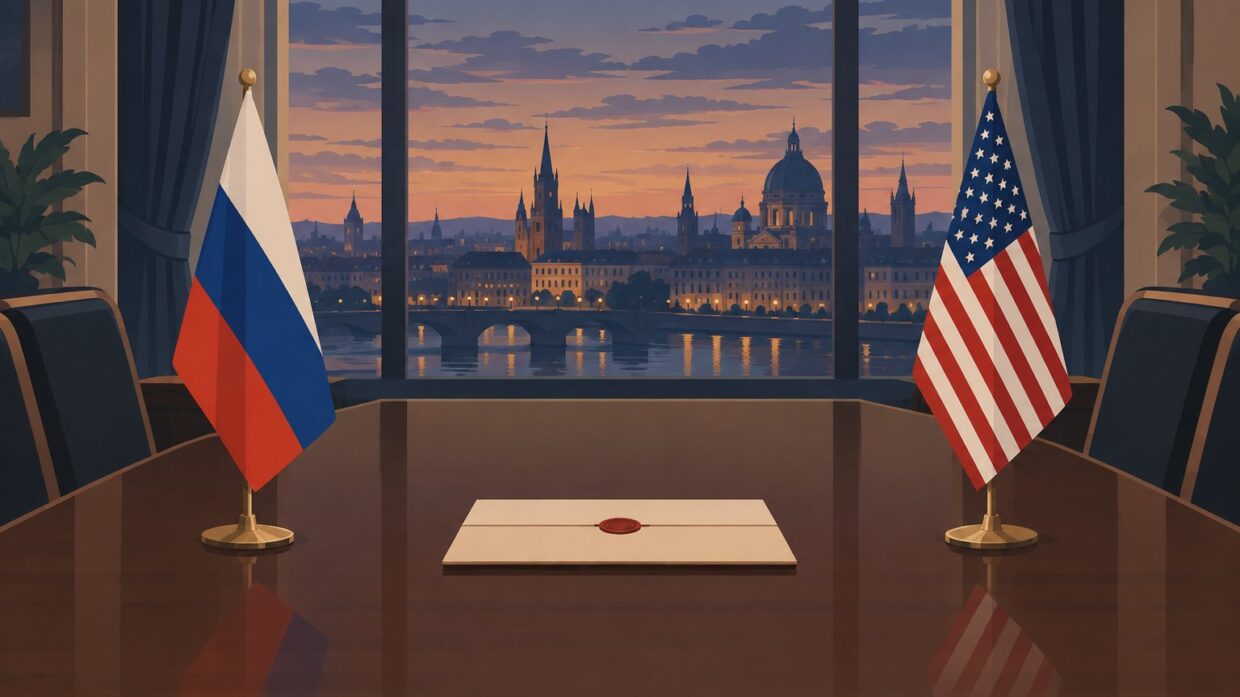
Trump envoy Witkoff to present Ukraine peace proposal to Putin in St. Petersburg
Key Takeaways
- The Trump administration has not disclosed whether Russia has expressed willingness to modify its demands for Ukrainian territory, leaving unclear what would motivate Putin to accept any proposal presented during Wednesday's meeting.
- Jared Kushner's virtual rather than in-person participation in the St. Petersburg meeting suggests either logistical constraints or an intentional decision to limit Trump family representation that has not been publicly explained.
- The administration's stated position that Russia must withdraw from occupied territory has not been publicly reconciled with the fact that an 'updated proposal' is being presented, leaving ambiguous whether the core demand remains unchanged.
The Analysis
Steve Witkoff's planned visit to St. Petersburg represents a direct diplomatic channel between the Trump administration and the Russian government on the Ukraine war, a development both supporters and critics are framing through their established positions on Russia policy without addressing what the engagement actually requires from each side to succeed.
The documented facts establish the following: Witkoff, a Trump adviser with no formal diplomatic title, will meet Putin on Wednesday with what Axios reports as an "updated proposal" to end the war. Jared Kushner, Trump's son-in-law and former Middle East envoy, will participate virtually. The proposal itself remains undisclosed. This is the most direct Trump administration contact with the Russian leadership since Trump took office and represents a significant shift from the preceding administration's posture, which emphasized military aid to Ukraine and diplomatic isolation of Russia until Russian withdrawal from occupied territories.
The left-framing, evident in NPR's coverage, emphasizes the envoy visit as a news item alongside other global developments, placing it in a sequence that includes Saudi Arabia canceling the "Davos in the Desert" conference due to Houthi strikes. This framing treats the Witkoff visit as one story among several without emphasizing what it signals about U.S. policy direction. The implicit concern is that direct negotiation with Russia may signal acceptance of territorial concessions or a shift away from supporting Ukraine's stated objectives. What this framing leaves out is any discussion of what incentives might exist for Russia to agree to any proposal, or whether the Trump administration has secured commitments from Ukraine that would make such a proposal viable.
The right-framing, reflected in The Hill's coverage and Axios's structural treatment, emphasizes the diplomatic initiative as part of a coherent Trump strategy to resolve conflict through negotiation. The Pentagon semiconductor investment announcement, appearing in the same news cycle, serves a framing function that associates Trump administration activity with domestic economic benefits. The implicit message is that this administration pursues both conflict resolution and American economic security. What this framing does not address is the specific concessions or arrangements such a proposal might entail, or whether Russia has indicated any willingness to modify its stated objectives regarding Ukrainian territory.
What neither side fully captures is the actual leverage question. The available reporting does not establish what Trump administration officials believe Russia's current negotiating position is, what Ukraine has been told about this proposal, or whether this represents a shift in the administration's stated position that Russia must withdraw from occupied territory. The public record does not disclose whether this proposal was coordinated with European allies or whether it was developed independently. The sequence raises questions about whether this represents a pre-planned diplomatic strategy or a response to specific signals from Moscow. The reporting also does not establish whether the "updated" language in Axios's description means this is a revised version of an earlier proposal, and if so, what changed and why.
The significant detail is that Kushner's participation is virtual, not in-person. This suggests either scheduling constraints or a deliberate choice to keep Trump family representation remote. Neither possibility is explained in the available reporting. The absence of a formal diplomat or State Department official in the lead position is notable; Witkoff is primarily known as a Trump loyalist and businessman, not as a career foreign service professional or someone with prior Russia expertise.
The underlying question this moment presents is whether the Trump administration believes the current military situation in Ukraine has shifted enough to make negotiation feasible, or whether it believes negotiation itself is a policy choice independent of the military balance. That distinction matters because it determines what terms would be acceptable. The reporting does not establish which premise guides this initiative.
Any agreement Russia accepts will establish the baseline for how the Trump administration treats territorial conquest by military force, setting precedent for how it responds to similar conflicts globally. If this proposal involves Ukrainian territorial concessions without Russian withdrawal from occupied areas, it signals that military occupation becomes negotiable rather than reversible, fundamentally altering how adversaries calculate the costs of invasion. European security architecture depends on the principle that borders cannot be redrawn by force; accepting a Ukraine settlement that violates this principle means NATO members will reassess their own defense commitments and potentially accelerate independent nuclear weapons programs. The specific terms Witkoff carries to Putin will determine whether this administration has chosen conflict resolution over deterrence, a choice that reverberates through every regional security calculation from the Baltic to Taiwan for the next decade.