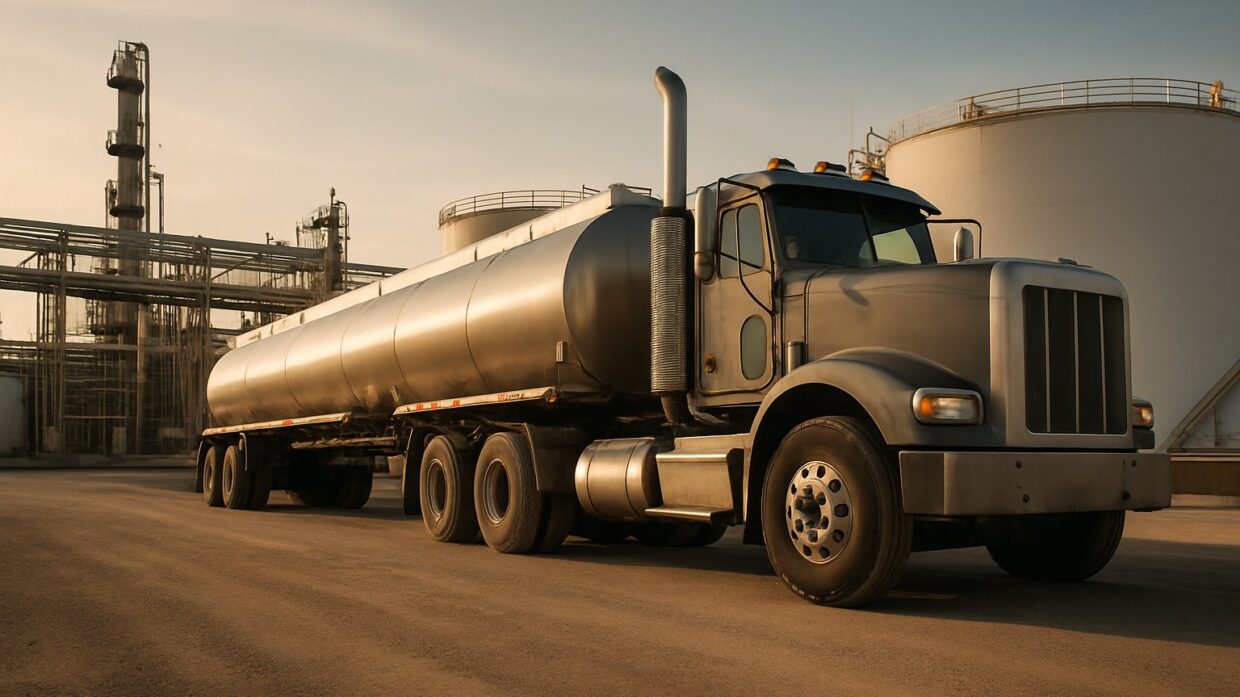
Photo: Well This Is News
Trump's unpopular diesel ban exposes GOP fracture ahead of midterms
Trump takes action on fuel prices while establishment economists warn of blowback
Trump endorses diesel export ban as Republicans distance themselves on economic policy
Key Takeaways
- Goldman Sachs analysis indicates a diesel export ban would fill domestic storage, lower diesel prices, cause refiners to shift production toward gasoline, shrink gasoline supply, and ultimately raise pump prices for consumers, yet this economic chain is absent from most Republican commentary defending the policy.
- Trump's endorsement of the diesel ban represents a continuation of his existing trade restriction pattern using national security justifications, but the specific timing and constituency pressure driving this particular policy choice remain undocumented in available reporting.
- Congressional Republicans appear to be performing disagreement with Trump on energy and trade issues for their home districts while the national-level policy may proceed without meaningful obstruction, suggesting electoral positioning rather than substantive policy conflict.
The Analysis
Trump's endorsement of a diesel export ban, announced Tuesday alongside Ukrainian President Volodymyr Zelensky, represents a policy reversal for an administration that has previously resisted export restrictions, and it has created immediate tactical distance between Trump and Congressional Republicans worried about electoral survival. The policy proposal sits at the intersection of three separate political narratives, each incomplete on its own.
The factual baseline is narrow: Trump said he has called for a ban on U.S. diesel exports. Goldman Sachs co-head of global commodities research has published analysis suggesting such a ban would rapidly fill domestic storage, depress diesel prices, and ultimately shrink gasoline supply while raising pump prices. The Axios reporting establishes that Congressional Republicans are "increasingly breaking with an unpopular president on foreign policy and pocketbook issues" as they attempt to preserve electoral majorities, with Trump's approval reaching new lows six weeks before midterms. Vox frames this as Republicans seeking "distance from the very unpopular president."
The left framing emphasizes Republican fracture and uses the phrase "full-scale revolt" to describe what is explicitly not happening, then immediately qualifies it. The narrative centers Trump's unpopularity as the driver and positions the diesel ban as an example of economically damaging policy that Republican candidates find politically toxic. That frame omits what prompted the diesel export ban proposal in the first place, why Trump chose to endorse it at this particular moment, or what constituency within the Republican base supports it. It leaves unexamined whether the "distance" Republicans are putting between themselves and Trump on this issue reflects genuine policy disagreement or pure electoral calculation.
The right framing, present in Axios's reporting without editorial layer, emphasizes Trump's "willingness to challenge conventional economic wisdom" and frames the endorsement as responsive to grassroots conservative concerns. That narrative is built on implicit approval of Trump's instincts on trade and domestic priority. It does not foreground the Goldman Sachs analysis suggesting pump price increases, and it treats established economic analysis as mere "establishment" skepticism rather than evidence-based warning.
What neither side examines is the specific mechanism of how a diesel export ban would function. The Bloomberg reporting establishes the likely consequence: storage fills, diesel prices fall domestically, refiners respond by producing less diesel and more gasoline to maintain margins, gasoline supply shrinks, pump prices rise. This is not a political disagreement. It is a described chain of economic events. The absence of this causal sequence from most of the Republican defensive commentary suggests that either the policy has not been stress-tested against basic refinery economics, or the political logic (appear responsive to energy concerns weeks before an election) outweighs the economic logic.
The prior context matters: Trump's administration imposed tariffs, pursued trade restrictions, and repeatedly invoked national security to justify export controls. A diesel ban would extend that pattern. What changed is not the principle but the energy sector and the electoral calendar. The documented record does not establish why Trump endorsed this specific policy at this specific moment, or whether pressure from any particular constituency prompted it. The available reporting suggests it serves a dual function: demonstrates responsiveness to anti-establishment energy concerns while simultaneously creating political space for Republicans to distinguish their own positions as more moderate. The Republicans breaking with Trump on this issue may be performing disagreement for their districts while accepting the policy at the national level.
A diesel export ban would mechanically raise gasoline prices at the pump through a documented refinery economics chain: storage fills, diesel prices fall domestically, refiners cut diesel production to protect margins, gasoline supply shrinks, pump prices climb. Republicans distancing themselves from Trump on this proposal are either unaware their party might implement a policy that directly contradicts their messaging on inflation and cost-of-living, or they are performing opposition for home districts while the policy advances nationally. The gap between what Republicans say publicly and what their party will deliver to voters has become the actual substance of their disagreement with Trump, not the policy itself.