Photo: Well This Is News
Trump uses 250th anniversary to attack communism while NYC mayor offers pro-immigration contrast
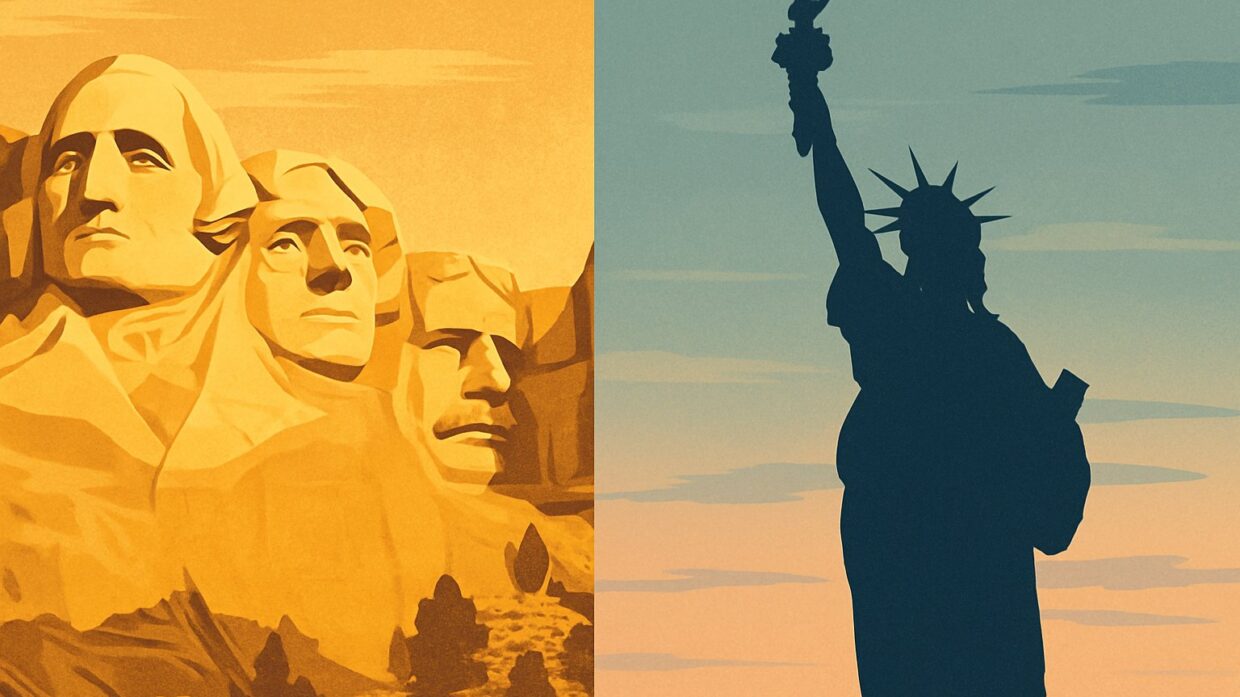
Trump declares America 'most exceptional nation' at Mount Rushmore, warns of communist threat
Trump delivers Mount Rushmore speech warning of communism as competing anniversary visions emerge
Key Takeaways
- Neither Trump nor Mamdani specified which actual communist policies, governments, or movements they were warning against or defending, leaving both speeches as symbolic positioning rather than substantive policy debate.
- Left-leaning outlets omitted that Mamdani identifies as a socialist while right-leaning outlets omitted what specific threat Trump believed communism posed, allowing both sides to avoid addressing the core disagreement.
- The White House's suggestion about Trump on Mount Rushmore and characterizations of both speeches as either 'divisive' or 'fierce' were editorial judgments, not reporting of what each official actually proposed or believed.
The Analysis
Trump's Mount Rushmore speech on July 3 and Mamdani's preceding address created a specific factual tension: two government officials used America's 250th birthday to argue opposing visions of what the nation represents, delivered within hours of each other in different cities. The substance of each address can be separated from how it was framed.
Trump declared communism "the enemy" and warned of its "resurgence," according to NBC reporting. He framed the 250th anniversary around national exceptionalism, stating America is "the most exceptional nation ever to exist," per Fox News. The speech was delivered at Mount Rushmore in Keystone, South Dakota. Mamdani, identified as the socialist mayor of New York by multiple outlets, gave a speech "flanked by recently naturalized citizens," according to NBC, in which he "invoked the history of immigrants who came to America's shores." The Washington Examiner reported the White House suggested Trump would be "no better addition" to Mount Rushmore than a fifth presidential figure.
The left-aligned framing emphasizes Trump's focus on communism as divisive and absent genuine unity rhetoric. NBC's reporting leads with "unity" in the headline but covers the communist warnings prominently. This framing leaves out Trump's own stated intent regarding national purpose and downplays the substantive policy differences that might explain why communism warning resonates with his coalition. It positions the Mamdani speech as a straightforward pro-immigration address without naming Mamdani as an openly socialist politician, a detail the right-wing sources foreground immediately.
The right-aligned framing emphasizes American exceptionalism and frames Mamdani's speech as "sinister" and dark in tone. The Daily Wire headline claims Mamdani "painted a sinister picture of the greatest country on earth." This framing treats the White House suggestion about Mount Rushmore as newsworthy without acknowledging the self-promotional implication. It presents the communist warning as a substantive policy concern without establishing what specific policies or movements Trump was referencing. The Washington Examiner describes the speech as "fierce rebuke," which is editorializing rather than reporting what Trump said.
What neither framing adequately addresses is what the actual competing content differences were. Trump warned of communism as a governing ideology. Mamdani emphasized immigration history. Neither outlet explains whether Trump was referencing specific domestic policies, foreign governments, or academic movements when warning of communism. Neither covers whether Mamdani's speech made specific policy proposals or historical arguments about immigration that would clarify the actual substantive disagreement. The Hill characterizes Trump's speech as "injecting partisan rancor" into anniversary remarks, but does not establish whether the communism reference itself is partisan or whether it reflects genuine policy concern among Trump's political base. Bloomberg reports Trump used the venue to "boost his own political standing ahead of midterm elections," but does not document whether the communist warning was designed for that purpose or was a separate rhetorical choice.
The underlying question neither side fully captures is whether there is actual policy daylight between these two figures on specific government action, or whether the speeches represent purely symbolic and rhetorical positioning using the same historical moment for opposed messaging. The record establishes that both speeches occurred, that their framings differed sharply, and that outlets chose to emphasize different aspects of each. What remains undisclosed is the intent behind each speech's framing choices and whether they respond to specific policy proposals or represent broader ideological positioning.
Trump's Mount Rushmore speech established communism as a central campaign concern heading into midterm elections, forcing Democratic officials to explicitly defend against socialism accusations rather than set their own legislative agenda. The competing anniversary addresses revealed that partisan control of national symbolism now determines which historical narrative Americans hear on civic occasions, with no institutional mechanism to ensure both frames reach voters equally. This split in how government officials describe national purpose at the same moment indicates fracturing consensus about foundational American values, making future bipartisan commemoration increasingly difficult. Media outlets amplified rather than bridged this gap by selecting opposing details, meaning voters in different information ecosystems saw fundamentally incompatible versions of what the 250th anniversary meant. The practical consequence: candidates will now calculate whether anniversary speeches offer attack platforms or require defensive positioning, converting historical commemoration into campaign infrastructure.