Photo: Well This Is News
Trump Abandons In-Person Rallies in Toss-Up Senate States as Midterms Near
We haven't found a right-leaning take on this story yet.
Breaking stories sometimes publish before every side has covered them. We'd rather show you that than invent a view.
Trump Cancels In-Person Iowa and Kansas Rallies, Pivots to 19-State Tele-Rally Blitz
Key Takeaways
- The Republican National Committee never disclosed whether the switch from in-person to tele-rally format reflected budget constraints, scheduling conflicts, strategic calculations about voter mobilization, or confidence that in-person turnout is no longer the deciding factor.
- Tele-rallies cost less to produce and require no local venue arrangements or crowd management, yet news reporting did not examine whether this operational efficiency drove the decision or what comparative effectiveness tele-rallies have versus in-person events for turnout.
- Neither the left nor right frame addressed whether eliminating in-person rallies in Iowa and Kansas, two states with genuinely competitive Senate races, reflects opportunity to reach more voters nationally or necessity due to resource or scheduling constraints.
The Analysis
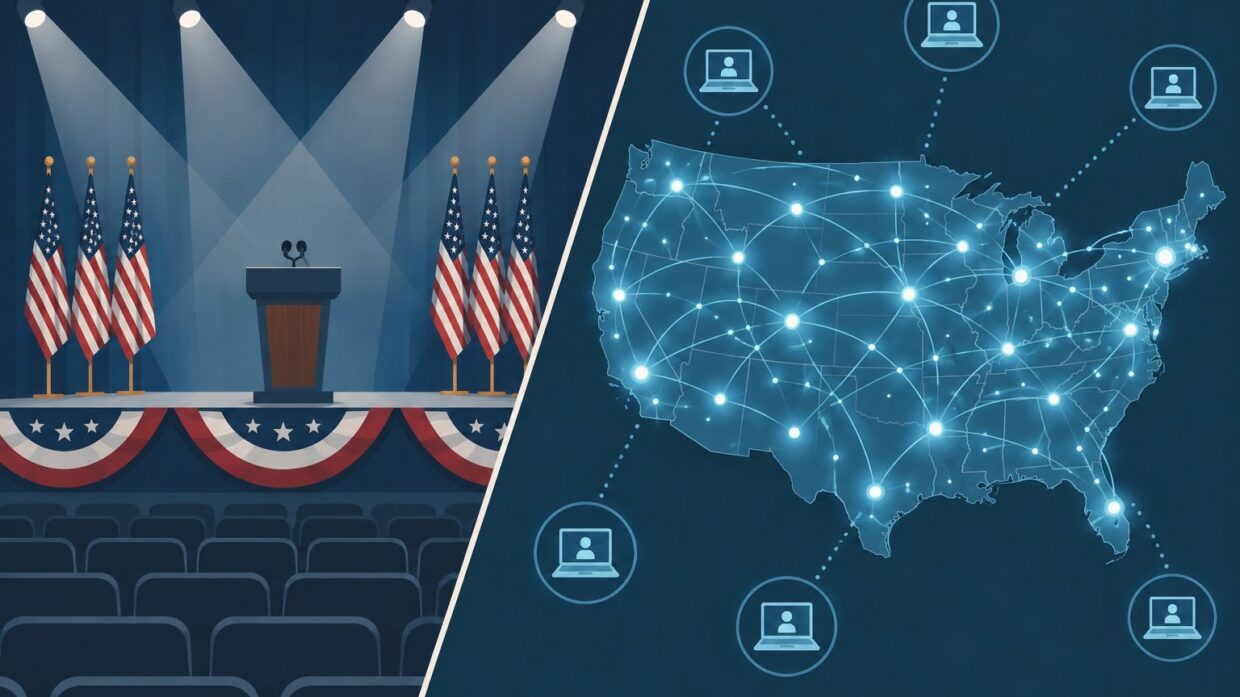
Trump canceled in-person rallies in Iowa and Kansas on Thursday, replacing them with tele-rallies across 19 states, according to the Republican National Committee. The shift happened in the final weeks before midterm elections where both states have competitive Senate races. What the announcement does not disclose is why the format changed at this moment, or whether scheduling, logistics, or strategic calculations drove the decision.
The factual record is straightforward. Trump had planned to hold weekend rallies in Iowa and Kansas. The RNC announced instead that he would conduct "a large number of tele-rallies" across 19 states before Election Day. NPR reported that Trump has been campaigning heavily in the midterms and that "supporters are showing up, in part because this could be the last chance to see him holding the large rallies that have been his trademark." That language appears to be Trump's own framing, since he used similar phrasing in his own speeches, though NPR does not provide a direct quote.
The left frame, as presented in NBC's coverage, emphasizes that both Iowa and Kansas Senate races are "considered toss-ups" and "could be key in either party's path to control of Congress." NBC foregrounds the competitive landscape and implies that canceling in-person events in these states represents a strategic retreat or resource reallocation. This framing leaves out what tele-rallies accomplish that in-person events do not, or any practical or operational reasons for the shift. It also does not establish whether canceling these specific rallies weakens Republican chances in those states or whether tele-rallies deliver comparable organizational benefit.
The center-right and centrist framing from NPR and The Hill presents the shift as part of a broader campaign pivot rather than as a setback. The Hill's headline, "Trump to join tele-rallies 19 states," leads with the scale and reach of the new format rather than the loss of in-person events. NPR's report mourns "the end of rallies" as though they are losing their historical significance, which invites sympathy for Trump's signature format. Neither source explains what advantage tele-rallies provide, or why the RNC would abandon the energizing effect that in-person crowds generate if those crowds remain a draw.
What neither side fully captures is the operational context. Tele-rallies are cheaper to produce, reach more geographic territory simultaneously, and allow Trump to participate without travel. They also do not require local venue arrangements or crowd management. Whether that shift reflects resource constraints, scheduling pressure, or strategic choice about how to maximize reach in the final weeks is not established in any of the available reporting. The decision may also signal confidence that in-person turnout is no longer the limiting factor in Republican midterm performance, or it may signal the opposite. The public record does not disclose which.
The real headline is simpler and less dramatic than either frame suggests: Trump changed his campaign format in the final weeks of the midterms, reaching more states but in a format that lacks the in-person energy his supporters associate with his rallies. What remains unclear is whether this reflects opportunity or necessity, and whether tele-rallies will prove as effective as in-person events at mobilizing Republican turnout in the states where control of the Senate may be decided.
This shift reveals a critical constraint on Trump's ability to deliver in-person turnout in final midterm weeks, which directly undermines the RNC's core reliance on rally-driven voter mobilization in toss-up Senate races. Tele-rallies reach more states but sacrifice the crowd energy that generates earned media coverage and local organizing momentum, forcing Republicans to depend more heavily on digital infrastructure and paid advertising when in-person events have historically driven their ground operation in Iowa and Kansas. If tele-rallies fail to match the conversion rate of physical rallies among persuadable voters in these two critical Senate contests, the format change becomes a strategic liability that could flip control of the chamber. The decision essentially trades geographic breadth for intensity at precisely the moment when both matter equally in competitive races.