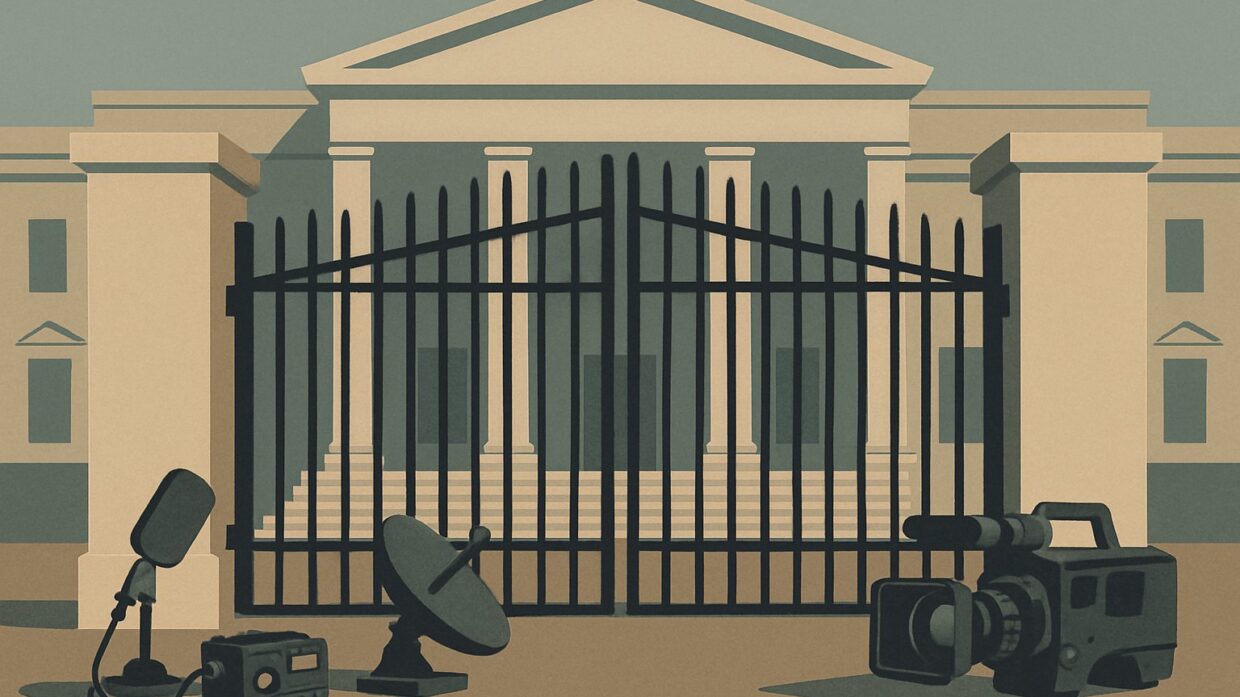
Photo: Well This Is News
Trump bars MSNBC, CNN, Politico from White House after calling their reporting 'fake news'
Trump restricts media access as House GOP leadership distances itself from decision
Trump bans three news outlets from White House grounds; GOP leader says he doesn't know reason
Key Takeaways
- Trump banned three news organizations from White House grounds citing false reporting, but the public record contains no explanation of what specific stories or editorial decisions prompted the decision or when it was made.
- House Republican leadership explicitly declined to defend or justify the ban, with Majority Leader Scalise stating he did not know the president's reasoning when asked directly.
- Neither side has examined what journalistic standard an administration should apply to judge coverage as false, what recourse news organizations have if they disagree with that judgment, or how this decision compares to previous presidential conflicts with the press.
The Analysis
Trump barred three news organizations from White House grounds Saturday after publicly announcing on social media that he had banned CNN, MSNBC, and Politico for what he characterized as persistent false reporting. The ban raises a straightforward constitutional question about government access to facilities and press freedom, but the actual details of what triggered the timing and scope of the restriction remain publicly undisclosed.
The documented sequence is narrow: Trump made a social media post identifying the outlets and his stated reason (false reporting), and the next day journalists from those organizations were denied access to White House grounds. What the public record does not establish is whether there was a specific news story, editorial decision, or reporting pattern that prompted the action on that particular weekend, or whether it reflected a longer accumulation of grievances. The available reporting does not contain Trump's expanded explanation beyond the "fake news" characterization.
The left-leaning framing emphasizes Trump's attack on press freedom and his ongoing pattern of dismissing critical coverage as false. NBC News positioned this as part of his "constant" attacks on these outlets, language that frames the ban as predictable escalation rather than a discrete decision requiring explanation. That framing leaves out the specific editorial or reporting choices by the three outlets that Trump cited, focusing instead on his hostility to negative coverage generally. The emphasis shifts attention toward his rhetoric rather than the journalistic standards question underneath.
The right-leaning framing, represented by the Washington Examiner's coverage of Scalise's response, takes a different approach: it does not defend the ban or explain its rationale, but instead documents that House Republican leadership explicitly declined to justify it. Scalise told ABC News "I don't know" when asked about the decision. That response is itself notable because it suggests distance between the White House and congressional Republicans on the question. The right-framed narrative essentially treats the ban as Trump's personal decision and moves past it rather than mounting a defense of press restrictions.
What neither side foregrounds is the precedent this sets for government access to facilities based on editorial content, or the distinction between Trump's legal authority to manage White House grounds and the policy implications of doing so based on coverage assessment. Neither framing acknowledges prior instances of media access restrictions or the history of presidential conflict with the press. The left emphasizes Trump's hostility; the right documents Republican non-defense of the action. Neither examines what journalistic standard or recourse exists if an administration believes coverage is false, or how that dispute typically resolves outside of access revocation.
The underlying question is whether a president can restrict press access to government facilities as a response to editorial judgment about accuracy. The available reporting does not establish what specific reporting triggered the decision, what standard the administration applied to identify the coverage as false, or whether the three outlets had opportunity to respond before access was revoked. A fuller picture would require those details.
Barring news organizations from government facilities based on coverage disputes erodes the institutional assumption that press access to official spaces is a baseline condition of democratic accountability, not a privilege contingent on editorial favor. Once a president establishes that repeated access denial is an available tool for responding to unfavorable reporting, subsequent administrations inherit that precedent, and the scope of exclusion naturally expands. The absence of a fixed standard for what constitutes disqualifying coverage means future presidents can apply the restriction selectively and inconsistently without meaningful constraint. Congressional silence from both parties signals no institutional counterweight exists to prevent escalation, making this weekend's ban a jurisdictional shift rather than an isolated confrontation.