Photo: Well This Is News
Trump violates First Amendment by barring CNN, Politico, MS NOW from White House
Trump within rights to remove reporters behaving in bad faith from White House
Trump bans reporters from three outlets; officials split on constitutional grounds
Key Takeaways
- No court has definitively ruled whether a president can exclude specific news organizations from White House premises, making this a genuinely unsettled legal question rather than a clear constitutional violation or permission.
- Both sides claim the Constitution already settled this dispute in their favor, but decades of press access conflicts across administrations of both parties remain legally unresolved.
- Trump provided no public explanation for the legal basis or process used to select these three outlets, leaving the standard for what constitutes disqualifying 'bad faith' journalism undefined and subjective.
The Analysis
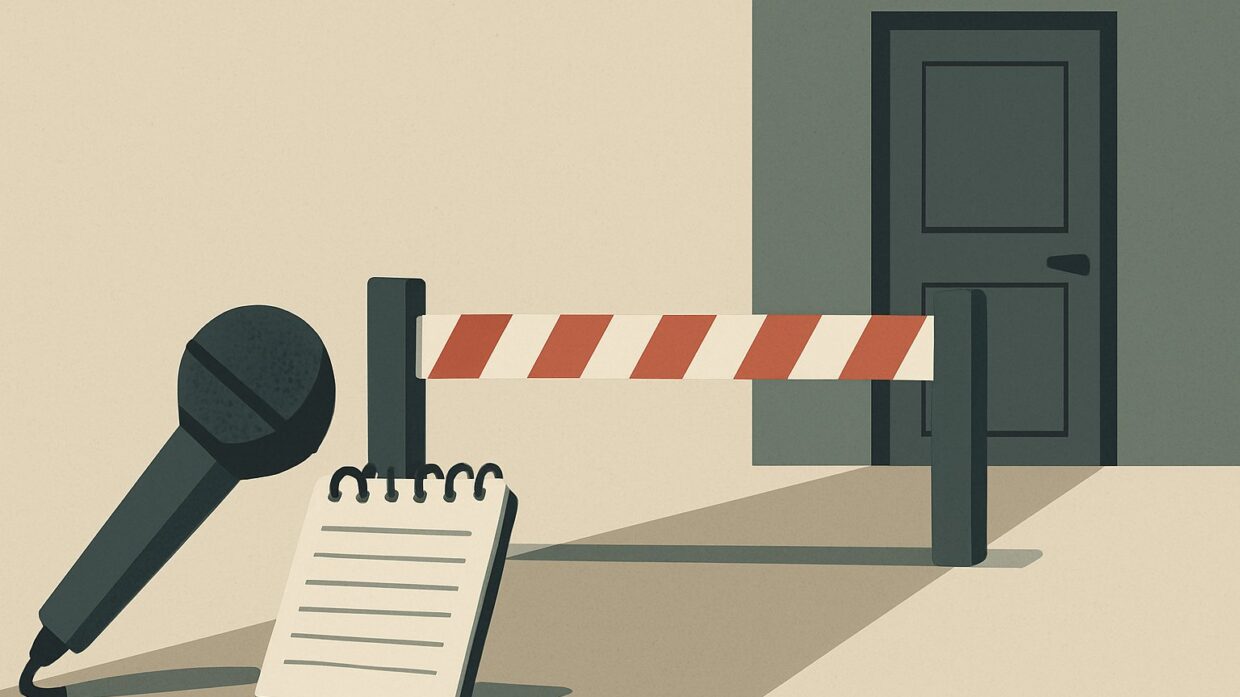
Trump banned reporters from CNN, Politico, and MS NOW from White House access on Friday, and within 48 hours Republicans and Democrats had already hardened into opposite constitutional readings of the same action, each side omitting the legal and historical framework that would complicate their framing.
The factual record is narrow. Trump, as president, excluded journalists from three named outlets from White House premises. The ban was implemented without prior public notice and targeted specific news organizations rather than individual reporters. No source material discloses the formal basis Trump cited for the exclusions or the process by which they were decided.
The left frame, represented by Maryland Gov. Wes Moore, uses language that emphasizes presidential authority overriding constitutional constraint. Moore told CNN that Trump "seems to have a real problem" with the outlets and uses the Constitution "like a suggestion box." This framing treats the ban as evidence of Trump's indifference to constitutional limits, but it does not engage the actual legal question: whether a president has discretionary authority to deny White House access to specific credentialed journalists. That question remains a live legal dispute in American law, not a settled constitutional violation.
The right frame, articulated by Sen. John Barrasso and UN Ambassador Mike Waltz, asserts the ban is constitutionally permissible. Barrasso stated directly that the ban "doesn't violate the U.S. Constitution," while Waltz said Trump is "absolutely within his rights" to exclude reporters "not behaving" in good faith. Waltz's language shifts the grounds from constitutional authority to journalist conduct, implying that bad-faith reporting is a legitimate disqualifier. What this framing leaves unexamined is the standard for determining bad faith and whether a president's subjective judgment about reporter fairness is the same as demonstrated misconduct.
What neither side addresses is the documented history of press access disputes at the White House. The question of whether a president can exclude journalists from premises or from specific briefings has generated litigation and policy disputes across multiple administrations without producing a clear constitutional resolution. The Trump administration in 2017 similarly restricted or denied access to journalists from various outlets, and no court has definitively ruled that such access restrictions violate the First Amendment when applied to the White House itself, as opposed to federal property open to the public generally. Presidents of both parties have attempted to control press access, though the legal and political boundaries remain contested.
The framing both sides offer treats the constitutional question as already settled in their favor, but the available case law does not establish that either side's reading is dispositive. A fuller understanding requires acknowledging that courts have recognized some presidential discretion over White House access while also recognizing limits to that discretion, and those limits remain undefined in the specific context of barring named news organizations from premises.
What neither side is saying is that this dispute will likely require litigation to resolve, and the outcome will depend on whether courts view the White House as a limited-access government office or as a public forum with First Amendment constraints on exclusion. The constitutional question is not whether Trump acted improperly in political judgment, but whether he exceeded legal authority. That remains unanswered.
This ban will force courts to finally define the legal boundary between presidential control over White House premises and First Amendment protections for press access, a distinction that has remained deliberately ambiguous across administrations precisely because no president wanted it clarified. If courts rule the ban illegal, Trump loses a tool future presidents have used; if they rule it legal, the precedent applies equally to Democratic administrations, making this decision the foundation for how press exclusion operates in American government for decades. The litigation will determine whether "the people's house" requires access for credentialed journalists or whether a president can selectively silence coverage deemed unfavorable, transforming the institutional relationship between executive power and democratic accountability at its most visible point.