Photo: Well This Is News
Trump uses college football stage for political visibility ahead of Senate votes
EXCLUSIVE: Trump interviews with Clay Travis at Texas-Tennessee during White House return
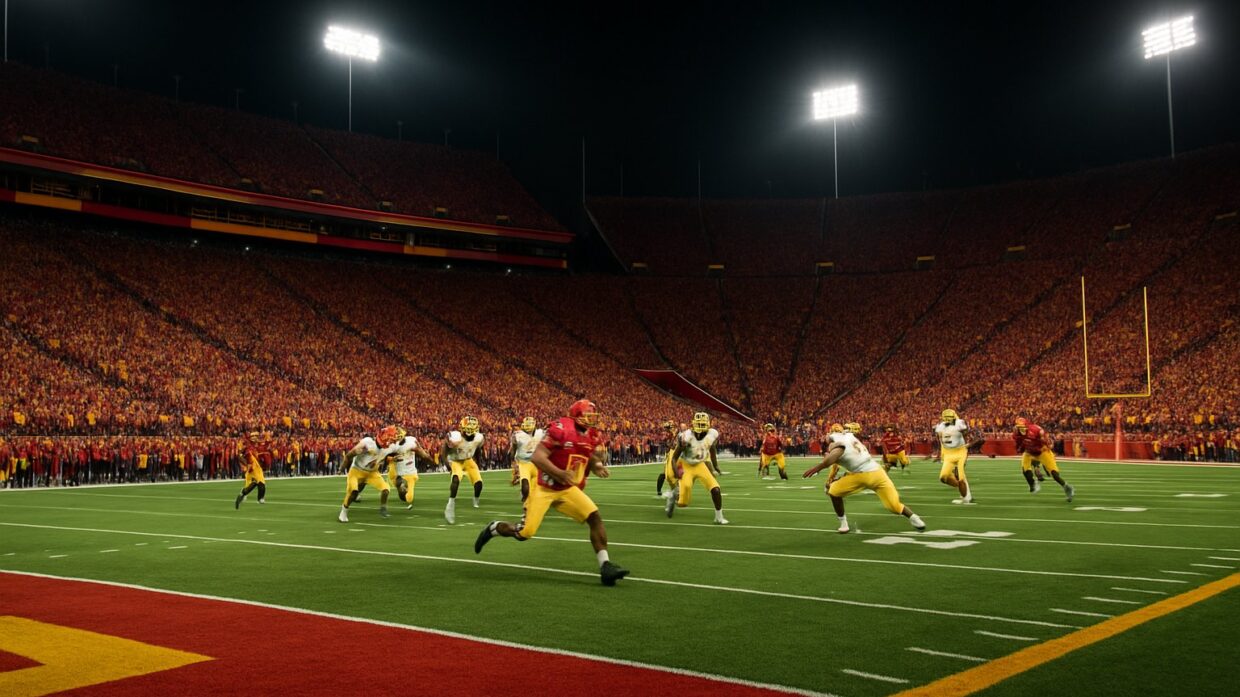
Trump attends Texas-Tennessee game, grants halftime interview to Clay Travis
Key Takeaways
- Trump's appearance at the game occurred the same day as the final Senate opportunity to pass the Protect College Sports Act before recess, but neither major news source explained what that legislation actually does.
- The Protect College Sports Act would restrict college athletes' ability to form unions and collectively bargain over name, image, and likeness rights, yet this substance remained absent from both news accounts of Trump's game attendance.
- Clay Travis, the chosen interviewer, built his platform through criticism of corporate political correctness in sports and maintains consistent Trump alignment, but this communications choice was presented as a factual detail rather than analyzed for its strategic framing.
The Analysis
Trump attended a college football game between Texas and Tennessee on Saturday and granted an exclusive halftime interview to Clay Travis, a sports commentator and founder of Sport & State, before returning to the White House the same afternoon. The reporting of this event splits sharply on what it signifies, but both accounts leave out the same critical context about the timing and legislative stakes.
The documented facts are straightforward. Trump appeared at Neyland Stadium in Knoxville during the Texas-Tennessee game. Clay Travis, who has built a media presence centered on sports commentary with explicitly libertarian and Trump-aligned editorial positioning, conducted a halftime interview with him. Trump departed for Washington the same day. The Hill's coverage, the more neutral source available, notes that this appearance occurred specifically ahead of senators' final opportunity to pass the Protect College Sports Act before a lame-duck recess, though it does not elaborate on what that legislation does or why Trump's attendance might influence its fate.
The Daily Wire's framing treats the interview as intrinsically newsworthy content, emphasizing exclusivity and the fact that the conversation happened during the game itself rather than in a traditional postgame setting. The headline and story structure position this as a media win: Trump granted an exclusive to a sympathetic outlet at a major cultural event. There is no analysis of what Trump said, what legislative position he signaled, or why a college football game was the chosen venue for this statement.
The Hill's framing foregrounds the legislative context. By placing the Trump appearance in the same update as the pending Protect College Sports Act, it signals that the game attendance was politically timed. The coverage suggests this was not a casual fan appearance but a strategic positioning before a Senate vote. However, The Hill does not explain what the Protect College Sports Act actually does, who supports or opposes it, or what Trump's position on it is. A reader would not understand why his presence at this particular game mattered to the bill's prospects.
What neither side addresses is the substance of the Protect College Sports Act itself. That legislation would restrict how college athletes can form unions and would limit their ability to collectively bargain over name, image, and likeness rights. It has drawn opposition from athlete advocacy groups and labor organizations. Trump's legislative agenda on this issue remains undisclosed in both accounts. The Daily Wire does not mention the bill at all. The Hill mentions it only in passing, without explaining its contents. A reader cannot assess whether Trump's appearance signals support, opposition, or indifference.
Equally missing is any explanation of why Clay Travis was the chosen interviewer. Travis built his platform partly through criticism of corporate political correctness in sports and has been consistently favorable to Trump. The choice of outlet and interviewer frames the message for a specific audience but is presented as a factual detail rather than as a communications choice with implications.
The actual headline neither side is writing is this: Trump attended a college football game timed to his influence over pending Senate legislation affecting college athletes, and granted an exclusive interview to a sympathetic commentator whose editorial perspective aligns with Trump's. What that legislative position is remains unknown.
Trump's stadium appearance was not a casual fan outing but a tactical insertion into Senate negotiations over the Protect College Sports Act, legislation that would restrict athlete unionization and collective bargaining rights. By granting an exclusive interview to Clay Travis, a commentator with explicitly Trump-aligned editorial positioning, before senators' final vote window, Trump signaled either support or at minimum investment in the outcome without stating his actual position. The venue and timing transformed a sports event into a legislative messaging opportunity, yet neither major coverage explained what the bill does, who opposes it, or what Trump's appearance committed him to supporting. This gap between strategic action and transparent disclosure about its purpose means voters cannot evaluate whether Trump is backing athlete restrictions, nor can they assess his intervention's weight on senators preparing to vote.