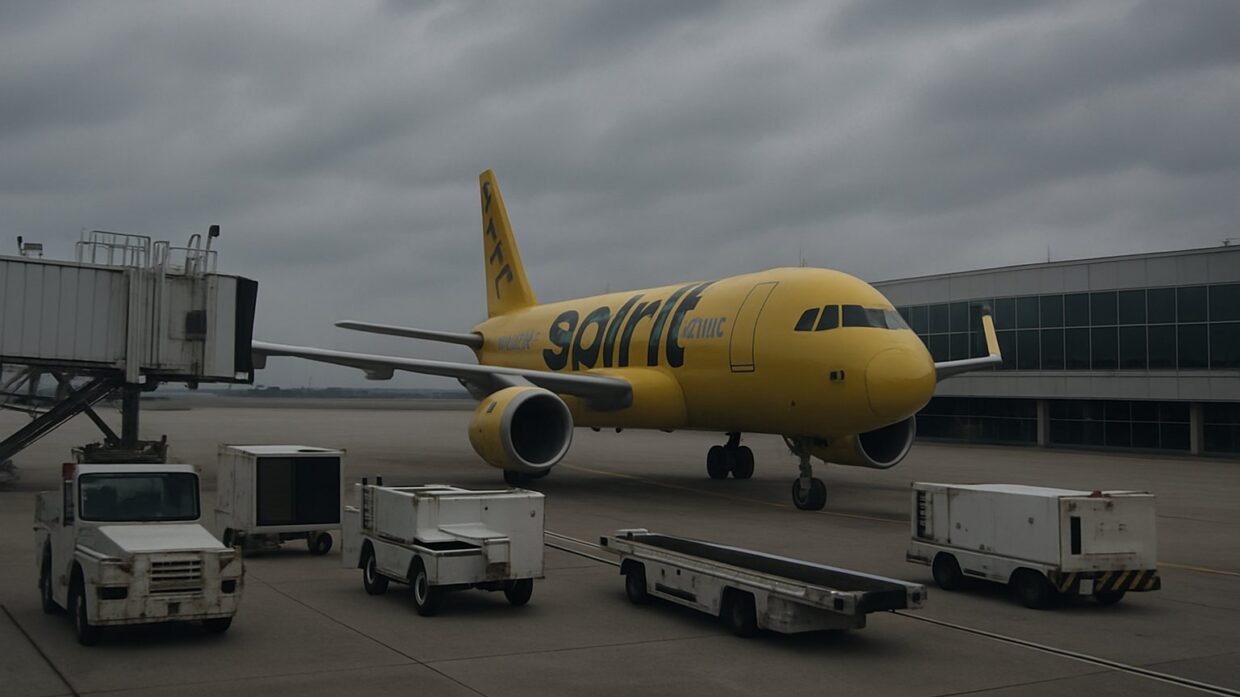
Photo: Well This Is News
Trump Bailout for Spirit Airlines Could Cost Taxpayers Hundreds of Millions
Trump Administration Explores Creative Financing to Save Struggling Airline
Trump Administration Negotiating $500M Rescue for Bankrupt Spirit Airlines
Key Takeaways
- The federal government would gain up to 90% ownership of Spirit Airlines under the rescue structure, meaning the U.S. would become an airline operator rather than making a simple loan.
- Spirit's bankruptcy filings came during a period of robust travel demand in 2022, suggesting structural business failure rather than temporary market problems.
- The $500 million rescue omits exploring whether retraining workers and funding regional transportation alternatives might better serve the 10,000 affected employees than government ownership of a chronically failing carrier.
The Analysis
Spirit Airlines is negotiating a $500 million rescue package with the Trump administration, but both sides of the political aisle are describing the exact same deal in fundamentally different language—which tells you what each side is trying to hide.
The verified facts first: Spirit has filed for Chapter 11 bankruptcy protection twice in under twelve months. The company operates an ultra-low-cost carrier model, competing with Frontier and Allegiant, and has accumulated losses that make independent survival unlikely. The proposed rescue involves a convertible financing facility—meaning the federal government would loan $500 million with the contractual option to convert that debt into equity, giving the U.S. government up to 90% ownership of the company once it exits bankruptcy, according to Bloomberg's reporting, which cites people familiar with the deal.
The left's framing, led by NBC/MSNBC, calls it a "bailout" and emphasizes "taxpayer money." The language choice matters. "Bailout" carries the connotation of rewarding corporate failure—suggesting American taxpayers are absorbing losses without receiving anything in return. This framing is convenient because it omits two things: first, that the government structure involves equity ownership (meaning taxpayers own a piece of what they're funding), and second, that Spirit employs approximately 10,000 people, a fact neither the left-leaning coverage nor the right-leaning coverage emphasizes.
The right's framing, via The Daily Wire, calls it a "financial lifeline" and describes the mechanism as "creative financing" that "allows the airline to restructure debt." This language choice is equally selective. It emphasizes innovation and problem-solving while obscuring the scale of government intervention—$500 million is not a small amount, and 90% ownership means the government is not providing finance; it's acquiring the company. The right's framing also omits Spirit's actual operational failures: the company has been poorly managed, has had repeated mechanical issues that invite FAA scrutiny, and has alienated customers through aggressive fee structures. Those facts don't fit the "just needs a little help" narrative.
What neither side is saying: This is the third time in five years the U.S. airline industry has come to the federal government. The 2020 CARES Act provided $58 billion in payroll support to airlines. In 2023, regional carriers again lobbied for subsidies. Each time, the industry frames it as job preservation. Each time, the government accepts it on those terms. But Spirit was already struggling in 2022 when travel demand was robust—suggesting the problem is not temporary market conditions but structural business failure.
The actual headline: The Trump administration is considering 90% government ownership of an airline that has failed twice in a year, disguised as a loan to a private company. Left media calls it a taxpayer burden. Right media calls it creative restructuring. Neither acknowledges that the U.S. government is becoming an airline operator, or asks whether $500 million deployed to worker retraining and regional transportation alternatives might serve the actual affected workers better than owning a chronically failed carrier.
Allowing a chronically mismanaged airline to fail twice in twelve months and then rescue it with near-total government ownership sets a precedent that federal resources flow to corporate dysfunction rather than to the workers and communities that actually need transition support.