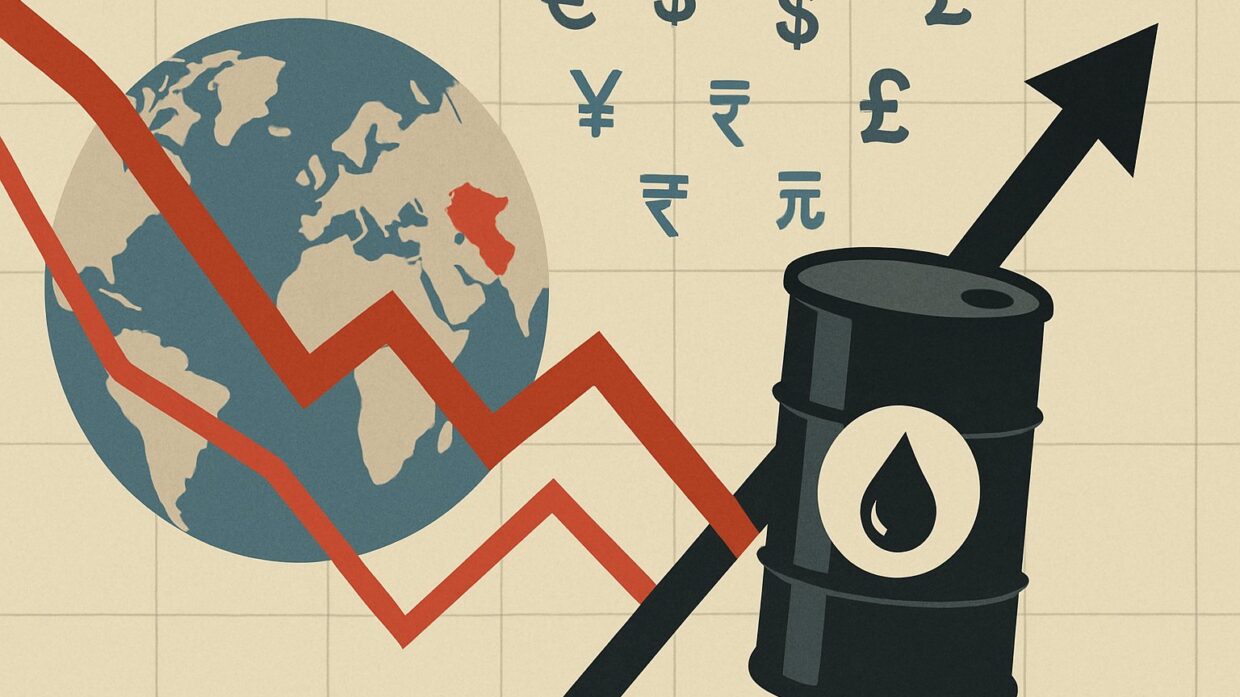
Photo: Well This Is News
Tech stocks erase $1 trillion as oil surges past $110 amid geopolitical tensions
We haven't found a right-leaning take on this story yet.
Breaking stories sometimes publish before every side has covered them. We'd rather show you that than invent a view.
Tech stocks fall $1T as oil reaches $110 for first time since May
Key Takeaways
- The reporting never explains whether the $110 oil price reflects actual supply disruptions from Iran and Ukraine or merely abstract risk premiums added to prices because of geopolitical tension.
- Oil at $110 is compared only to May prices, not to historical context like the 2008 peak of $147 or demand destruction thresholds that would determine if this price is genuinely concerning.
- The $1 trillion tech stock decline may reflect either rational repricing of macroeconomic risk or panic selling unrelated to oil prices, but reporting does not distinguish between these scenarios.
The Analysis
Oil reached $110 per barrel Friday for the first time since May, and tech stocks shed $1 trillion in value the same day, but the reporting glosses over a critical connection: what caused the price spike matters enormously for determining whether this selloff reflects fundamental risk or temporary volatility.
Brent crude, the international benchmark, hit $110 during Friday trading. The Hill attributes this to "persistent shocks from the U.S.-Iran and Russia-Ukraine wars." NBC News uses the same framing: "oil surged" as these conflicts persist. MarketWatch focuses exclusively on technical indicators and warns against buying the dip, citing chart patterns that "suggest there's more pain ahead." None of the three sources quantifies what portion of the $110 price reflects each geopolitical factor, or whether new information emerged Friday that caused the spike or whether this was a continuation of an earlier trend.
The left framing emphasizes oil as a victim of geopolitical instability, using the word "surges" and "shocks" to suggest sudden, external disruption. This language implies that markets are responding rationally to real threats, and that tech stocks fell as a secondary consequence of energy market stress. The omission: NBC News does not establish whether institutional investors are pricing in physical supply disruptions or whether they are pricing in the abstract risk premium that geopolitical tension adds. The first would justify the tech selloff; the second might not.
The neutral sources take different approaches. The Hill presents the price move as factual, naming the two geopolitical events but not claiming they caused the spike. MarketWatch bypasses geopolitics entirely and frames the question as technical: should investors buy this dip? The implied answer is no, based on chart patterns. This framing leaves out why those patterns formed in the first place, treating the price action as independently meaningful rather than as a symptom of something else.
What neither side adequately addresses is whether oil at $110 is historically significant or cyclically normal. May prices are mentioned, but no context on whether $110 is near structural ceilings for demand destruction, or whether it remains well below the 2008 peak of $147. The reporting also does not establish whether the $1 trillion tech stock decline is concentrated in energy-sensitive sectors like financials and industrials, or whether it represents broad-based flight from growth equities. That distinction determines whether the market is making a rational adjustment or whether it is in panic mode.
The underlying question is whether Friday's moves represent a repricing of genuine macroeconomic risk or a technical unwinding after earlier gains. Oil at $110 suppresses demand for growth-stage companies. But the reporting does not confirm whether the geopolitical triggers are new or whether markets are simply catching up to information already in the public domain. One plausible interpretation is that institutional investors are de-risking ahead of expected data or policy announcements, and oil and tech are falling together as a result of higher interest rate expectations, not because of a causal link between energy and technology. The available reporting does not rule that out.
If oil prices are driven by genuine supply disruptions rather than speculative risk premiums, central banks face pressure to tolerate higher inflation rather than aggressively raising rates, fundamentally altering the calculus for tech valuations and potentially locking in the stock market losses as structural rather than cyclical. Conversely, if Friday's spike reflects abstract geopolitical anxiety rather than imminent physical shortages, aggressive rate hikes remain viable, which could actually support tech stocks that have already priced in recession fears. The $1 trillion decline means nothing without clarity on causation: reporting that conflates geopolitical tension with measurable supply constraints obscures whether institutional investors are responding to real economic tightening or simply rotating out of overvalued growth stocks, leaving policymakers and investors unable to distinguish between a genuine commodity shock requiring monetary accommodation and a tactical repricing requiring patience.