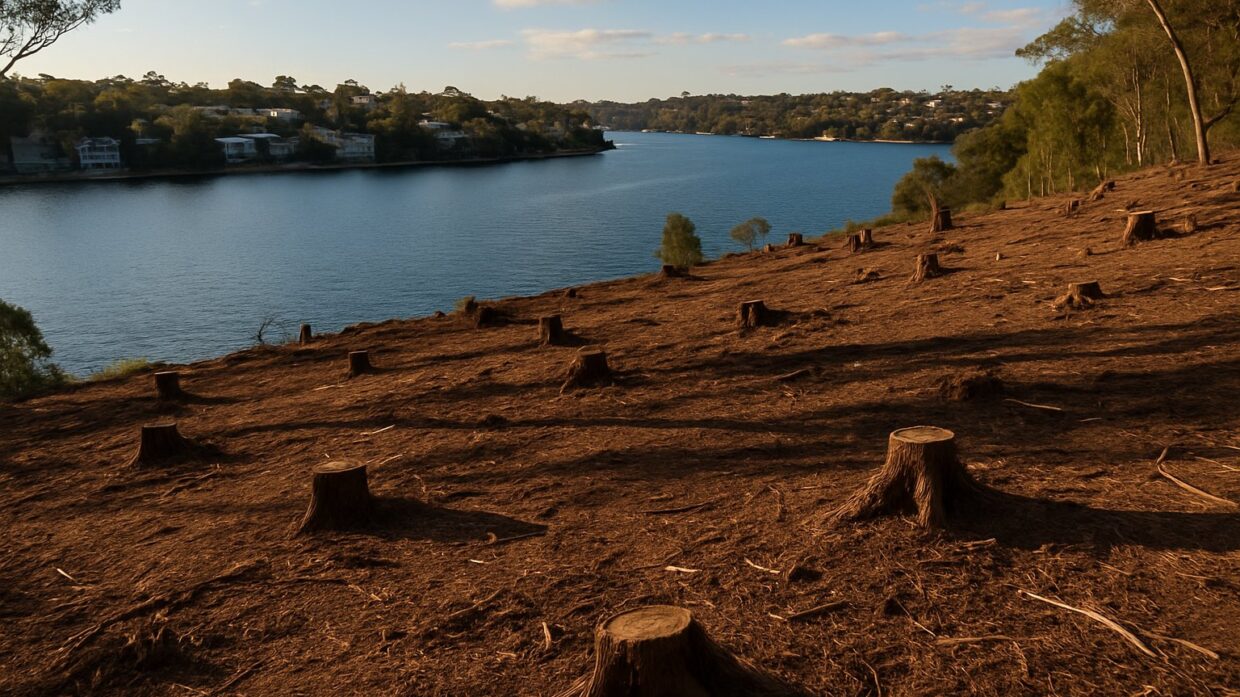
Photo: Well This Is News
Local Council Calls Mass Tree Removal 'Worst Environmental Vandalism in Lane Cove History'
Property Owner Faces Near-Record Fine for Unauthorized Landscaping on Private Land
Sydney Gardener Fined $200,000 for Removing 287 Trees Without Permit
Key Takeaways
- Neither reporting nor council statements disclosed what specific laws governed tree removal on this property, what notice requirements applied beforehand, or whether the property owner had received prior warnings.
- The reporting treats 287 trees as the key detail but omits the species, age, size, and location of the removed vegetation on the property, information that would materially change how serious the removal actually was.
- It remains unclear whether the fine represents routine enforcement of well-known tree protection rules or an exceptional interpretation applied for the first time in this case.
The Analysis
A Sydney property owner has been fined approximately $200,000 for removing 287 trees without council approval, but the reporting obscures a critical jurisdictional question: what specific laws govern tree removal on private land, and what notice or permitting requirements actually existed before the removal occurred.
The verified facts are these. A gardener removed 287 trees from a harbourside property in Longueville. Lane Cove council, the local authority with jurisdiction over the area, described the incident as the "worst act of environmental vandalism in Lane Cove history." The gardener was fined approximately $200,000. The removal appears to have been done to improve water views for the property owner. The Guardian reported this as the lead story, using language like "vandalism" and framing the removal as unauthorized.
What the left framing emphasizes is environmental protection and the scale of the violation. The Guardian's headline and opening move immediately to the council's characterization of the incident as "vandalism," language that transforms a property action into a crime against the public good. The framing omits what the actual legal standard was. What permits, if any, were required before removal? What notice must an owner provide? What is the enforcement mechanism? The reporting does not establish whether the gardener and owner simply ignored known requirements, or whether the legal requirement itself was ambiguous or newly enforced. By leading with "vandalism" and the council's moral judgment rather than the legal basis for the fine, the framing positions the story as a victory for environmental protection rather than as a question about how much oversight councils exercise over private land.
The right's frame, not represented in the available sources but plausible given the facts, would emphasize private property rights and the breadth of regulatory reach. A property owner removed trees from land he owns. The fine of $200,000 suggests a council authority so expansive that landscaping decisions on private property can trigger six-figure penalties. This framing would ask: what tree protection law permits a local authority to fine a property owner this amount for work on private land? The question is not whether environmental protection matters, but whether the regulatory apparatus has grown beyond traditional property law boundaries.
What neither framing addresses is the specific statutory basis for the fine, the notice requirements that applied, and whether the property owner had been warned in advance that removal would violate law. The reporting does not establish whether the owner ignored a known prohibition or whether the application of the law to this case was novel. It also does not disclose what the 287 trees were, their age, species, or location on the property. A property with significant mature trees removed is one story; a property where a gardener cleared understory vegetation or smaller specimens is materially different, but the reporting treats 287 as the sole meaningful detail.
The underlying question is how Australian tree protection law actually operates on private property, what property owners must know or do to comply, and whether this fine represents standard enforcement or an exceptional case. The available reporting does not answer these questions. A reader knows only that a council views the action as vandalism and that a fine was imposed. Whether the law was clear, the property owner was warned, or similar removals are routinely permitted in other contexts remains undisclosed.
Council fines for tree removal on private property will expand if this case establishes precedent without clarifying the statutory threshold. Lane Cove's $200,000 penalty signals that local authorities can impose six-figure costs for landscaping decisions on owned land, shifting property law boundaries in ways that affect all Sydney landowners. Future disputes will hinge on whether courts treat this fine as enforcement of explicit pre-existing requirements or as novel application of vague tree protection statutes. If the latter, property owners face retroactive liability for actions taken under ambiguous rules. The real consequence is not environmental vindication but institutional empowerment of councils to define and punish tree removal after the fact, making compliance impossible because the legal standard existed only in the council's interpretation.