Photo: Well This Is News
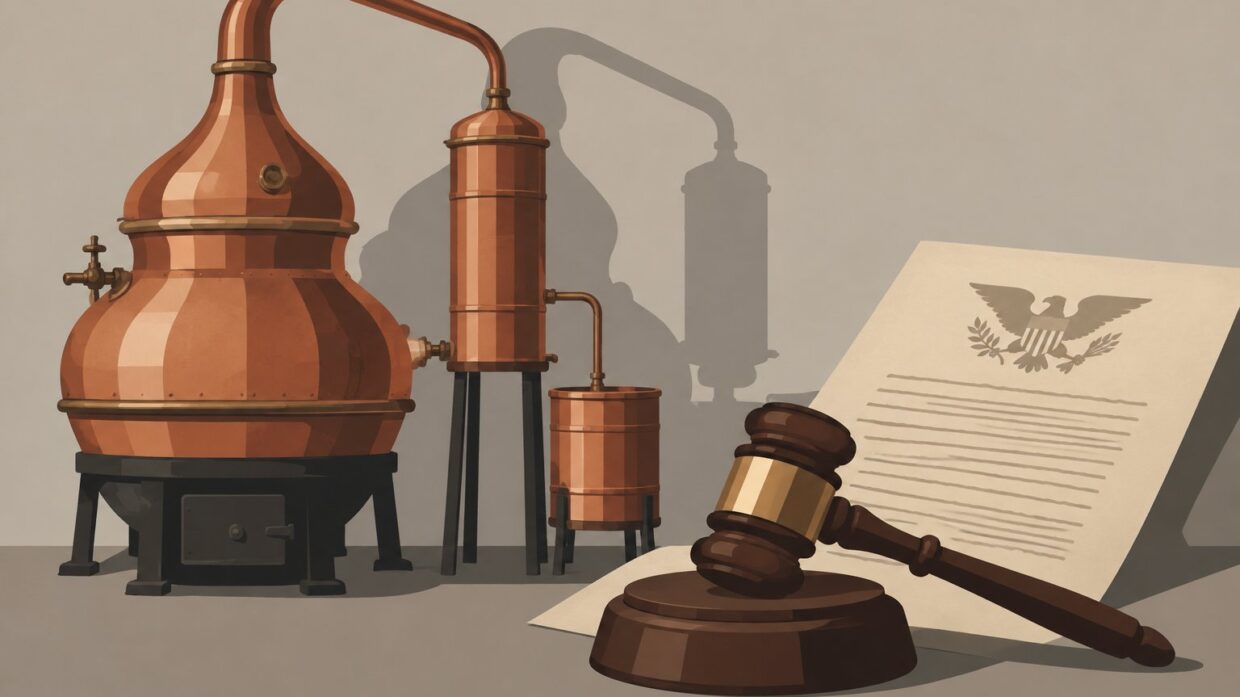
Supreme Court takes up case that could strike down federal ban on home distilling
Supreme Court considers whether federal government overstepped with home distilling ban
Supreme Court to weigh constitutionality of 160-year-old home distilling ban
The Analysis
The Supreme Court's decision to hear a challenge to the federal home distilling ban exposes a substantive constitutional question that both left and right coverage has underplayed, and one that hinges on how narrowly the government can restrict conduct when closely related conduct is already permitted.
The established facts are these: Federal law prohibits distilling spirits at home but permits home fermentation of beer (up to 100 gallons per person annually) and wine (similarly limited). A federal appeals court found the distilling ban unconstitutional. The Trump administration urged the Supreme Court to take the case and reverse that lower court decision. The justices agreed to hear it.
The left framing, present in NBC's coverage, emphasizes the word "strike down" and connects this case to a narrative of individual liberty and choice. NBC's headline uses the phrase "High spirits" and references the case as determining the "fate" of the ban, language that tilts toward viewing the ban as an obstacle to remove. The reporting acknowledges that home beer and wine production are already legal, but does not fully explain the constitutional tension this creates: if the government permits home fermentation but bans home distillation, on what constitutional grounds does that distinction rest? That omission matters because it's the core of the case.
The right framing, present in the Washington Examiner, emphasizes "oversteps" and "powers," shifting the focus from individual liberty to federalism and constitutional limits on government authority. The Examiner's language around the Trump administration "urging" the justices to intervene frames this as a separation-of-powers issue rather than a consumer choice issue. What this framing leaves out is equally significant: it does not engage with the government's actual rationale for the distilling ban, which centers on tax enforcement and preventing unlicensed commercial production, not abstract notions of federal overreach.
What neither side fully captures is the specific historical context. The distilling ban dates to Reconstruction-era tax policy designed to fund the federal government after the Civil War. Home fermentation of beer and wine were exempted from those same restrictions in 1978, during the Carter administration. The constitutional question is not whether the government can regulate alcohol, but whether the specific distinction between permitting fermentation and prohibiting distillation survives rational basis review, the lowest level of constitutional scrutiny. That is a narrower question than either framing suggests.
The Trump administration's involvement also warrants specificity. The available reporting indicates the administration took the position that the lower court's constitutional holding was incorrect, but the reporting does not establish the administration's reasoning beyond calling it a "blink" at precedent. One plausible interpretation is that the administration viewed the decision as a threat to other federal regulatory distinctions of similar structure. That remains unclear from the sources provided.
The real headline is that the Supreme Court will decide whether a tax-driven regulatory distinction created in 1865 and partially modified in 1978 can survive a constitutional challenge grounded in the logic of its own exemptions. That is more technical than either side's framing suggests, and less dramatic than either hopes.