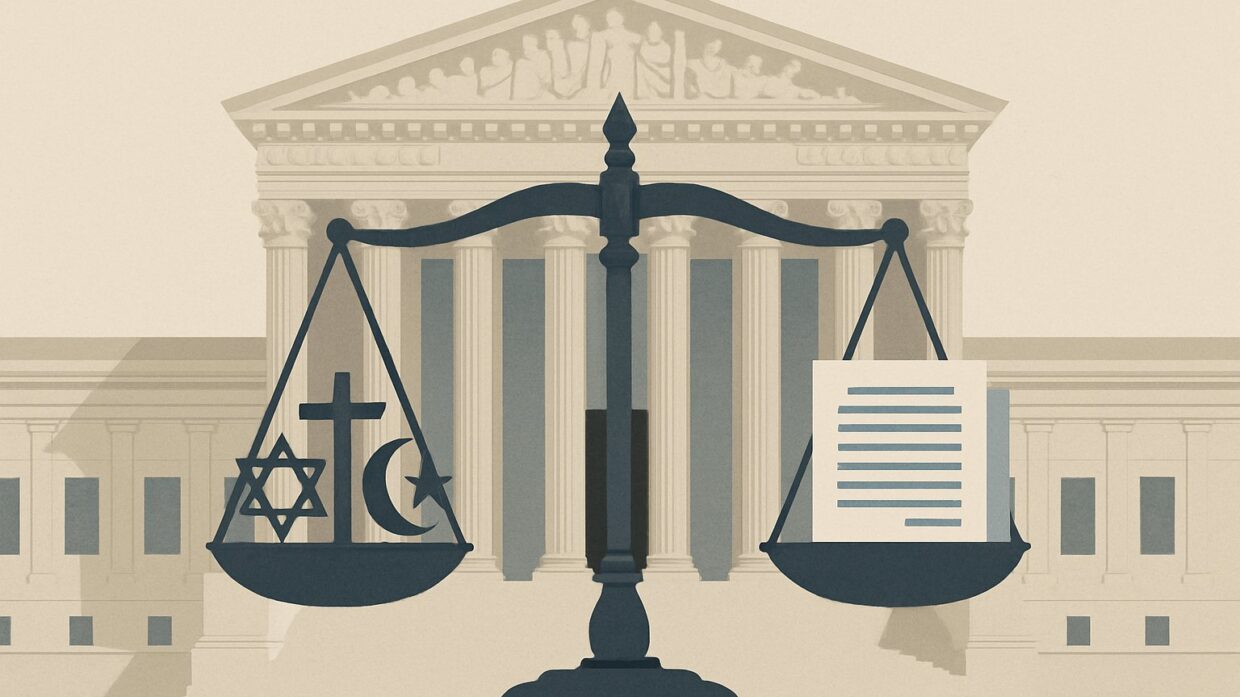
Photo: Well This Is News
Supreme Court strips protections from prisoners and immigrants while expanding religious exemptions
Supreme Court reasserts constitutional limits on government power and judicial overreach
Supreme Court ends term with major rulings on religious liberty, immigration, and congressional power
Key Takeaways
- The Court simultaneously expanded religious liberty protections in some contexts while narrowing remedies for prisoners and green card holders in others, creating an unexplained doctrinal split that applies different standards based on who the defendant is.
- The pattern cannot be explained as neutral application of standing doctrine alone, since the Court's recent religious liberty cases rest on protecting sincere religious exercise from substantial government burden, the exact fact pattern present in the Landor case.
- Major decisions on birthright citizenship and presidential authority over Federal Reserve appointees remain pending, meaning the Court's full doctrinal direction for this term will not be clear until final rulings are issued.
The Analysis
The Supreme Court's final decisions before its recess reveal a tension that neither the left nor the right is fully naming: the Court is not consistently applying its own doctrines, but rather appears to apply different standards depending on who is suing the government.
The specific facts establish this pattern clearly. In the case of Damon Landor, a Rastafari prisoner held in a Louisiana facility, the Court declined to protect what lawyers described as one of the most obvious religious liberty violations on record. Landor maintained dreadlocks as a religious vow for over two decades before incarceration. Louisiana's prison policy prohibited him from keeping them. Yet the Court has simultaneously expanded religious liberty protections in cases like the one referenced in National Review's coverage of standing doctrine, where the emphasis falls on protecting individuals' ability to assert constitutional rights.
The left frames this as hypocrisy: the Court has built an expansive religious liberty doctrine in recent terms, but those protections mysteriously narrow when the defendant is the government itself rather than a private employer or healthcare provider. MSNBC and Vox coverage emphasizes that the Court claims to prioritize religious freedom, yet denies it to the least powerful people in the system. Mother Jones names the specific mechanism: the Court weakened the Religious Freedom Restoration Act's applicability in federal prisons by narrowing who can sue under the statute, effectively giving what the outlet calls a "blank check" to prison authorities.
The right frames this differently. National Review's coverage emphasizes that the Court carefully examined the question of who has legal standing to sue, not whether religious liberty itself was protected. The framing suggests that standing doctrine imposes neutral, structural limits on judicial power rather than partisan outcomes. The right does not foreground the Landor case in available coverage, instead emphasizing broader questions about the separation of powers and the limits of congressional authority through the spending clause.
What neither side fully captures is the precedential contradiction at work. The Court's recent religious liberty expansion, particularly in cases like Burwell v. Hobby Lobby and subsequent decisions, rested on the principle that sincere religious exercise deserves protection from substantial government burden. Landor's case presents exactly that fact pattern: a sincere religious practice, maintained for decades, substantially burdened by government regulation. The question is not whether standing doctrine is neutral, but whether it is being applied consistently across cases where the defendant changes.
The Court also issued a ruling on due process protections for green card holders that Mother Jones characterizes as stripping protections while National Review does not emphasize it in available excerpts. The ruling appears to narrow when the government can be sued for immigration violations, reducing remedies available to permanent residents facing deportation or detention.
The public record does not establish whether the Court made explicit calculations about treating religious liberty claims differently based on who the defendant is, or whether these outcomes flow from neutral application of standing and jurisdictional doctrines. What the decisions do establish is a pattern: religious liberty protections expand when private entities or states are defendants, and narrow when the federal government is the defendant.
The Supreme Court's term-ending decisions expose a structural vulnerability in American constitutional law: religious liberty doctrine now operates as a one-way ratchet that expands protections against private employers and states while contracting them against federal authorities. By denying Louisiana prisoner Damon Landor protection for maintaining dreadlocks as sincere religious practice, the Court narrowed Religious Freedom Restoration Act standing in ways that create a constitutional immunity zone around federal prisons and immigration enforcement. This precedent will metastasize through institutional practice. Federal agencies will cite the standing contraction to insulate policies from judicial review, creating de facto religious liberty exemptions for government actors. State and local governments facing similar restrictions will face different doctrinal standards, fragmenting constitutional protection along defendant identity lines rather than constitutional principle.