Photo: Well This Is News
Trump's stock boom masks economic inequality and hollow wage growth
Markets rally under Trump 2.0 despite media predictions of collapse
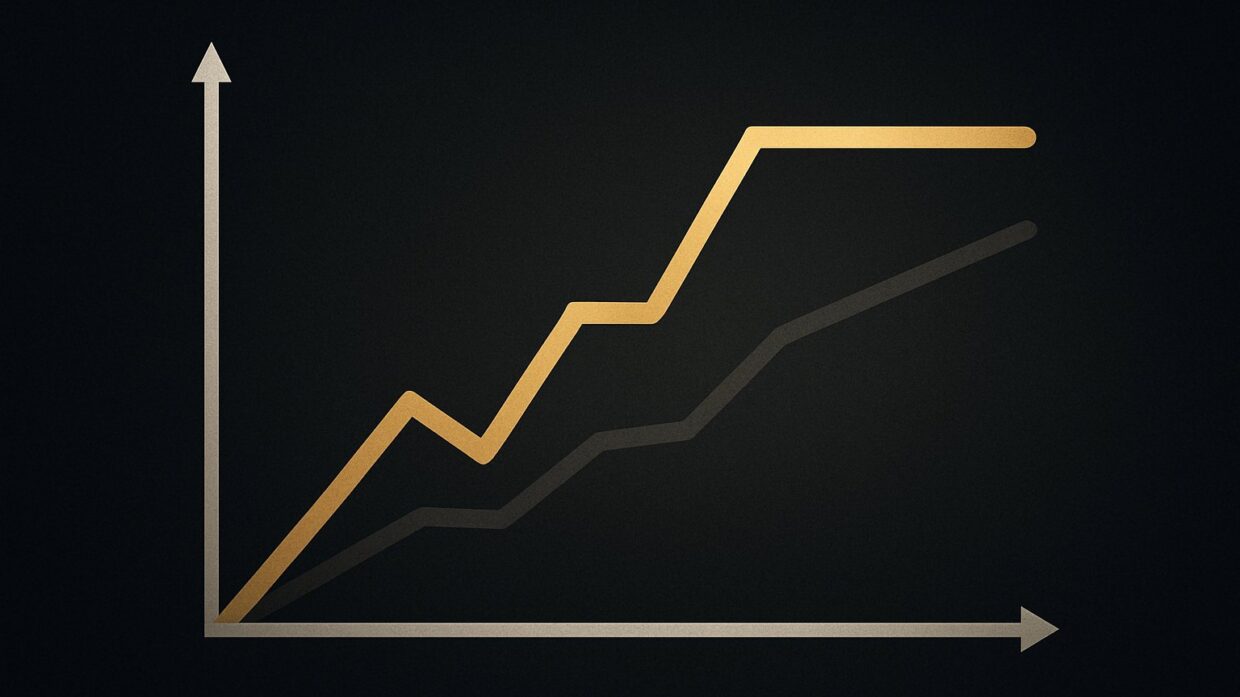
Stock market in Trump's second term lags first term pace through 20 months
Key Takeaways
- Stock market gains during Trump's second term have grown more slowly than the same 20-month period in his first term, a crucial fact neither side is highlighting.
- The three specific valuation risks analysts cite remain unnamed and unexplained in reporting, leaving readers unable to assess whether they represent structural problems or routine market cycle concerns.
- Trump treats stock market performance as the primary measure of economic health, but this metric alone cannot capture employment, wage growth, and inflation trends that require separate analysis to determine actual economic condition.
The Analysis
The stock market expanded during Trump's second term through September 2026, but the data Axios compiled from Financial Modeling Prep reveals a specific historical fact neither side is emphasizing: the 20-month gain in Trump 2.0 underperformed the identical period in Trump's first term. This is the opposite of the narrative both supporters and critics are building.
What actually happened: The S&P 500 and related indices rose during the first 20 months of the second Trump administration, making it a positive period by absolute measure. However, the comparative performance against Trump's first term shows a slower rate of growth. Investing.com reporting identifies three specific valuation risks that analysts cite: the story does not disclose which analyst made this claim or what the three risks are, but the framing suggests structural concerns independent of political leadership.
The right frames this as validation of Trump's pro-business agenda. The headline construction from the right side emphasizes that markets "rallied" despite media predictions of failure. This language choices matter. It does not claim growth exceeded prior periods. It instead constructs the story around media predictions that did not materialize. It leaves out the comparative underperformance relative to Trump's first term. The frame shifts attention from the data to the media's failed forecasting.
The left frames this as evidence of inequality decoupled from broad prosperity. This perspective emphasizes that stock gains do not translate to wage growth for workers, and that valuation risks suggest fragility. The language here uses "masks" and "hollow" to describe the disconnect. It leaves out any acknowledgment that stock portfolios represent retirement savings for 60 million Americans. The omission is significant because it allows a cleaner narrative about Wall Street versus workers, but obscures the distributional question: who owns the stocks that are rising?
What neither framing establishes is why Trump 2.0 underperformed Trump 1.0 in comparable time periods. This raises specific questions the reporting does not answer. Did rate environments differ? Did investor expectations shift? Did policy certainty matter more in year one than year two? The Axios comparison provides the historical fact but not the causal explanation.
The three valuation risks Investing.com mentions remain unnamed in the available reporting. This is a critical omission. Without knowing what those risks are, readers cannot assess whether they are structural concerns specific to current market conditions or recycled concerns that appear in every market cycle. The reporting does not establish whether these risks are different or worse than previous periods.
Trump himself has stated the stock market is a proxy for the economy. The reporting notes this preference without contesting it. But the data itself complicates that equivalence: markets are up but at a slower pace than his first term, while employment data, inflation, and wage growth would require separate analysis not fully present in these sources. The stock market is one metric, not the economy.
The underlying question is whether markets are pricing in sustainable confidence in Trump 2.0 policies or whether they are reflecting corporate profit margins and financial engineering that could unwind if the three unnamed risks materialize. Neither the left nor right framing gives readers the specific factors to evaluate that themselves.
Slower market gains in Trump's second term will reshape how both parties measure economic success going forward. If comparative underperformance persists, it undermines the core claim that Trump policies automatically unlock stock market growth, forcing Republicans to explain why identical pro-business approaches yielded different results across administrations. Democrats gain credibility arguing markets decouple from worker prosperity, but only if they identify the specific unnamed valuation risks and explain whether they represent genuine structural problems or normal market cycles. The real institutional consequence: future presidents will face higher evidentiary standards when claiming market performance validates their economic agenda, since this comparison proves such claims require historical context, not just absolute gains.