Photo: Well This Is News
Democratic States Sue to Block Trump's 'Wealth Test' Blocking Immigrants from Benefits
New York Sues Trump Admin To Allow Foreigners on Welfare To Enter Country
States and Cities Challenge Trump's Expanded 'Public Charge' Immigration Rule
Key Takeaways
- Multiple presidential administrations since 1996 have adjusted the 'public charge' standard in different directions without the same level of legal challenge, suggesting the controversy may reflect political changes as much as legal overreach.
- The core dispute is really about administrative power and process, not whether immigrants should access benefits, since the underlying statute from 1952 has been interpreted differently by each administration.
- Neither the lawsuit nor the administration's defense directly engages whether the Trump rule complied with required regulatory procedures, which may be the actual legal vulnerability or strength of the policy.
The Analysis
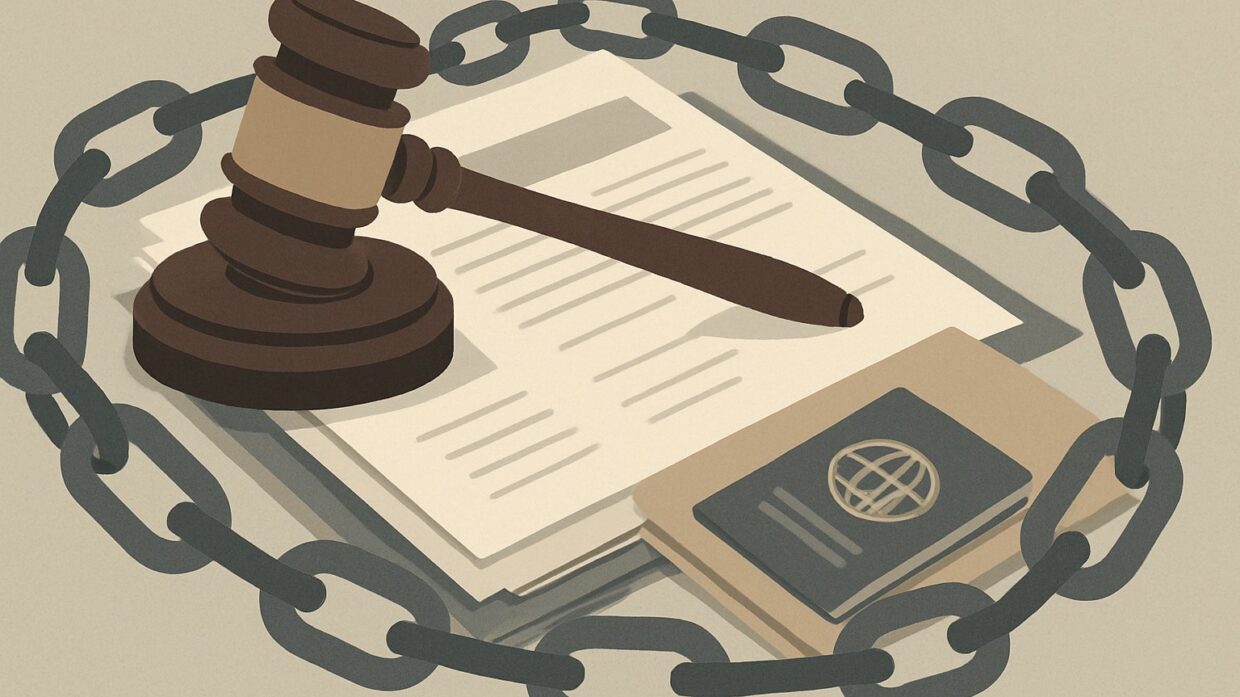
Twenty-two states and Washington, D.C., filed a lawsuit September 2026 challenging a Trump administration rule that tightens the 'public charge' standard for immigrants seeking permanent residency or entry to the United States. What both the legal challenge and the political response to it omit is that this rule builds on criteria that have existed since the 1996 welfare reform law, and that multiple administrations have adjusted the threshold without generating identical controversy.
The documented facts: The Trump administration expanded what counts as relying on 'public charge' to include programs like Supplemental Nutrition Assistance Program (SNAP) and housing vouchers, not just cash assistance. Previously, the threshold was narrower. The 22 states filing the lawsuit are led by New York, which argues the rule is unlawfully broad and will cause immigrants and mixed-status families to avoid public services entirely, worsening public health outcomes. New York City Mayor Zohran Mamdani stated the rule would 'shield foreigners from receiving visas or green cards if they are on welfare,' according to The Daily Wire's framing of the filing.
The left's framing, visible in Mother Jones and The Hill's reporting, emphasizes the rule as an unlawful 'wealth test' that restricts entry based on economic status. The language used by challengers focuses on the breadth of the expansion and its disparate impact on low-income immigrants. This framing leaves out several contextual elements: that the Obama administration also enforced public charge rules, that the standard for what counts as 'public charge' has been contested and adjusted multiple times since 1996, and that prior administrations also tightened enforcement without this same level of legal challenge.
The right's framing, seen in The Daily Wire, uses the phrase 'shield foreigners using welfare' and emphasizes that the rule restricts access to visas and green cards for people receiving welfare benefits. This framing does not engage with the legal argument about whether the expansion exceeds statutory authority, nor does it note that the determination of what counts as 'public charge' is a matter of regulatory interpretation rather than settled statutory text. It emphasizes the protection of welfare access rather than examining what the rule actually changes about who qualifies.
What neither side fully captures is the regulatory history of the public charge doctrine itself. The Immigration and Nationality Act of 1952 established the basic standard, requiring immigration officers to determine if an immigrant is likely to become a 'public charge.' The 1996 welfare reform law (PRWORA) limited what benefits counted. The Obama administration issued guidance in 1999 narrowing enforcement. The Trump administration's 2020 rule expanded the interpretation. Now this 2026 expansion faces legal challenge. The pattern suggests that administrations interpret the same statute differently based on policy priorities, and that the boundaries of permissible administrative action in this domain remain genuinely contested.
The underlying tension is not primarily about whether immigrants should receive public benefits, but about who decides the threshold for determining 'public charge' status, whether that threshold must be tied to specific statutory language, and what process regulators must follow before expanding it. The litigation will likely turn on administrative law questions rather than the merits of immigration policy itself.
States challenging Trump's expanded public charge rule are fighting over administrative interpretation rather than statutory authority itself. The legal outcome will establish precedent for how broadly future administrations can redefine eligibility criteria within existing statutes. If courts defer to the Trump rule's interpretation, subsequent administrations gain latitude to expand public charge definitions further or apply similar expansions to other immigrant benefit determinations. If courts reject it, they constrain regulatory flexibility but potentially invite Congress to legislate the standard more precisely, ending decades of administrative drift. The case ultimately determines whether public charge doctrine remains a tool for adjusting immigration selectivity through regulatory reinterpretation or whether courts will impose textual limits on executive discretion in this domain.