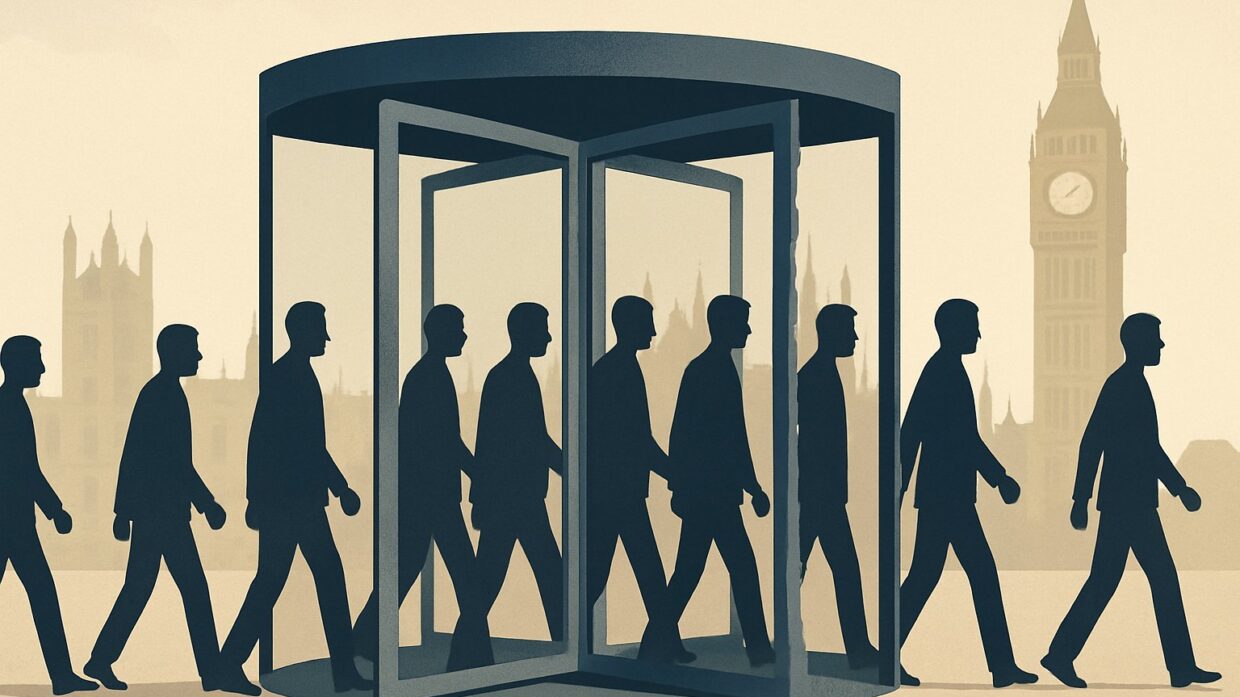
Photo: Well This Is News
Starmer steps down as Labour faces internal crisis; Burnham positioned to succeed
Starmer quits after two years of chaos, free speech crackdowns, and controversies
Starmer resigns as UK PM after party rebellion; seventh leader in decade
Key Takeaways
- No coverage explains what specific trigger caused Labour MPs to lose confidence in Starmer between his 2024 landslide election victory and his June 2026 resignation, leaving the actual cause of the rebellion unclear.
- Britain's seventh prime minister in ten years reveals an institutional pattern of leadership instability that extends far beyond any single politician's performance.
- The rebellion could reflect genuine policy disagreement, concerns about electoral viability, internal factional power struggles, or some combination, but available reporting does not establish which drove the actual outcome.
The Analysis
Keir Starmer resigned as British Prime Minister on Monday after losing the backing of his own Labour MPs, making Britain the home of seven prime ministers in ten years. What the coverage establishes clearly differs sharply in emphasis: the left reports a factual political transition; the right documents what it frames as a tenure defined by policy failures and speech restrictions. Neither framing fully captures what made this collapse happen or what it suggests about Labour's structural problems.
Starmer won the 2024 general election with a landslide victory. He became prime minister in July 2024 and announced his resignation in June 2026, serving approximately 23 months. The specific trigger for the resignation was a rebellion among Labour MPs that made his position untenable. According to the sources, Andy Burnham, who won a special election in Makerfield last week, is the clear favourite to succeed him as Labour leader. The party will conduct a leadership election to choose Starmer's successor, and Starmer has indicated he will remain prime minister during that process.
The left's framing, represented by NPR and MSNBC, emphasizes the procedural aspects: that Starmer faced a party rebellion, that there was a leadership transition underway, and that Burnham was positioned to succeed. This language is procedurally accurate but leaves out what the rebellion was about. The left coverage does not foreground the specific controversies that weakened Starmer's authority, including decisions around free speech prosecutions, the handling of grooming gang cases, or the timing of Palestinian statehood recognition. By treating the resignation as a straightforward political consequence of internal pressure, the left coverage avoids explaining why the pressure became overwhelming.
The right's framing, through The Daily Wire and Breitbart, explicitly connects the resignation to policy failures and what it characterizes as civil liberties concerns. The Daily Wire specifically mentions free speech crackdowns, grooming gang scandal handling, and a Palestinian statehood decision as defining his tenure as chaotic. This framing names specific policy decisions and their consequences. However, the right coverage uses loaded language like "finally did what millions of Britons had been waiting for" and reports Starmer appeared "on the verge of tears" without establishing what that emotional response signifies about his actual state of mind. The right frame presents policy objections as the core narrative but does not fully establish the timeline of how these controversies escalated into a party rebellion.
What neither side fully addresses is the institutional question: why did Labour MPs conclude Starmer's position was untenable? The sources do not establish whether the rebellion reflected disagreement with specific policies, loss of confidence in his electoral viability, internal power struggles over party direction, or some combination. The public record also does not explain what changed between Labour's landslide election victory in 2024 and the June 2026 rebellion that prompted resignation. A fuller picture requires understanding whether the controversies cited by the right were the driving force behind the rebellion or whether they became rhetorical justifications for a shift in factional power within Labour.
The most honest headline reflects what the record establishes: Starmer lost internal party support and resigned, completing yet another rapid turnover in British leadership. The underlying question is whether this reflects genuine policy failure, changing circumstances that made him unelectable, or the factionalization of Labour itself.
Britain's political system has now become a revolving door of prime ministerial failure, with seven leaders in a decade representing institutional breakdown rather than normal democratic turnover. Starmer's resignation after a landslide victory only 23 months prior reveals a deeper problem: Labour MPs concluded their own prime minister had become untenable, yet the specific reasons remain obscured by partisan framing that emphasizes either procedural transitions or alleged civil liberties failures without establishing the actual sequence of events that triggered the rebellion. The real consequence is that British governance now operates in a state of perpetual leadership crisis, where electoral mandates provide no stability and party management has become the dominant political skill. This pattern suggests the Westminster system itself may be experiencing structural failure when even landslide majorities cannot guarantee prime ministerial tenure, leaving Britain unable to maintain consistent policy direction or long-term planning across any major institutional challenge.