Photo: Well This Is News
Schiff: Democratic oversight will prioritize bringing down costs and corruption
Schiff signals impeachment possible if Democrats retake Congress
Schiff emphasizes cost focus over impeachment; Democrats frame 2026 strategy around economic messaging
Key Takeaways
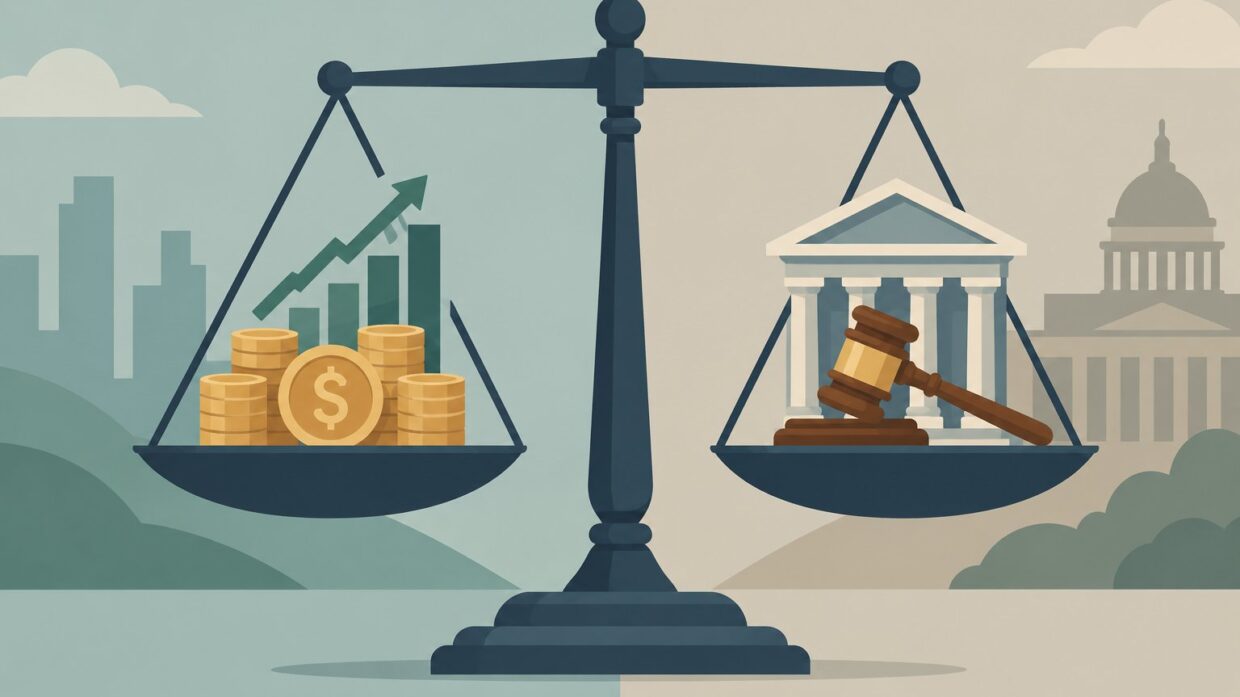
- Schiff's statement simultaneously de-emphasizes and preserves impeachment as a Democratic option, allowing the party to campaign on economics while leaving open the possibility of removal proceedings.
- Both Democrats and Republicans are defining the 2026 strategy without offering affirmative details about their own economic policies, instead focusing on attacking the other side's record or intentions.
- The differing coverage of the same interview demonstrates how identical statements can support opposite conclusions when emphasis and framing diverge, making it unclear whether Schiff's position reflects genuine priority-shifting or disciplined campaign messaging.
The Analysis
Sen. Adam Schiff's statement that Democrats should place 'overriding emphasis' on costs rather than impeachment, paired with his acknowledgment that impeachment remains possible, illustrates a deliberate rhetorical separation between campaign messaging and potential congressional action. What Schiff said, word-for-word according to NBC's reporting, was that oversight 'could potentially lead to impeachment,' but that the primary focus should be costs and corruption. This construction allows two distinct readings simultaneously, which is precisely why both NBC and Breitbart drew opposite conclusions from the same interview.
The left-leaning coverage from NBC frames Schiff's position as a strategic pivot toward economic messaging, emphasizing that he is deliberately downplaying impeachment as a primary goal. That framing is supported by Schiff's own language: 'overriding emphasis' suggests a hierarchy of priorities. The NBC headline does not mention impeachment at all, instead leading with the costs focus. What this framing leaves out is the second part of his statement, which kept impeachment explicitly on the table as a consequence of oversight work.
Breitbart's coverage leads with the impeachment possibility, framing Schiff's statement as a signal that Democrats plan to pursue removal if they gain power. That reading is textually supported by Schiff's conditional statement, but it inverts the emphasis hierarchy that Schiff explicitly stated. Breitbart also adds reporting on Schiff's separate accusation that the DOJ is 'complicit' in Trump's alleged attempts to 'subvert the elections,' a claim that appears in the Meet the Press interview but does not appear in the NBC article's initial framing. This is selective emphasis rather than misrepresentation.
What neither framing adequately addresses is the underlying strategic calculation. Schiff's positioning reflects a Democratic consensus emerging in 2025-2026 that leading with economic grievances polls better than leading with accountability messaging, particularly in constituencies Democrats need to win back. The 'costs and corruption' formulation appears designed to avoid the appearance of pursuing political revenge while preserving the option to do so. This is a common rhetorical move in opposition politics, but it requires both framings to be true simultaneously: costs are the priority, and impeachment remains available.
Gov. Gretchen Whitmer's parallel messaging in the same interview, attacking Republicans for lacking an economic plan while signaling openness to a 2028 presidential run, suggests Democrats are operating from a shared strategic script. Her statement that America is ready to elect a woman president, which pushes back on Michelle Obama's earlier remarks, serves a dual function: it positions her as optimistic about Democratic prospects while distinguishing her from establishment figures. The coverage of her remarks splits along predictable lines, with NBC emphasizing her cost-focused attacks on Republicans and The Hill centering her pushback against Obama.
The underlying tension is between two legitimate interpretations of the same statement. Schiff said what he said. Both readings are textually defensible. What the available reporting does not establish is whether Schiff's framing represents a genuine de-emphasis of impeachment as a Democratic priority, or whether it reflects campaign messaging discipline with different intentions for actual governing strategy. That distinction matters, but the sources do not provide internal communications, subsequent actions, or direct clarifications that would resolve it.
The institutional implication is that Democrats are attempting to run on economics while preserving impeachment as a tool, whereas Republicans are highlighting impeachment as proof of Democratic intent toward politicization. Neither side is making an affirmative case about what their economic policy actually is, beyond Whitmer's criticism that Republicans lack one.
Democrats' deliberate ambiguity about impeachment allows them to campaign on economic messaging while keeping removal as a governing option if they win power. Schiff's formulation, 'overriding emphasis' on costs with impeachment 'potentially' following oversight, creates political cover: it satisfies voters skeptical of partisan revenge while signaling to the Democratic base that accountability remains possible. This rhetorical separation between campaign promises and potential actions establishes plausible deniability for either choice later. The strategy works only if voters don't demand specificity about which promise actually binds future behavior. Republicans will argue this proves Democratic intent to weaponize government. Democrats will argue this proves they prioritize economics. Both sides will cite the same statement for opposite conclusions through 2026, leaving the actual boundary between investigation and revenge undefined until decisions are made under power.