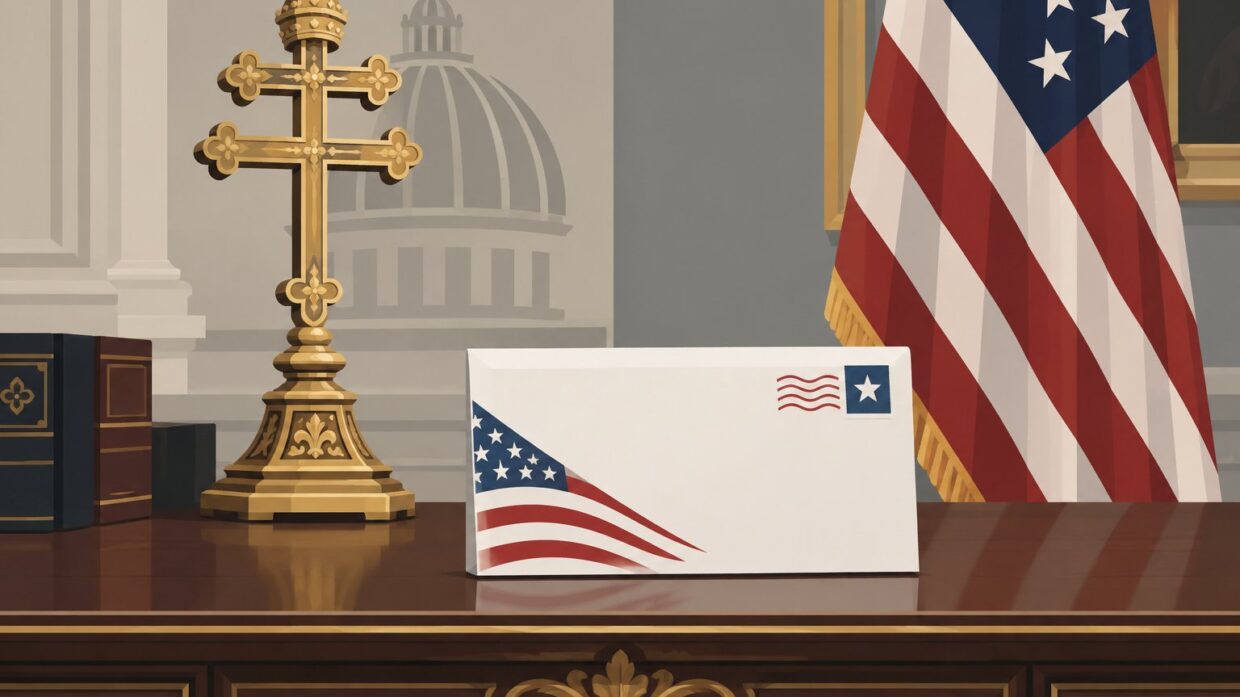
Photo: Well This Is News
Pope Leo XIV votes in U.S. midterms as Melania Trump brokers Ukraine peace
Pope Leo XIV makes history voting in U.S. midterms, affirms democratic duty
Pope Leo XIV becomes first sitting pontiff to vote in U.S. election
Key Takeaways
- No Vatican or Illinois election authority documentation has been released showing whether officials consulted on papal voting eligibility or whether the papacy formally prepared for this participation before Leo XIV applied for a ballot.
- Pope Leo XIV's vote establishes a binding precedent that future pontiffs may inherit, potentially triggering questions about whether the papacy falls under U.S. campaign finance law, foreign agent regulations, or Vatican sovereignty protections.
- The reporting omits whether other sitting heads of state have voted in U.S. elections under similar citizenship arrangements, making it impossible to assess whether this decision reflects unique papal status or applies to all foreign-born leaders with American citizenship.
The Analysis
Pope Leo XIV cast a mail-in ballot in Illinois' 2026 midterm elections, making him the first sitting pontiff known to vote in a U.S. general election, according to Vatican confirmation announced Friday. The pope, born in Chicago and holding U.S. citizenship, requested and received an absentee ballot while serving as head of the Roman Catholic Church. No public disclosure establishes which candidates or measures he voted for, nor does the available reporting confirm how long the Vatican considered this action before announcing it.
The left-leaning framing, as presented by NBC News, embeds this electoral participation within a broader narrative of Pope Leo's diplomatic activism. That coverage emphasizes his role in brokering an evacuation mission in a Russian-occupied Ukrainian city under a localized ceasefire arranged with Melania Trump. By pairing these stories, the NBC framing suggests the pope is an active participant in real-time geopolitical problem-solving, situating his vote as one expression among several of his engagement with worldly affairs. This framing leaves unexamined the distinction between papal diplomatic mediation, which has historical precedent, and direct participation in a foreign nation's electoral process, which does not.
The right-leaning sources, particularly Breitbart, emphasize the Vatican's own statement that Pope Leo "exercised his right and duty of citizens to participate in democratic processes." That language mirrors civic participation rhetoric rather than papal tradition. Breitbart's headline frames the act as historic affirmation of democratic principle, not as an institutional departure. Fox News similarly leads with "makes history," emphasizing novelty without contextualizing what tradition this breaks. The coverage does not address whether the papacy's historic distance from secular electoral participation served any institutional or theological function.
What neither framing adequately establishes is the prior relationship between the Vatican and U.S. electoral law. No source provided discloses whether the Vatican formally requested clarification on papal voting eligibility before Leo XIV applied for a ballot, or whether the Illinois election authority consulted any federal guidance on voting rights for foreign leaders resident in foreign sovereign territories. The reporting does not confirm whether other sitting heads of state have voted in U.S. elections under similar citizenship arrangements. One plausible interpretation is that the Vatican selected this moment to normalize papal electoral participation as an expression of institutional values, but the available documentation does not confirm that reasoning.
The institutional implication is structural: a pope voting in U.S. elections establishes a precedent that future pontiffs may inherit, potentially affecting how the papacy is viewed under U.S. campaign finance law, foreign agent regulations, and Vatican sovereignty doctrine. The distinction between a sitting pope exercising individual citizenship rights and the papacy as an institution participating in American politics remains unsettled.
The most honest version of this headline: Pope Leo XIV becomes first sitting pontiff to vote in U.S. election, breaking a historic separation between the papacy and secular democratic participation while raising unresolved questions about Vatican sovereignty and the scope of papal citizenship.
Pope Leo XIV's vote establishes a legal and diplomatic precedent that erases a centuries-old institutional boundary. If future pontiffs claim voting rights as sitting heads of the Vatican, U.S. campaign finance regulators must determine whether papal electoral participation triggers foreign agent disclosure requirements or compromises the Vatican's sovereign status under international law. The Illinois election authority's acceptance of his absentee ballot without documented consultation with federal authorities suggests no legal framework currently governs how a foreign sovereign's chief executive relates to American electoral law. This gap matters because it creates ambiguity about whether the Vatican can now be treated as a domestic political actor rather than a foreign government, potentially exposing the papacy to subpoena power, donor transparency rules, and tax implications that historically have not applied to the Holy See.