Photo: Mico Medel
Riot police clash with protesters blocking far-right AfD conference
Antifa militants clash with police and journalists at AfD conference
Police deploy in Erfurt as thousands protest AfD conference
Key Takeaways
- Both left and right accounts describe the same physical confrontation but omit basic factual details like the number of protesters, specific triggering incidents, injury counts, police tactics used, and whether protest organizers had permits.
- The AfD's electoral success in recent German elections makes it a significant mainstream party rather than a fringe movement, complicating narratives that treat it as categorically beyond democratic engagement.
- Germany's specific legal and historical frameworks governing assembly and political expression are absent from both framings, leaving unclear what rights protesters held, what police authority existed, and whether either side violated applicable law.
The Analysis
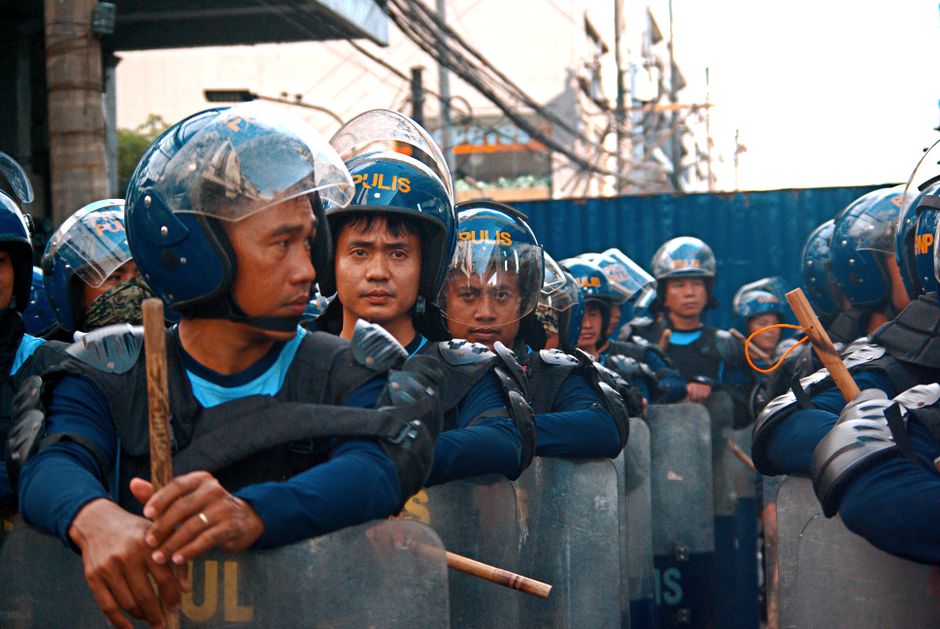
Thousands of people gathered in Erfurt, Germany on Saturday to protest the Alternative für Deutschland conference, resulting in multiple clashes with police. The event reveals a fundamental disagreement over how to describe the same physical confrontation and what context matters most for understanding it.
The Guardian frames this as "riot police clash with protesters hoping to block far-right AfD conference." The language emphasizes the protesters' stated intention and describes them as opponents of a far-right party. The headline construction puts police action in the active voice and protesters in a descriptive frame. The timing detail mentioned is that the conference occurred on a date with Nazi historical significance, which appears designed to deepen the moral stakes of the story. What this framing leaves unaddressed is what specific actions triggered police deployment, whether protesters blocked access or movement, or what legal framework governed police response.
Breitbart's framing uses "Antifa militants clash with police and reporters at AfD conference." The language choice shifts from "protesters" to "Antifa militants," establishing a specific organizational identity rather than a spontaneous opposition. The phrase "far-left Antifa radicals" appears in the summary text. Breitbart emphasizes that journalists were attacked, reframing the confrontation as not just about police-protester dynamics but about assault on press freedom. This narrative leaves out what distinguishes these protesters from broader demonstrations, whether the attacks on journalists were systematic or sporadic, or what the AfD conference itself involved.
What neither side foregrounds is a specific factual record: How many people protested? What exactly triggered the initial clashes? Were there injuries? How many police deployed and what methods did they use? Were access roads actually blocked? The Guardian invokes Nazi historical dates as context, which carries interpretive weight but leaves unexplained whether German law permits police to prevent gatherings on such dates or whether protesters had permits. Breitbart emphasizes attacks on journalists but does not specify what happened, who was attacked, or whether police intervened in those attacks.
The left frame treats this as a story about democratic protest against a far-right political movement, where police presence represents potential suppression. The right frame treats this as a story about extremist violence targeting both police and media, where police deployment represents proportionate response to disorder. Neither acknowledges that both dynamics may be simultaneously true: protesters may have legitimate concerns about a political party while some protesters may have engaged in violence, and police may have both legitimate security responsibilities and potential for excessive response.
Germany has specific historical and legal frameworks governing political expression and assembly that neither source discusses. The AfD has won significant electoral support in recent years, making it a major party rather than a fringe movement, a fact that complicates the "far-right" descriptor depending on definitional choice. What remains undisclosed from these summaries is whether protest organizers coordinated with police, whether the gathering was legal, or whether any law enforcement investigations followed the clashes.
Germany's ability to manage political polarization depends on its courts and police maintaining legitimacy across ideological divides, yet these competing narratives about Erfurt suggest that legitimacy is fracturing. When the same confrontation becomes either "democratic resistance to extremism" or "antifa violence against order," citizens lose shared factual ground for evaluating whether police response was proportionate or whether protest tactics crossed legal lines. This fracture matters because it prevents the formation of public consensus about what happened and why, which is precisely what authoritarian movements exploit. Germany's past demonstrates that democratic collapse accelerates once major institutions lose the ability to be trusted as neutral arbiters of fact. The Erfurt clashes themselves may be resolved, but the collapse of agreed-upon reality about what occurred creates cascading damage to institutional authority that extends far beyond this single protest.