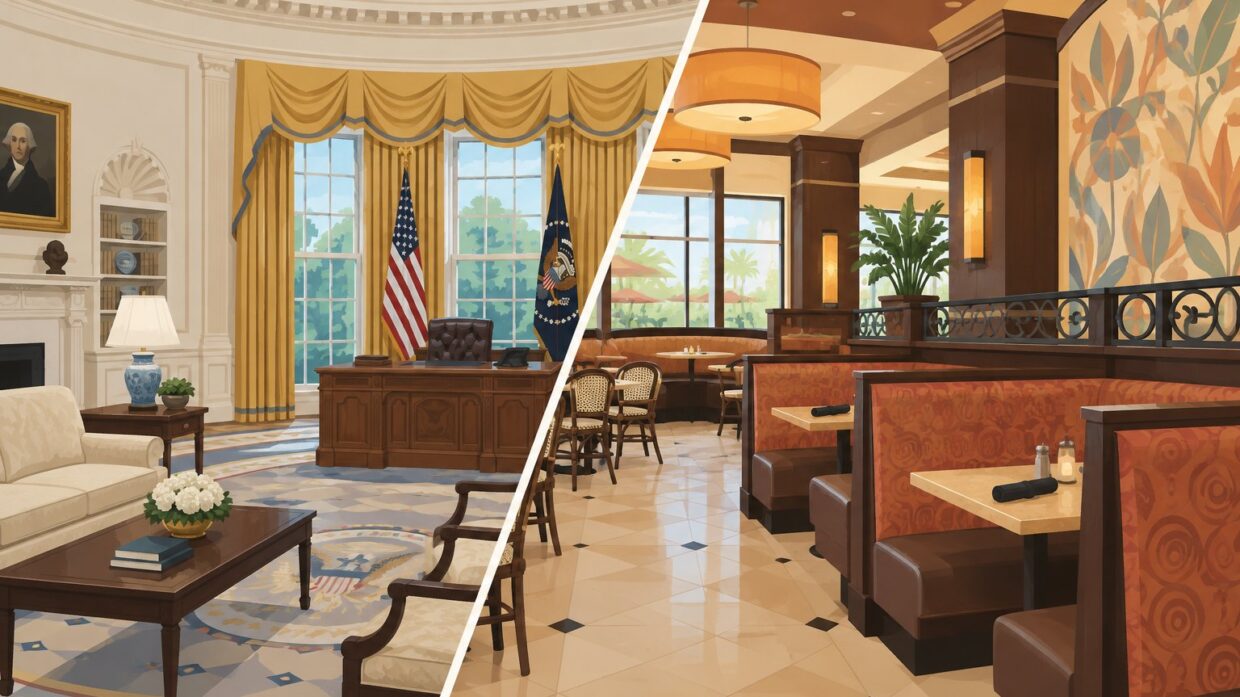
Photo: Well This Is News
Trump Supporters React Sharply to Obama's White House Critique
We haven't found a right-leaning take on this story yet.
Breaking stories sometimes publish before every side has covered them. We'd rather show you that than invent a view.
Obama's Cheesecake Factory Comparison Becomes Political Flashpoint
Key Takeaways
- Obama never specified which design elements in the Oval Office he found objectionable, leaving the actual merits of his aesthetic criticism unevaluated by any side.
- Both the left and right debated the tone and politics of Obama's comment rather than whether Trump's White House modifications were architecturally or functionally sound decisions.
- The comparison between Saddam Hussein and a casual restaurant chain is historically mismatched and compresses multiple unrelated insults without clarifying what Trump's design choices actually looked like.
The Analysis
Obama made a specific comparison, not a vague insult: he said Trump's White House modifications resembled "Saddam Hussein opening up a Cheesecake Factory." That exact phrasing does two things simultaneously. It attacks the aesthetic choices Trump made to the Oval Office by comparing them to both authoritarian kitsch and commercial degradation. It also suggests moral equivalence between Trump and a documented war criminal, which is the part that landed the hardest.
The documented record shows Trump did modify the White House during his tenure. He changed the carpet, the wallpaper, the curtains, and the overall design aesthetic of the Oval Office. These are factual alterations that occurred. What neither the available reporting nor Obama specified are the particular design elements that prompted the comparison, which matters because the critique depends on them looking genuinely incongruous with the setting.
The left framing, as HuffPost presented it, emphasizes that Trump's supporters "melted down" over the comment. That language choice, "melted down," frames the response as overreaction rather than principled objection. HuffPost's headline construction itself suggests the reaction was disproportionate to the provocation. The coverage does not engage with what the actual design changes looked like or whether any architectural criticism of them had merit. It treats the comment as comedic observation rather than political argument.
The right's response, based on available reporting, appears to have treated the comment as evidence of elite contempt. Trump supporters interpreted the Cheesecake Factory reference as metropolitan condescension toward Trump's taste. One plausible reading is that they saw it as a privileged coastal Democrat mocking a populist president's aesthetic choices. The response assumes the comparison was intended to be cutting and that the underlying argument is about class resentment. But the available reporting does not capture what right-leaning sources themselves said about the modifications or whether they defended the design choices on their merits.
What neither framing captures is that the comparison itself was historically odd. Saddam Hussein and Cheesecake Factory are not inherently linked in meaning. A dictator's aesthetic choices and a casual dining establishment's design language serve different functions. The comparison compresses multiple insults into one metaphor without clarifying which aspect of Trump's modifications triggered it. The reporting does not establish which specific design elements Obama found objectionable, which means readers cannot evaluate whether the criticism was about actual design problems or about signaling.
MarketWatch's coverage noticed something neither the left nor right frame addressed: the Cheesecake Factory's stock performance was strong at the time of the controversy. The company's actual business metrics were positive. This is not a critique of either side's political argument, but it demonstrates that the entire news cycle treated the restaurant chain as a symbol rather than a business. The company itself had no stated involvement in the exchange.
The real story here is that a former president used deliberately derisive language about a sitting president's taste, the sitting president's supporters treated that language as class warfare, and both sides argued about the tone rather than the substance of interior design choices. The White House Oval Office modifications were real decisions made by a real administration. Whether they were aesthetically or functionally sound is a separate question from whether comparing them to a dictator's authoritarian kitsch was fair characterization.
Obama's comparison invoked Saddam Hussein to attack Trump's Oval Office redesign, compressing authoritarian kitsch and commercial degradation into a single metaphor without specifying which design elements actually warranted the criticism. The left framed conservative pushback as overreaction rather than examining the modifications themselves, while the right interpreted it as coastal elite contempt for populist taste. Neither side engaged the substantive question: whether Trump's changes to the carpet, wallpaper, and curtains represented genuine design failures or merely stylistic differences. The entire controversy treated the Cheesecake Factory as political symbol rather than business entity, obscuring the actual aesthetic judgment beneath layers of class signaling and tone policing. This pattern of substituting metaphorical insult for concrete critique weakens political discourse by allowing both camps to avoid defending their actual positions on taste, executive prerogative, and institutional stewardship.