Photo: Well This Is News
Collapsing Office Buildings Show America Needs Housing Conversion, Not Demolition
New York's Development Push Erases Italian-American Heritage and Historic Neighborhoods
NYC Office Tower Wobble Exposes Competing Visions for Downtown Manhattan's Future
Key Takeaways
- Converting vacant offices to apartments is not automatically cheaper or faster than new construction, yet both left and right framings treat conversion as either a clear solution or a clear threat without examining the actual economics.
- New York City has not attempted any systematic approach that pursues housing conversion while simultaneously preserving neighborhood character and community input, instead allowing property-by-property market decisions to create unpredictable winners and losers.
- The real tension is whether development policy can serve both housing and cultural heritage, but neither side has presented evidence of what integrated policy would look like or whether the city has tried it.
The Analysis
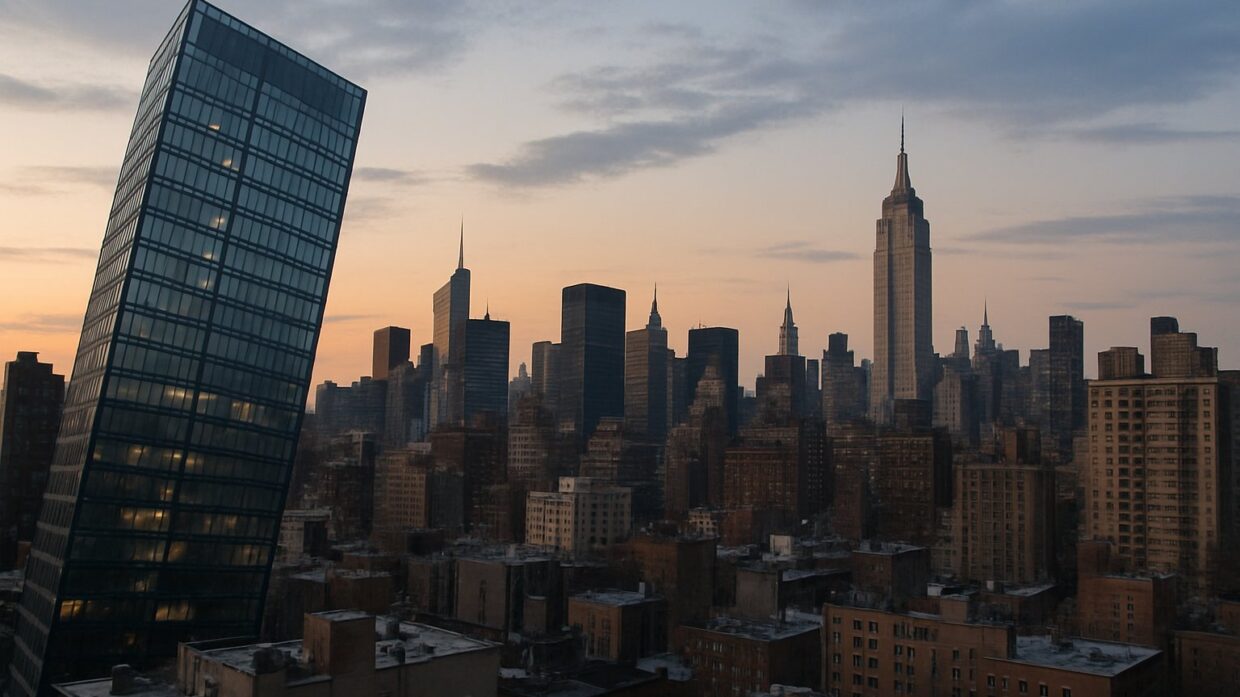
A wobbling office tower in Manhattan has become a focal point for two separate but genuine policy problems that New York City has not yet learned to address simultaneously: the post-pandemic collapse of office occupancy and the ongoing erasure of immigrant working-class neighborhoods during development cycles. Neither framing fully acknowledges the tension between them.
The physical event is straightforward. An office tower in midtown Manhattan exhibited structural instability, prompting police barricades and public alarm. The building's vulnerability reflects a broader market reality: commercial real estate occupancy in Manhattan stands far below pre-pandemic levels. According to available reporting, office vacancy rates in the city approached 20 percent in 2024, creating economic pressure on property owners and raising questions about building maintenance. The Vox framing seized on this fact to argue that conversion to residential use offers a solution to America's housing shortage.
The left frame makes a testable claim: vacant commercial space can be repurposed as apartments, addressing housing scarcity without requiring new construction. This reasoning relies on two hidden assumptions. First, it assumes that conversion economics work,that the cost of retrofitting office buildings into residential units is cheaper than new construction. The available reporting does not establish this clearly. Second, it assumes that the market for new apartments in the exact locations of these offices matches demand. Many vacant Manhattan office towers sit in commercial districts where foot traffic and school access may not align with residential preferences.
The right frame, represented by the Washington Examiner piece, does not directly dispute housing need. Instead, it argues that rapid development and zoning changes are erasing Italian-American, Irish-American, and Jewish-American neighborhood identity. The piece names specific communities but does not provide detail on what the Mamdani administration's specific zoning decisions were, which neighborhoods are affected by which policies, or which properties are being developed. This framing establishes that cultural heritage loss is a legitimate concern without establishing the mechanism by which current policy causes it.
What neither side addresses is the actual relationship between the two problems. Office conversion and neighborhood preservation are not automatically opposed. A conversion strategy that integrates community input, protects historic architectural features, and preserves ground-floor commercial use could theoretically do both. The evidence suggests that neither the city nor developers are systematically pursuing this integrated approach. Instead, the market is making ad-hoc decisions property by property, which creates winners and losers without serving either housing policy or cultural preservation consistently.
The wobbling tower is a useful metaphor precisely because it points to instability in the underlying system. Commercial real estate economics have shifted. Neighborhood identity in immigrant cities has always depended on economic viability. The question New York has not adequately answered is whether development policy can serve both housing and heritage, or whether the fiscal pressures of conversion will predictably favor the highest-margin use regardless of community impact. The available reporting does not establish whether that integration is possible or whether city policy has attempted it.
NYC's handling of the wobbling tower will determine whether the city can simultaneously address its office vacancy crisis and preserve immigrant neighborhood character, or whether fiscal pressure forces a false choice between them. The conversion economics remain untested at scale,retrofitting vacant commercial space into residential units may not actually cost less than new construction, and many empty towers sit in commercial districts misaligned with residential demand. Meanwhile, the city has not articulated a systematic policy integrating community input, historic preservation, and ground-floor activation into development decisions. Property-by-property market choices are creating winners and losers without serving either housing policy or cultural protection consistently. If Manhattan defaults to highest-margin conversions without community integration, it will have surrendered the only moment when structural vacancy could have funded authentic neighborhood renewal rather than displacement.