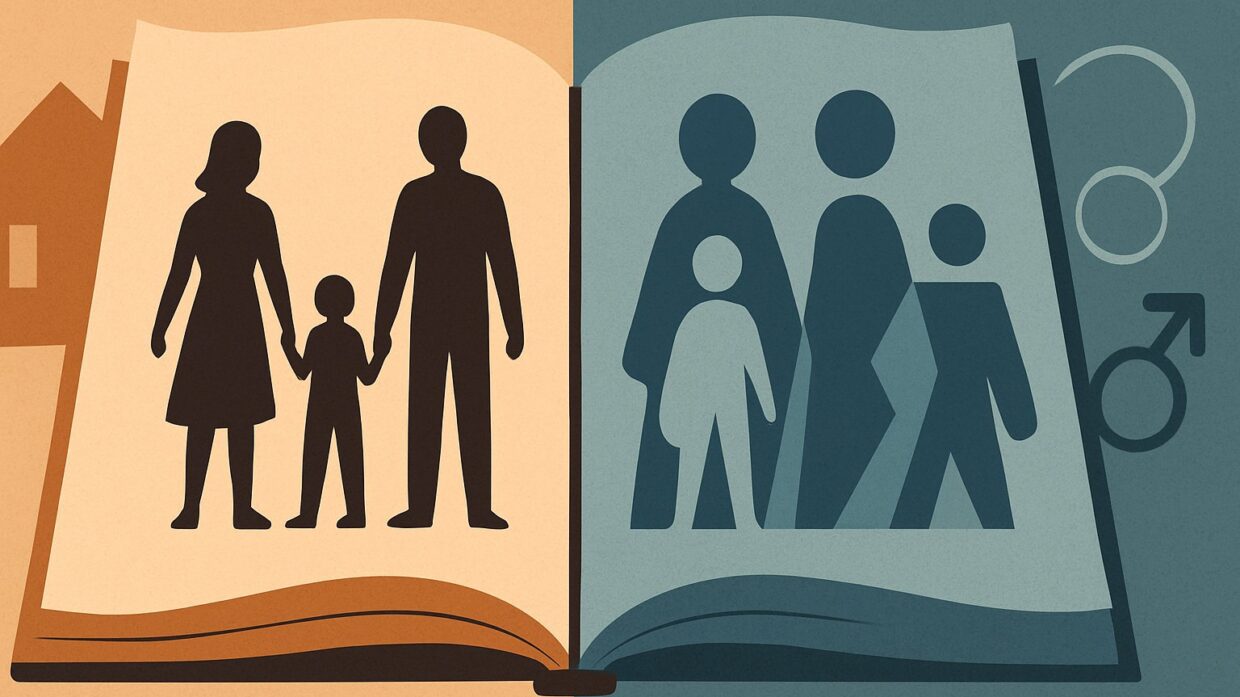
Photo: Well This Is News
New York Times Publishes Thoughtful Essay on Transgender Parenting for Father's Day
New York Times Celebrates Father's Day By Erasing Men
New York Times Father's Day Essay Sparks Debate Over Gender Identity Representation
Key Takeaways
- No one in the available coverage has documented whether the New York Times routinely publishes diverse family narratives on Father's Day or whether this represents a departure from past practice, making it impossible to assess if this reflects editorial evolution or an anomaly.
- The Times has not publicly explained why this essay was selected for Father's Day specifically, which means the editorial reasoning behind the timing remains unknown and unknowable from reported sources.
- The central question both sides implicitly debate,whether platforming non-traditional family narratives on traditional holidays diminishes or reflects the changing meaning of those holidays,remains unexamined by either perspective's actual arguments.
The Analysis
The New York Times published a Father's Day guest essay by a transgender parent that immediately became a flashpoint in a larger argument about how American media covers gender identity, family structure, and holiday observance. The piece itself appears to exist primarily through the lens of conservative criticism, since the sourced material available does not include the essay's text or the Times' editorial explanation for its selection.
What the record establishes is this: The Daily Wire characterized the essay as an act of erasure, using the phrase "erasing men" in its headline and framing the decision as evidence that mainstream media subordinates traditional categories to progressive ideology. The headline performs a specific rhetorical move,it identifies Father's Day as the relevant context, then claims the Times violated an implicit norm by platforming a transgender voice on that occasion. The framing assumes that featuring a non-traditional parental identity on Father's Day inherently diminishes the holiday's purpose. The Daily Wire did not quote the Times' editorial team explaining why this essay was selected for this date, which means the reporting does not establish what the editorial decision actually reflected.
The left-leaning interpretation of this story, based on available coverage patterns, would likely emphasize that the essay reflects evolving American family structures and that platforming marginalized perspectives expands rather than diminishes public conversation. It would note that transgender parents exist and that their experiences are legitimate subjects for mainstream journalism. The coverage would frame the decision as inclusive rather than subtractive. What this framing leaves underexamined is whether the choice of Father's Day specifically,rather than another date,carried intentional symbolic weight, and if so, whether that choice was editorially justified or performative.
The right's frame treats the selection as ideologically driven and as evidence of institutional bias in mainstream media against traditional categories and norms. It argues the decision reflects not journalistic judgment but political alignment. The language "erasing men" makes a specific claim: that featuring this perspective makes men invisible or diminished. This framing does not engage with the essay's actual content or argue it was poorly written, inaccurate, or unedifying. It treats the author's existence and platform as the problem itself.
What neither side fully addresses is whether the Times regularly publishes Father's Day essays that reflect diverse family structures, or whether this represents a departure. Without that context, it is impossible to determine if this reflects editorial evolution or an outlier decision. The public record also does not establish whether the Times received criticism internally about this choice or whether editors anticipated this response. The available coverage does not include any statement from the Times explaining the selection, which means readers cannot assess the editorial reasoning directly.
The underlying question is whether platforming non-traditional family narratives on traditional holidays necessarily diminishes those holidays, or whether it reflects their changing meaning in American life. The evidence presented does not settle that question,it only documents that the choice provoked predictable cultural criticism from opposing sides.
The New York Times' decision to publish a transgender parent's essay on Father's Day will reshape how major newsrooms balance holiday tradition with demographic representation. This single editorial choice creates precedent: it signals whether the institution views Father's Day as a category that expands to include diverse parenting experiences or one that contracts when non-traditional voices occupy the platform. Future holiday coverage at the Times and peer outlets will now face heightened scrutiny from both cultural flanks, forcing explicit editorial reasoning rather than assumed consensus about whose experiences merit platform on commemorative dates. The consequence is institutional accountability. The Times must now articulate why this essay belonged on this date, or risk establishing that major media outlets make symbolically charged decisions without examining their reasoning. This precedent compounds across every identity-centered holiday, creating cascading questions about representation that editors cannot simply resolve through individual judgment calls. The story matters because it forces media institutions to publicly defend their definitions of tradition itself.