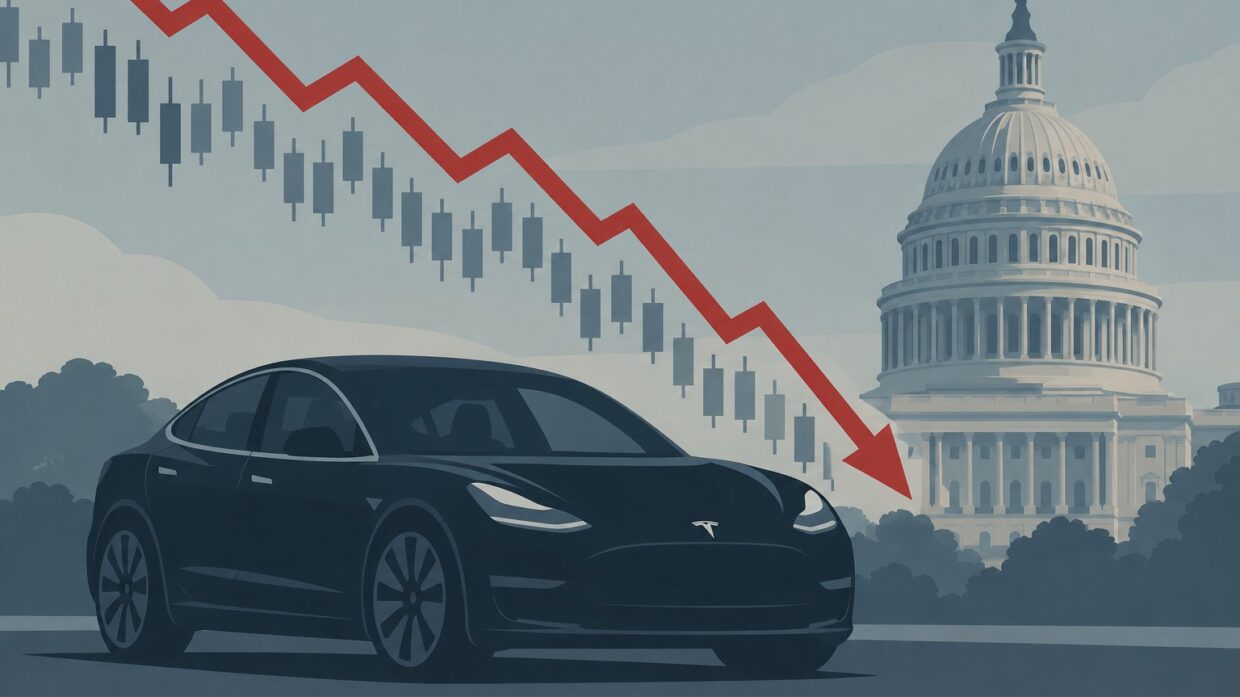
Photo: Well This Is News
Musk's $500M Bet Failed. Now Democrats Are Coming for His Power.
Musk's Wealth Plummets $33.5B as Markets Fear Democratic Majorities
Musk Faces Congressional Scrutiny as Democrats Gain Seats; Tesla Stock Falls Sharply
Key Takeaways
- The mechanism by which Musk's $500 million failed to secure Republican control remains unexplained, leaving unclear whether this reflects contingent electoral circumstances or fundamental limits on billionaire political spending.
- Neither the market decline nor the announced investigations establish whether investors and Democrats are responding to genuine compliance problems at Musk's companies or primarily reacting to his political moves.
- The causal relationship between Musk's political spending, the election outcome, and both his wealth loss and impending oversight remains ambiguous in public reporting.
The Analysis
Musk's political spending in the 2026 midterms produced an outcome that satisfies neither his strategic interests nor the conventional wisdom about billionaire political power. The documented facts are these: Musk spent approximately $500 million supporting Republican candidates, Democrats gained congressional seats despite that spending, his net worth fell $33.5 billion in market value following the results, and Democratic leaders have announced plans to investigate his government contracts and leadership at DOGE. What neither side is adequately addressing is the distinction between these observable outcomes.
The left frame emphasizes accountability. NPR reports that Democrats "are likely to launch investigations into Musk's influence, including his leadership of DOGE and government contracts." This framing highlights a straightforward institutional point: when a single billionaire exercises significant influence over federal spending through an executive agency, Congressional oversight of that arrangement is a routine function of checks and balances. The Atlantic's reporting notes that Musk's "unprecedented spending may even have hurt Republicans," suggesting that his political capital did not translate to electoral success. What this framing leaves out is whether the investigations are substantive inquiries into actual policy problems or primarily retaliatory in character, or whether Democratic majorities would be pursuing similar oversight if Musk had remained politically neutral.
The right frame emphasizes market consequences. The Washington Examiner reports the $33.5 billion decline as a direct result of investor concerns about "incoming Democratic majorities in Congress." This framing treats the wealth loss as evidence of regulatory risk and potential targeting of Musk's companies. What this frame does not address is whether the market decline reflects genuine policy concerns about Tesla's regulatory compliance or federal contracts, or whether it reflects market uncertainty about Musk's divided attention and recent political moves. The framing also does not distinguish between investigations that might reveal actual wrongdoing and investigations pursued primarily as political countermeasure.
What neither side fully establishes is the causal sequence. The Atlantic reports that Musk's spending "may even have hurt Republicans," but does not explain the mechanism by which $500 million failed to move electoral outcomes in a closely divided country. The right-leaning coverage attributes the stock decline to Democratic victory, but does not address whether investors may be concerned about Musk's judgment in making that spending decision itself, independent of its political consequences. The public record does not establish whether Musk's companies face genuine compliance problems that Democratic oversight would reasonably address, or whether the investigations announced by Democrats are motivated primarily by political retaliation for his spending.
The underlying question is whether Musk's $500 million represented a rational investment in political influence that failed for contingent reasons, or whether it exposed structural limits to billionaire spending in electoral politics. The documented facts support neither absolute interpretation. His spending did not secure Republican control. His wealth fell sharply. Oversight is coming. What remains unstated by most reporting is that both outcomes can be true simultaneously without either proving the other false.
Musk's failed $500 million bet on Republican midterm candidates has created a structural test case for whether federal oversight of billionaire-backed executives can function independently of partisan retaliation. If Democratic investigations into his DOGE leadership and Tesla contracts produce substantive findings about policy violations, Congressional oversight will have operated as intended. If the investigations prove performative and disappear when Democratic leverage diminishes, it establishes that institutional checks on executive influence collapse into pure partisan theater. The immediate stakes extend beyond Musk's portfolio: future presidents will calibrate how much autonomous authority to delegate to wealthy operatives partly based on whether Congress can investigate such arrangements without appearing nakedly vindictive. The market's $33.5 billion erasure signals investors recognize this uncertainty, creating incentive for actual policy clarification rather than mutual political warfare.