Photo: Well This Is News
NYC Mayor Mamdani Delivers Early Wins Despite Predictable Attacks From Business Lobby
Socialist Mayor's Tax Video Triggers $6B Business Flight, Veto Stokes Antisemitism Concerns
Mamdani's Tax Push Meets Business Backlash as NYC Mayor Navigates Early Governing Tests
Key Takeaways
- Ken Griffin's threat to cancel his $6 billion project is political leverage against a democratically elected official, not a neutral market response to tax policy.
- The actual security restrictions in the antisemitism bill that triggered Mamdani's veto were never explained in reporting, leaving readers unable to judge whether he opposed the substance or the method.
- Mamdani's governance collision between wealth redistribution and wealth preservation reflects a genuine democratic conflict that is exceptional in contemporary New York but historically common in other cities.
The Analysis
Mayor Zohran Mamdani has triggered three separate crises in his first hundred days by doing exactly what he promised to do, and the divergent narratives about those crises reveal what both sides are deliberately obscuring about how New York City actually works. Mamdani's second-home tax proposal and his veto of an antisemitism-related security bill represent genuine conflicts between competing visions for the city, but neither side is naming the structural power imbalance that makes those conflicts possible.
Here is what happened: Mamdani released a social media video promoting a new tax on expensive second homes. In that video, according to Bloomberg, he specifically referenced Ken Griffin's $238 million Manhattan penthouse. Citadel CEO Ken Griffin responded by signaling he might cancel a $6 billion Midtown construction project. Mamdani then vetoed a bill that would have expanded security restrictions on protests at educational sites in response to campus antisemitism. The right framed this as evidence of dangerous ideological priorities. The left framed the tax proposal as a moral blow against inequality and the veto as principled protection of protest rights.
Vox used the language "delivering on his key campaign promises" and emphasized "broadly positive" approval numbers, naming the mayor's popularity but omitting that he had triggered a potential $6 billion business exodus. Fox News used the phrase "derails bipartisan effort" and quoted unnamed sources as "disappointed," creating moral weight around the veto without examining what the security bill actually contained or why Mamdani objected to it specifically. The Daily Wire descended into pure propaganda, rendering Mamdani as literally demonic, making factual analysis impossible from that source. Bloomberg reported Mamdani's own words: that his tax push is "not motivated by any one individual," a direct contradiction to the video's specificity about Griffin's penthouse, yet Bloomberg named the contradiction without editorializing.
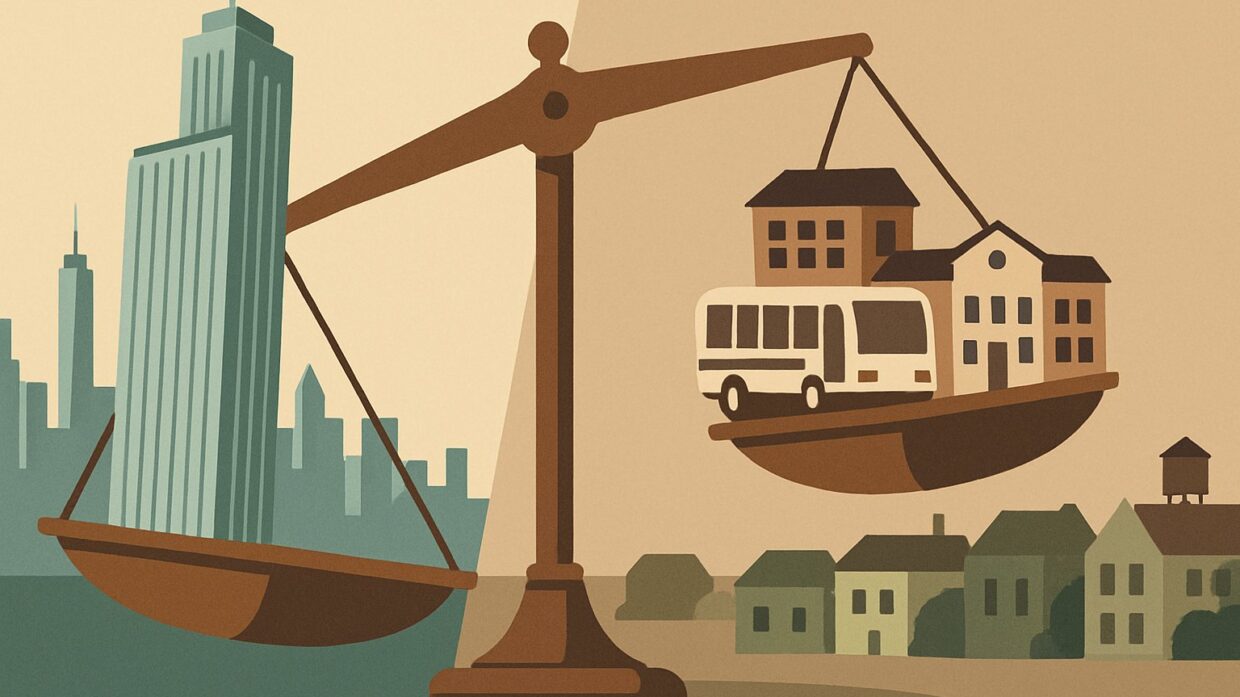
What both sides omit is essential: Mamdani was elected on an explicit platform of taxing wealth that has concentrated in New York City over the past forty years. Griffin's $6 billion project threat is not a market response to policy, it is a political threat. He is using capital mobility as leverage against a democratically elected official implementing a campaign platform. The right presents this as evidence that the policy is bad. The left presents this as evidence that the policy is necessary. Neither names the asymmetry of power: Griffin can threaten to leave the city. Mamdani cannot threaten to leave the country. Griffin can reshape the city's tax base through investment decisions. Mamdani can only reshape it through legislation.
On the antisemitism bill veto, the actual language of Mamdani's objection is absent from all reporting except Bloomberg's quote of his press statement. Without knowing what the security restrictions actually were, readers cannot judge whether Mamdani opposed the antisemitism response or opposed the method. The right assumes bad faith. The left assumes good faith. Neither names the historical pattern: civil rights movements have consistently faced security restrictions framed as necessary for public safety, and those restrictions have consistently been used to suppress the movements themselves.
Mamdani's first hundred days reveal a genuine governance collision between wealth redistribution and wealth preservation, and between protest rights and institutional security. What he is attempting is not radical in the historical record of democratic cities, but it is exceptional in contemporary New York. Neither side wants to name that plainly.
Mamdani's early conflicts expose that New York City governance is fundamentally asymmetrical, where private capital can threaten withdrawal from democratically mandated policy while elected officials cannot threaten equivalent consequences in return, a power imbalance that both left and right deliberately obscure through competing narratives about his tax and protest decisions.