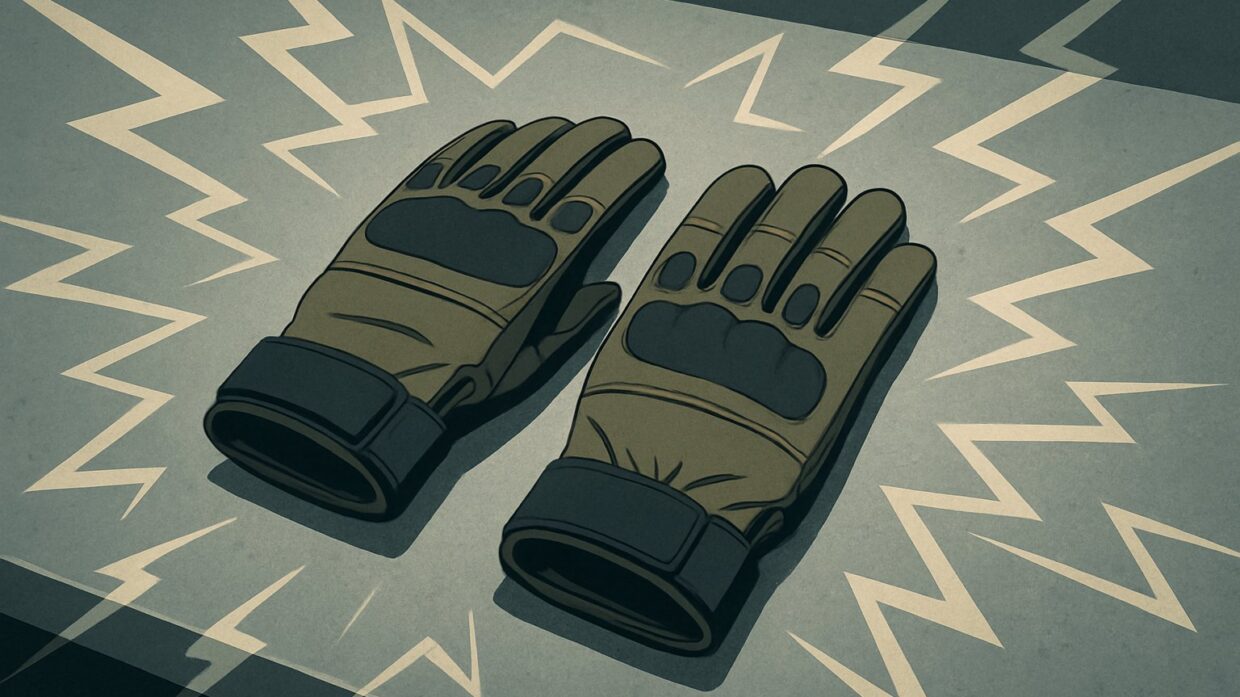
Photo: Well This Is News
ICE to outfit officers with electric shock gloves as nonlethal compliance tool
ICE to receive gloves delivering electric shock to de-escalate confrontations
ICE plans $20 million purchase of electric shock gloves for officer use
Key Takeaways
- No independent testing data has been published showing how the gloves perform on elderly detainees, people with cardiovascular conditions, or those under psychological distress, which represents a critical gap in assessing safety for ICE's actual detained population.
- The specific operational scenarios where ICE plans to use shock gloves remain undescribed in reporting, leaving unclear whether they are meant for arrests in progress or for detainees already in custody where other control tools exist.
- Neither the manufacturer's exact technical specifications for voltage, shock duration, or repeated use capability nor evidence of rejection by other federal agencies has been disclosed, making it impossible to evaluate whether this purchase represents standard equipment or an unusual escalation.
The Analysis
ICE plans to spend up to $20 million on electric shock gloves manufactured by Compliant Technologies, according to reporting from PBS NewsHour, Axios, NPR, and Breitbart published August 12, 2026. The specific procurement amount, manufacturer name, and stated purpose remain consistent across sources. What differs sharply is the framing of intent and consequence.
The documented facts are these: Compliant Technologies manufactures gloves designed to deliver electric shocks. ICE intends to purchase thousands of units. The manufacturer describes the device as nonlethal and designed to gain compliance. The gloves are intended for use during arrests and detention operations. PBS NewsHour reports the purchase is planned, not yet completed.
NPR frames the device through the manufacturer's language, emphasizing the word "nonlethal" and the company's stated purpose of making "individuals compliant." The framing does not foreground what "compliance" means operationally, what voltage or amperage the gloves deliver, or documented outcomes from testing. The language centers the manufacturer's intent rather than independent assessment of effect or risk. This framing leaves out questions about pain severity, medical effects on vulnerable detainees, or use-case scenarios beyond the stated purpose.
Breitbart frames the same purchase around the word "painful" and emphasizes the shock as a tool for those "who choose to fight rather than comply." The framing assumes resistance will be a choice rather than a result of fear, confusion, language barriers, or disability. By describing the mechanism as a response to a deliberate choice, the Breitbart framing shifts responsibility toward the person receiving the shock rather than toward the officer wielding it. This serves a narrative function: it positions the device as reactive rather than initiating force.
What neither framing addresses is the absence of independent testing data. Neither source reports whether the gloves have been tested on the populations ICE detains, many of whom are elderly, have cardiovascular conditions, or are under psychological distress. Neither source discloses what comparable devices have been rejected by law enforcement, or what medical organizations have said about electric shock devices used on restrained or partially restrained persons. Neither source establishes whether other federal agencies have considered and declined such equipment, or why.
The documented record does not establish the gloves' voltage, the duration of shock, whether shocks can be delivered repeatedly, or what safety cutoffs exist. Compliant Technologies' marketing materials are described but not quoted directly in the available reporting. That absence matters because the exact claims the manufacturer makes would clarify whether this is positioned as pain compliance or neuromuscular disruption, each of which carries different medical implications.
The procurement itself raises an unaddressed question: ICE detention operations already involve handcuffed or otherwise controlled detainees. The operational scenarios in which shock gloves would be used remain undescribed in the reporting. Arrests in progress? Detainees already in custody? The absence of scenario detail obscures whether this is genuinely de-escalatory or whether it extends force options into situations where other tools already exist.
What the record establishes is that ICE plans to spend substantial money on a pain-delivery device, the manufacturer claims it is nonlethal, and that claim remains untested in independent reporting. Whether that constitutes appropriate equipment, escalation, or necessity depends on evidence that neither the left nor right framing has yet provided.
ICE's planned purchase of electric shock gloves establishes a precedent for federal immigration enforcement to deploy pain-compliance technology on a detained population with limited legal recourse and no independent medical oversight. Unlike law enforcement equipment decisions that face court review or legislative scrutiny, immigration detention operates under reduced due process protections, making ICE adoption a testing ground for devices other agencies have rejected or restricted. The $20 million commitment signals institutional normalization of electroshock technology in routine custody operations, not emergency response. Once deployed and deemed acceptable within immigration enforcement, such equipment becomes available for adoption by state and local agencies holding immigrant detainees under ICE contracts, multiplying exposure across a system already documented for inadequate medical care and abuse reporting. The absence of independent testing data on vulnerable detainee populations, elderly individuals, and those with cardiovascular conditions means ICE will be conducting live implementation of an untested device rather than laboratory evaluation. This establishes a dangerous institutional precedent where