Photo: Well This Is News
Hong Kong Activists Jailed for Remembering Tiananmen as Beijing Tightens Control
Hong Kong Court Convicts Democracy Activists for Peaceful Tiananmen Memorial Vigils
Hong Kong Court Convicts Tiananmen Vigil Organizers of Subversion
Key Takeaways
- The court convicted the activists specifically for organizing the vigils, not for statements made at them, meaning the law now treats the act of coordinating commemoration itself as criminal incitement to subversion.
- The actual evidence and reasoning the court used to link memorial vigil organization to subversion charges has not been disclosed, leaving unclear whether authorities found coordination with foreign actors or only the vigils' existence.
- The conviction represents a significant expansion of the 2020 National Security Law beyond prosecuting explicit calls for regime change to potentially criminalizing acts of historical memory and remembrance.
The Analysis
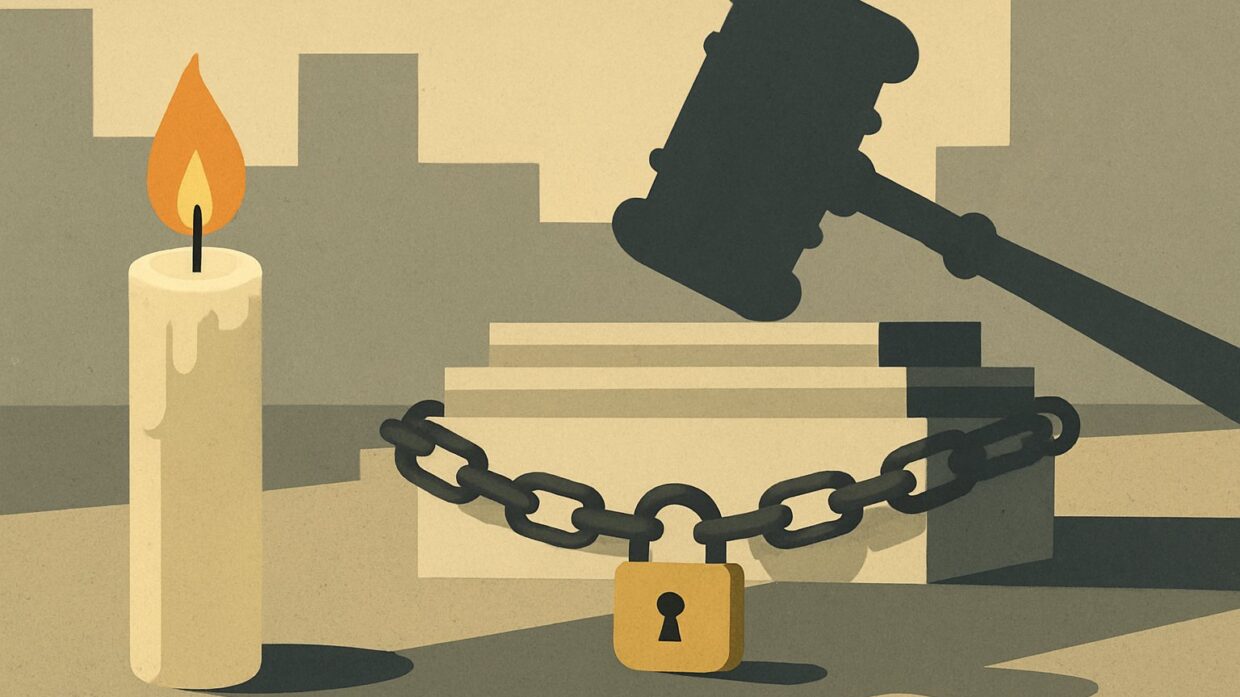
A Hong Kong court convicted two longtime pro-democracy activists, Lee Cheuk-yan and Chow Hang-tung, of inciting subversion under the 2020 National Security Law, marking an escalation in how Beijing-backed authorities are applying that statute to political speech and commemoration. The conviction turns on the act of organizing vigils, not on statements made at them, which reframes what the law defines as criminal conduct.
The documented facts are these. Lee Cheuk-yan and Chow Hang-tung organized the Victoria Park vigils, held annually since 1990 to commemorate the 1989 Tiananmen Square military crackdown that killed an estimated hundreds of people, exact numbers disputed. The vigils were public, recurring, and attracted thousands. In 2021, authorities banned the gatherings under the National Security Law. The two were charged and convicted under Article 22 of that law, which criminalizes incitement to subversion of state power. The UK Foreign Office condemned the verdict explicitly.
The left framing, as presented by The Guardian, emphasizes the word "peaceful." The headline reads "vigil organisers found guilty of inciting subversion," and the accompanying narrative focuses on the contrast between the nature of the activity (memorial gatherings) and the charge applied (subversion). The left's language choice leaves out the specific mechanisms by which the court determined the vigils constituted criminal incitement. It emphasizes state overreach without examining the court's reasoning. This framing serves a narrative function: it positions the law itself as arbitrary and the application as obviously unjust.
The right framing, as presented by Breitbart, also uses the word "peaceful" and emphasizes the act of "mourning." The headline reads "Hong Kong Activists Convicted of Subversion for Mourning Tiananmen Square Massacre." This framing is structurally similar to the left's but adds emphasis on the victims themselves and the idea of commemoration as inherently protected speech. The right's account does not examine whether the court found something beyond the vigils themselves,such as coordination with foreign actors or explicit calls for regime change,that triggered the subversion charge. That omission is not neutral; it leaves out context that Beijing's authorities claim justifies the law.
What neither side fully addresses is the history that precedes this verdict. The National Security Law was imposed by Beijing in June 2020 following Hong Kong's 2019 pro-democracy protests. That law explicitly criminalized secession, subversion, foreign collusion, and terrorism. The statute was controversial internationally but was enacted unilaterally by China's National People's Congress without Hong Kong's legislative approval. The law has been applied to dozens of cases since. What remains undisclosed in these reports is the specific evidence the court cited to conclude that organizing vigils constituted incitement to subversion, rather than protected political assembly. The court's reasoning document may clarify whether it found the vigils themselves subversive or whether it found evidence of coordination beyond memorial activities.
The underlying question is whether commemoration of a historical event, without explicit calls for political change, falls within the scope of conduct the law was intended to address. The conviction appears to expand the definition of subversion to include acts of memory itself, not only advocacy for regime change. That expansion, if confirmed, would represent a significant narrowing of what political speech remains lawful in Hong Kong.
Hong Kong's courts have now criminalized the act of remembering a specific historical event without requiring evidence that organizers explicitly advocated for regime change or coordinated with foreign actors to destabilize the government. This conviction redefines subversion under the National Security Law to encompass memorial activities themselves rather than only political advocacy or violence. Future organizers of any public commemoration in Hong Kong will face legal jeopardy simply for gathering people to mark historical moments, regardless of what is actually said or called for at such events. The verdict signals that Beijing-backed authorities view the preservation of collective memory about sensitive events as a threat to state power in itself. This transforms Hong Kong's legal framework from restricting political action into restricting historical consciousness, making commemoration indistinguishable from sedition in judicial practice.