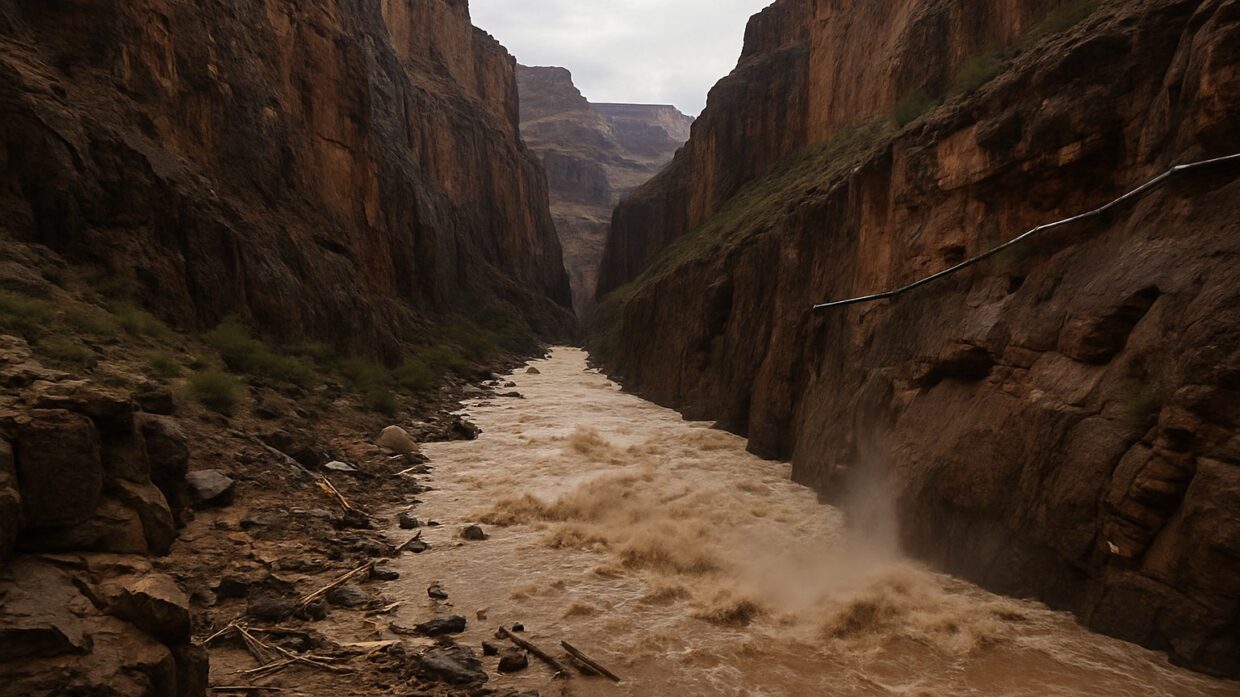
Photo: Well This Is News
Catastrophic Grand Canyon flooding kills at least 2 as climate-driven storms intensify
Over a dozen hikers missing after devastating flash flood sweeps through Grand Canyon
Flash flood kills at least 2, leaves 15 missing in Grand Canyon; water infrastructure damaged
Key Takeaways
- Flash floods in Grand Canyon tributary canyons are a documented seasonal occurrence, but reporting has not established whether Saturday's event represents an increase in frequency or severity compared to historical data from the past decade.
- Neither climate-focused nor rescue-focused coverage addresses whether the missing hikers received weather warnings before departure or whether permit systems require weather briefings, leaving a gap in understanding preparedness failures.
- The specific rainfall totals that triggered the flood and how Saturday's conditions compared to typical monsoon season patterns remain unexplained in available reporting, making it impossible to distinguish between normal seasonal risk and anomalous conditions.
The Analysis
A flash flood swept through the lower Grand Canyon on Saturday following heavy rain, killing at least two people and leaving approximately 15 hikers and backpackers missing or unaccounted for as of Monday. The flood struck near Bright Angel Canyon and Phantom Ranch, two of the canyon's most remote and densely populated backcountry destinations. Federal and state authorities launched search operations across the affected area, and reporting indicates that the deluge also damaged the canyon's only water pipeline, a critical infrastructure serving the region.
The left-leaning coverage from NBC News and The Guardian frames this as evidence of intensifying extreme weather patterns consistent with climate change. The NBC reporting uses the word "catastrophic" to describe the flooding and emphasizes the scale of the disaster alongside the warning that "more storms possible" may follow. The Guardian's headline emphasizes "one dead and 15 people may be missing" as its lead, structuring the story around human impact and vulnerability. This framing leaves out the specific meteorological conditions that produced Saturday's rainfall, the historical frequency of flash floods in the Grand Canyon, or how weekend weather forecasts compared to actual conditions.
The Daily Wire's coverage leads with "hikers vanish," emphasizing the search and rescue operation and the scale of those unaccounted for. The headline construction foregrounds the missing persons aspect rather than climate or infrastructure implications. This framing prioritizes the immediate emergency response narrative and the outdoor recreation angle. It does not foreground climate or environmental context, though it does not explicitly challenge such framing either. The Daily Wire reporting focuses on rescue worker activity and confirmed facts about the flood's path.
What neither framing fully addresses is the specific rainfall totals that triggered the flood, the canyon's historical vulnerability to flash floods in the narrow tributary canyons where hikers concentrate, or the extent to which Saturday's conditions were unusual versus typical for the region's monsoon season. The Hill notes infrastructure damage to the water pipeline but does not explain the pipeline's redundancy or repair timeline. The reporting also does not establish whether the missing hikers had received weather warnings before departing, whether permit systems require weather briefings, or how the National Park Service's notification protocols functioned in this case.
The public record from available reporting does not disclose why exactly 15 people were in the lower canyon during weekend conditions that produced heavy rain, nor does it specify whether the flood's timing surprised experienced hikers or whether current conditions were consistent with seasonal patterns. One unresolved question is whether this represents an increase in flood frequency or severity compared to historical data, which would require context about Grand Canyon flash flood incidents over the past decade.
The underlying question this story presents is whether Saturday's event signals a meaningful shift in the canyon's hydrology and hazard profile or whether it reflects normal risk in an environment where flash floods in tributary canyons are a documented seasonal occurrence. Neither framing engages directly with that distinction, though the climate-focused coverage implies the former and the rescue-focused coverage implicitly treats it as an isolated emergency.
The damaged water pipeline serving the Grand Canyon's backcountry infrastructure creates an immediate operational crisis that will constrain National Park Service capacity to manage the canyon's most remote hiking zones for weeks or months. Phantom Ranch and surrounding backcountry destinations cannot sustain current visitor traffic without reliable water supply, forcing the Park Service to either ration permits or close sections entirely until repairs complete. This incident will likely reshape how federal land managers assess flood risk to critical utility systems in narrow canyons where monsoon rainfall concentrates with little warning. The repair timeline and cost will establish precedent for infrastructure investment in one of America's highest-traffic backcountry destinations, potentially triggering broader assessment of permit policies and visitor capacity in flood-prone tributary zones.