Photo: Well This Is News
Kennedy Center Erases Trump's Name, but His Damage Remains
Judge's Order Forces Kennedy Center to Remove Trump Signage Despite Renovation Plans
Federal Judge Orders Trump's Name Removed From Kennedy Center; Crews Begin Work Ahead of Deadline
Key Takeaways
- The reporting on this case never explains what legal theory justified ordering the name removal or who filed the original lawsuit and what specific injury they claimed.
- A federal judge denied the Kennedy Center's pause request without issuing a written explanation, making it impossible to assess whether the decision followed proper judicial reasoning or represented political decision-making.
- The Kennedy Center's renovation-based alternative would have naturally resolved the name issue without rushed work, but the judge rejected it without disclosing whether the original plaintiff objected to that timeline.
The Analysis
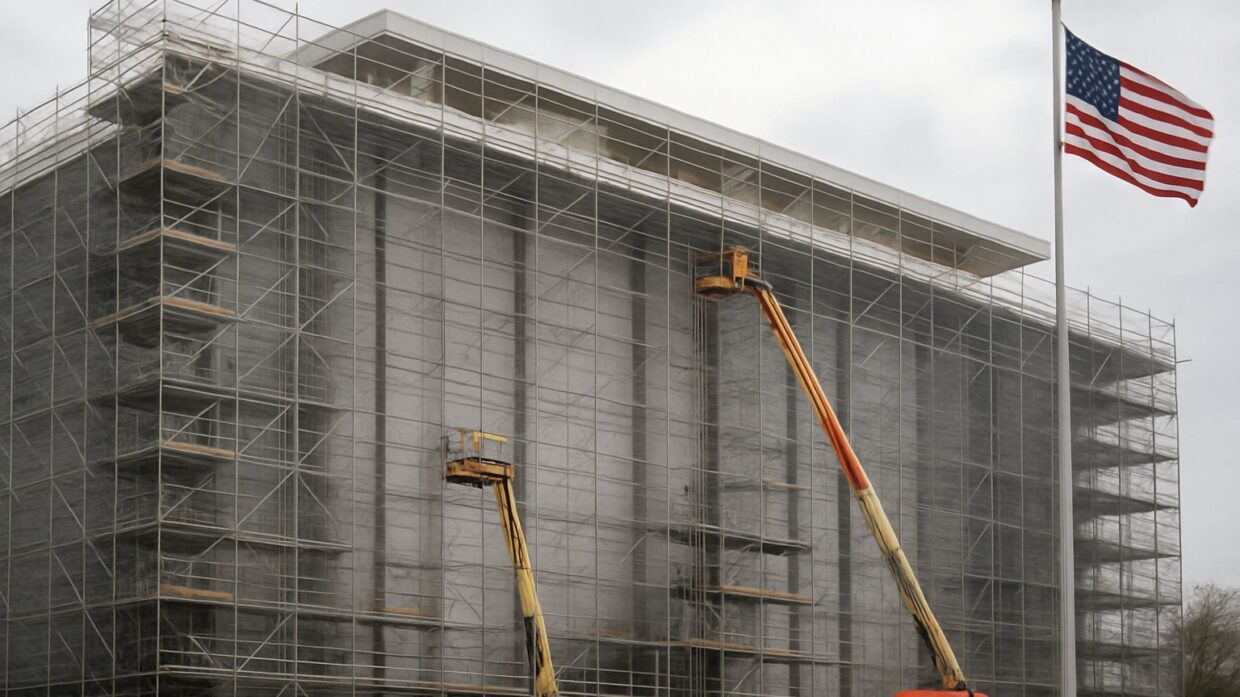
A federal judge on Friday denied the Kennedy Center's request to pause an order requiring the removal of President Trump's name from the building, and crews immediately began scaffolding work to meet the deadline. What the reporting leaves unspecified is the legal theory underlying the original order, who filed the initial lawsuit, and what specific damage or injury the plaintiff claimed justified mandating the name removal.
The Kennedy Center proposed an alternative: allow the name to remain temporarily while planned renovations proceed, which would have made separate removal work unnecessary and eliminated the cost. The judge rejected this request without issuing a written explanation for the denial, according to PBS NewsHour and Axios reporting. The scaffolding went up Friday despite the center's position that the renovation timeline would have resolved the issue without forcing rushed work.
The left frame, articulated in The Atlantic, treats the name removal as incomplete symbolic action. The headline uses the metaphor "de-Trumpification" and argues that erasing his name from a building cannot address "the damage he's done." This framing emphasizes institutional and cultural harm as the real story, with the physical signage as merely performative. It leaves out the specific legal claim that prompted the order in the first place, instead generalizing to Trump's broader presidency as the injury that matters.
The right frame, present in the Washington Examiner, emphasizes operational disruption. The reporting highlights that crews are working under pressure to meet a deadline and focuses on the renovation plans the Kennedy Center had designed to avoid this work. This framing treats the judge's decision as imposing unnecessary costs on an institution, with the renovation timeline as the more efficient path. What it underplays is whether the legal claim driving the order had substantive merit or was frivolous.
What neither framing addresses is the foundational question: what judicial authority supports ordering a private institution or mixed-use public building to remove a private citizen's name from its property? Kennedy Center signage is not a government monument or federal building. The reporting does not establish whether the suit alleged trademark violation, breach of contract, or some other legal theory. Without that context, readers cannot assess whether the order represents proper judicial enforcement of law or judicial overreach on a politically charged symbolic matter.
The sequence also raises structural questions the coverage does not resolve. The judge issued an order, the Kennedy Center sought a pause pending renovation work that would naturally resolve the issue, and the judge denied that request without written explanation. The absence of reasoning makes it difficult to evaluate whether judicial discretion operated appropriately. What remains undisclosed is whether the original plaintiff objected to the renovation timeline alternative, and if so, why.
Judges who issue orders without written explanations create enforcement gaps that distort institutional accountability. This case establishes precedent for judicial mandates to remove private names from buildings without disclosed legal reasoning, transforming what should be contract or trademark disputes into ideologically inflected removals divorced from their underlying claims. Future orders of similar scope will lack precedent clarity about what legal injuries justify such intervention, leaving institutions unable to predict compliance obligations or mount coherent defenses. The Kennedy Center's operational costs and timeline disruptions matter less than the structural damage: when courts act on political symbolism without articulating legal grounds, they invite similar orders across institutions while making appeals and reversals nearly impossible to frame. The judgment without reasoning becomes a mechanism for executing outcomes independent of law.