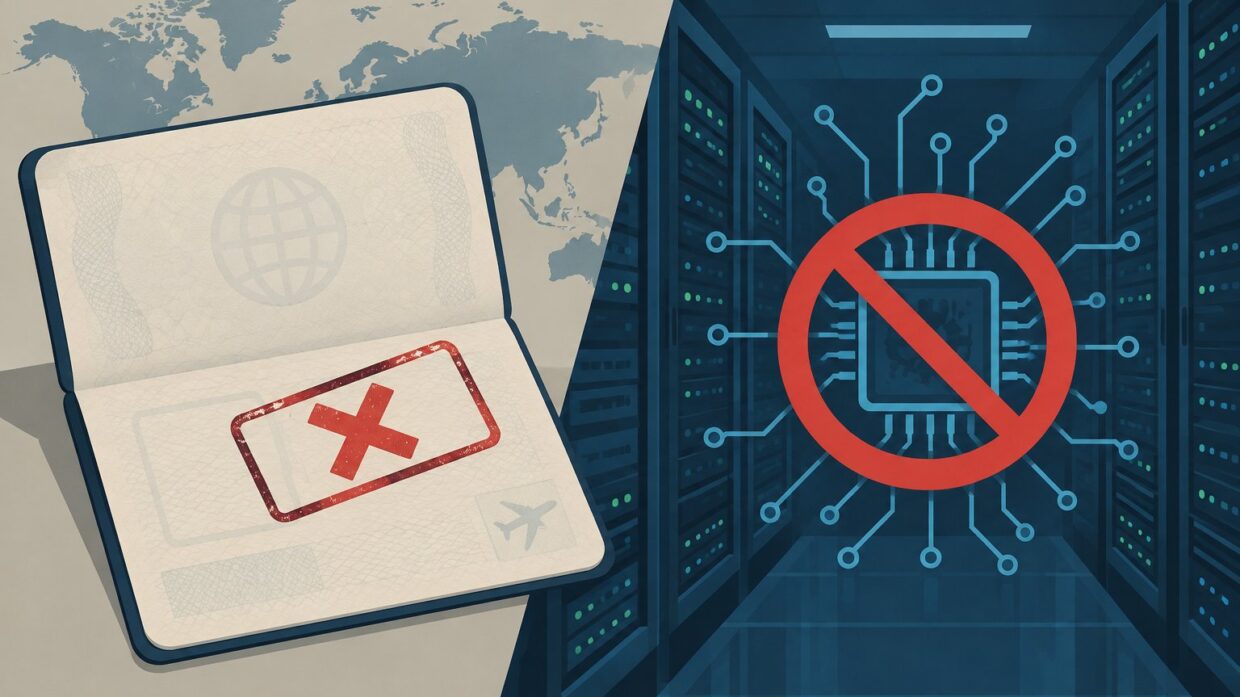
Photo: Well This Is News
Court Strikes Down Trump Visa Ban, Yet Thousands Remain Stranded Abroad
We haven't found a right-leaning take on this story yet.
Breaking stories sometimes publish before every side has covered them. We'd rather show you that than invent a view.
Federal Judge Blocks Visa Ban, But Delays Persist; Trump Admin Appeals AI Tech Ruling
Key Takeaways
- No one has established whether visa processing delays stem from the ban itself leaving applications in queue or from separate State Department staffing and capacity constraints that would persist regardless.
- The court's order invalidated the ban but neither the government nor news reporting has clarified whether the State Department has actually resumed processing applications from the affected countries.
- Both the visa ruling and the DOJ's appeal of the Anthropic AI ban follow the same pattern: courts enter orders, the executive branch contests them, but the practical operational changes remain publicly unexplained.
The Analysis
A federal judge has invalidated a Trump administration ban on issuing immigrant visas to people from 75 countries, yet thousands of affected immigrants remain in their home countries without clarity on when they will be processed, a gap between court victory and practical relief that neither the left nor right is fully explaining.
The NPR reporting establishes the basic sequence: a federal judge struck down the visa ban, but the court order has not eliminated the bureaucratic delays that keep immigrant visa applicants stuck abroad. The reporting does not specify whether the ban was formally rescinded or merely enjoined, whether the State Department has resumed processing on the affected countries' applications, or what the current application backlog actually is. The NPR framing emphasizes the disconnect between "court ruling" and "immigrants continue to be stuck," implying that a legal victory should have produced immediate relief but did not.
The left's framing, visible in NPR's headline and summary, emphasizes that the judge "struck down" the ban while highlighting that the practical outcome, people still waiting, contradicts what a court victory should deliver. The language chooses to foreground the court's action, then immediately undercut its significance. What this framing leaves out is whether the delays are attributable to the original ban's legacy (applications still in queue from when processing was blocked) or to separate, pre-existing State Department staffing and visa processing capacity constraints that would persist even with the ban removed. Without that distinction, readers cannot assess whether the judge's ruling actually solved the problem or merely removed one obstacle among many.
The right's perspective on this particular ruling is not directly represented in the available sources. The Trump administration's likely framing, if it characterizes this ruling at all, would emphasize that the court's order does not magically process applications faster, or that the ban served security purposes that remain valid. But that perspective is not supplied in the source material provided.
What neither side is saying clearly: the underlying question of visa processing capacity. A court can order that a ban be lifted, but if the State Department lacks the staff, resources, or security clearance infrastructure to process visa applications at speed, the court order produces a legal change without a operational one. The NPR reporting does not establish whether the backlog is a direct result of the ban (applications that could not be processed while it was in effect and are now in queue) or whether it reflects the State Department's documented staffing constraints, which have been reported independently of any ban. That distinction matters enormously for assessing what the judge's ruling actually accomplished.
The second story, the DOJ's appeal of a ruling that lifted a ban on federal agencies using Anthropic AI, presents a different but parallel dynamic: a court orders something, the executive branch contests it, and the practical implications remain uncertain. The Bloomberg reporting confirms the appeal exists but does not explain what specific harm the administration claims the Anthropic ban's removal would cause, or whether the appeal has already halted the lifting of the ban pending appeal.
What the available record establishes: one court ruling has been entered and one appeal has been filed. What it does not establish: what happens operationally in the meantime, and whether either ruling actually changes what federal agencies are doing with immigrant visa processing or AI technology procurement.
The visa ruling exposes a fundamental gap between judicial relief and administrative capacity. Courts can strike down restrictions, but they cannot force the State Department to hire additional visa adjudicators or accelerate security vetting procedures. If the backlog stems from the ban itself, the judge's order will eventually clear it. If it reflects chronic understaffing at the consular service, the ruling changes nothing about processing timelines. The Trump administration's appeal of the AI technology ruling compounds this problem by introducing legal uncertainty that freezes procurement decisions, meaning federal agencies cannot move forward even if the court lifts restrictions. The practical consequence is that neither immigrants nor federal technology initiatives advance until the appeals process concludes, making the distinction between legal victory and operational paralysis the actual determinant of policy.