Photo: Well This Is News
We haven't found a left-leaning take on this story yet.
Breaking stories sometimes publish before every side has covered them. We'd rather show you that than invent a view.
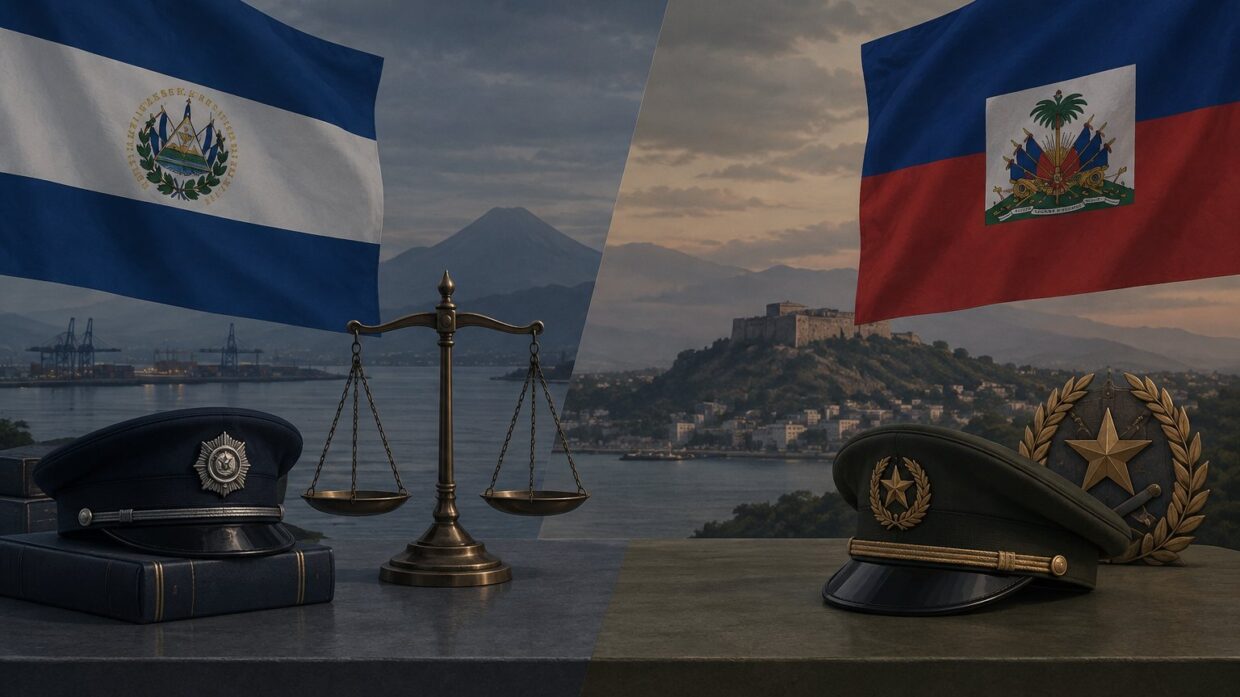
El Salvador strongman deploys troops to Haiti with Trump's blessing while first American extradited for murder
El Salvador sends 2,000 troops to Haiti; first U.S. dual citizen extradited to El Salvador for 2019 femicide
Key Takeaways
- Trump's approval of the Haiti deployment signals a shift in U.S. willingness to work closely with Bukele's government despite its documented pattern of arrests without due process, suggesting a tactical recalibration of tolerance for his methods.
- El Salvador's 2023 expansion of extradition authority for dual nationals creates a legal precedent that could enable other countries to extradite U.S. citizens, marking a potential broader change in how dual-citizen jurisdiction operates internationally.
- The Haiti operation addresses a genuine security crisis where gangs have displaced over 300,000 people and the Haitian government requested military support, but it also expands El Salvador's military footprint in a historically U.S.-influenced region.
The Analysis
Two separate announcements from El Salvador this week, a military deployment to Haiti and the extradition of a California dual citizen, are being presented by outlets across the political spectrum as either evidence of international cooperation or a warning about authoritarianism gaining U.S. backing, but the connection between them and what it actually signals about U.S. foreign policy remains underdiscussed.
The documented facts: Michael Alejandro Castillo Murga, a U.S. and Salvadoran dual citizen from California, was extradited to El Salvador on October 2024 to face charges of aggravated femicide in connection with a 2019 killing. The Department of Justice confirmed he is the first U.S. citizen extradited to El Salvador under this framework. Simultaneously, El Salvador announced it would deploy 2,000 troops to Haiti in support of United Nations-coordinated gang suppression operations and to locate four Salvadoran military technicians captured in a recent ambush. According to Axios, President Trump spoke directly with El Salvador's President Nayib Bukele on Tuesday prior to the announcement and expressed no objection to the deployment.
The right-leaning framing, represented by Axios and Breitbart, emphasizes Bukele's demonstrated capacity and willingness to project power, coupled with Trump's implicit endorsement. This narrative leaves out the fact that Bukele has consolidated executive power through means documented by human rights organizations as extrajudicial. The extradition announcement appears in this frame as evidence of institutional strength and legitimacy, not as a potential shift in how justice systems interact. What the right frame does not fully address is whether Trump's approval of the Haiti deployment signals a broader recalibration of U.S. policy toward Bukele despite documented concerns about his methods, or whether this is a narrow tactical alignment on gang violence.
The left-leaning outlets do not appear substantially in the provided source material, but the implied counter-frame would likely emphasize the extradition as an unprecedented expansion of Salvadoran jurisdiction over U.S. citizens and flag Bukele's military deployment as a form of regional strongman activity that the Trump administration is enabling. That framing would likely omit the specific security context in Haiti, gang violence that has displaced over 300,000 people and created a humanitarian crisis, and the documented request from the Haitian government for international military support.
What neither side foregrounds: the extradition of Castillo Murga is not simply a legal victory for El Salvador. It is a precedent. The specific legal mechanism that enabled it, El Salvador's 2023 expansion of extradition authority for dual nationals, creates a framework that could apply to other U.S. citizens. The timing of Trump's approval of the Haiti deployment matters because it suggests the U.S. is willing to align tactically with Bukele's government despite the documented pattern of arrests of journalists, opposition figures, and gang members without due process. The Haiti deployment itself is framed as humanitarian gang suppression, but it also expands El Salvador's military footprint in a region where the U.S. has historically maintained strategic influence.
The underlying question is not whether Bukele is legitimate or authoritarian, the evidence suggests both are partly true depending on which institutional lens you apply. The question is whether the U.S. is recalibrating its tolerance for his methods in exchange for regional security cooperation and whether the extradition precedent reflects a new U.S. position on dual-citizen jurisdiction that other countries might replicate.
El Salvador's successful extradition of a U.S. citizen under its 2023 dual-national framework establishes a legal precedent that could reshape how Washington and other nations handle citizens with multiple passports. Trump's tacit approval of Bukele's Haiti deployment signals the U.S. is willing to deepen security partnerships with El Salvador despite documented extrajudicial practices, potentially incentivizing other authoritarian governments to expand jurisdiction over American dual nationals. This precedent matters because it inverts traditional U.S. protections: rather than shielding citizens from foreign prosecution, Washington now appears to accept that dual nationality can trigger foreign extradition authority. If other countries adopt similar frameworks and the U.S. continues this alignment, millions of Americans holding dual citizenship face exposure to prosecutions conducted outside U.S. judicial safeguards. The Haiti deployment amplifies this by cementing El Salvador as a regional military actor independent of U.S. command