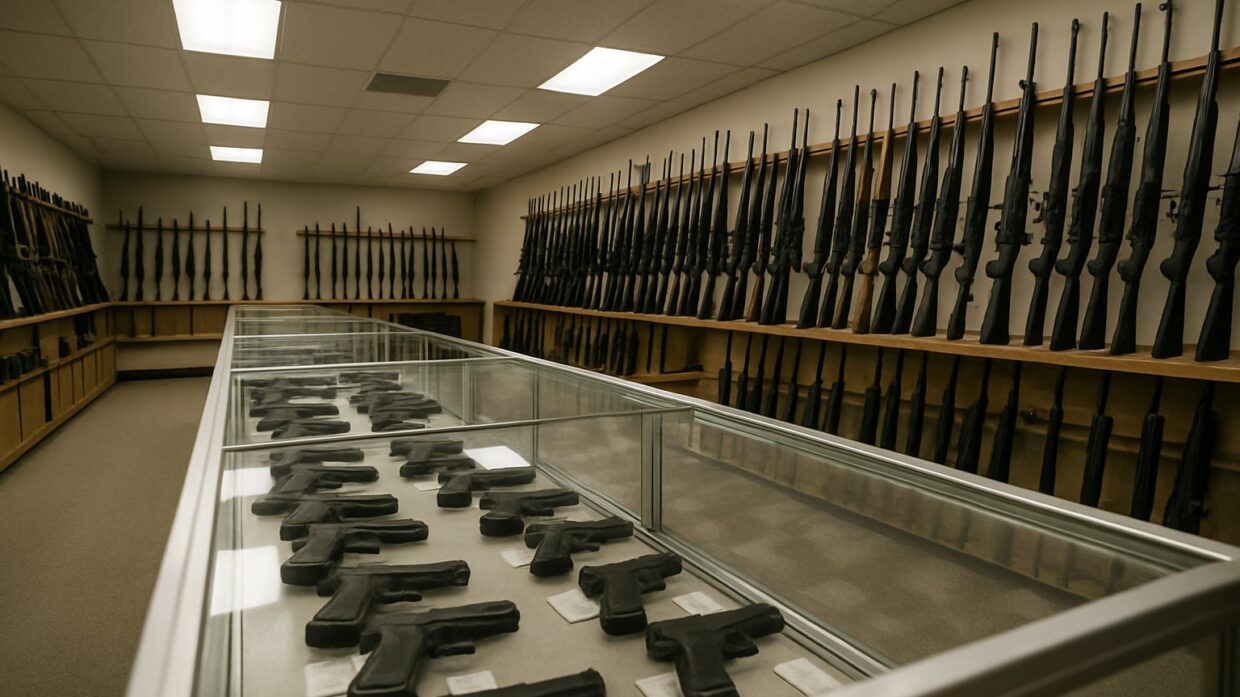
Photo: Well This Is News
Trump DOJ Moves to Arm Teenagers, Abandoning Decades-Old Gun Safety Restriction
DOJ: Federal Handgun Ban for Young Adults Violates Constitutional Rights
DOJ Won't Enforce 1968 Handgun Sales Ban for 18-20 Year-Olds, Citing Second Amendment
Key Takeaways
- The Trump DOJ announced non-enforcement of the law rather than asking Congress to repeal it, leaving the statute technically on the books but unenforced, which creates legal ambiguity for licensed dealers who may face conflicting state laws.
- The Office of Legal Counsel opinion justifying the non-enforcement decision has not been released to the public, so the actual constitutional reasoning behind the move remains undisclosed.
- The decision assumes no future administration will reverse course, but a different DOJ could restart prosecution of dealers selling handguns to 18-20 year-olds since the underlying statute was never repealed.
The Analysis
The Trump administration's DOJ announced it will not criminally enforce the federal ban on handgun sales to 18-20 year-olds, citing a Second Amendment violation after the Office of Legal Counsel completed its constitutional review. The decision affects a 1968 statute that has restricted licensed dealers from selling handguns to anyone under 21 for nearly six decades. No new enforcement mechanism was proposed, meaning the restriction is effectively suspended pending legislative or judicial action.
The actual facts are straightforward: the law exists, the DOJ concluded it violates the Second Amendment based on recent Supreme Court precedent, and the administration will not prosecute dealers who sell handguns to this age group. What remains unstated is the legal reasoning DOJ applied, which the public record does not yet disclose. The Office of Legal Counsel opinion has not been released.
The left frame, reflected in Axios's neutral coverage, emphasizes that this removes a "decades-old" safety restriction and notes the Trump administration initiated the move without Congressional action. That framing leaves out the constitutional basis DOJ cited and the fact that recent Supreme Court decisions, particularly New York State Rifle & Pistol Association v. Bruen (2022), established a historical-originalist test for Second Amendment claims that constrains how long-standing regulations can survive judicial review. The left's narrative of arbitrary removal omits why the legal landscape shifted.
The right frame, articulated by The Federalist and Breitbart, emphasizes constitutional consistency: 18-year-olds can vote, serve on juries, be drafted, and face adult criminal penalties, so the categorical exclusion from handgun ownership appears arbitrary under current doctrine. Assistant Attorney General T. Elliot made exactly this argument. That framing leaves out whether the original 1968 ban was paired with evidence about age-related firearm injury and suicide rates, or whether subsequent decades of gun violence data altered the constitutional calculus. It also does not address whether criminal penalties for dealers sufficiently distinguished this from a personal right inquiry.
What neither side fully captures is the institutional question: the DOJ did not ask Congress to change the law. It announced non-enforcement. This means the statute remains on the books but unenforced, creating a gap where licensed dealers face legal ambiguity. They may sell to 18-20 year-olds without DOJ prosecution, but state laws may still prohibit the sale, and dealers operate in this murky space. The decision also assumes no future administration will reverse course, which is not guaranteed.
The underlying precedent is the 2022 Bruen decision, which imposed a historical test: a gun regulation must be "consistent with the Nation's historical tradition of firearm regulation" to survive scrutiny. That ruling invalidated several post-1960s restrictions. The 1968 handgun ban for under-21 buyers is younger than Bruen's analytical framework prefers, making it vulnerable to challenge even if DOJ enforced it. What neither framing addresses is whether Congress, aware of the new constitutional standard, will legislate a replacement rule tied to historical practice or instead accept the policy outcome.
The real headline is that the Supreme Court's recent Second Amendment doctrine has shifted the constitutional ground beneath a half-century restriction, and the Trump DOJ has chosen not to defend it. Whether this constitutes good constitutional interpretation or problematic non-enforcement turns on the legal merits the public record does not yet show.
Licensed firearms dealers now operate in legal limbo. The 1968 handgun sales ban for 18-20 year-olds remains federal law, but the DOJ will not prosecute violations, leaving dealers exposed to conflicting state laws and potential liability from future administrations. Congress has not acted to replace the suspended rule, meaning no statutory alternative protects this age group from purchasing handguns through licensed channels. The Bruen decision's historical test has effectively hollowed out modern gun regulations without requiring legislative replacement, creating a gap between law and enforcement that Congress must now close or accept. This sets a precedent where executive non-enforcement can unilaterally suspend statutes without new legal authorization.