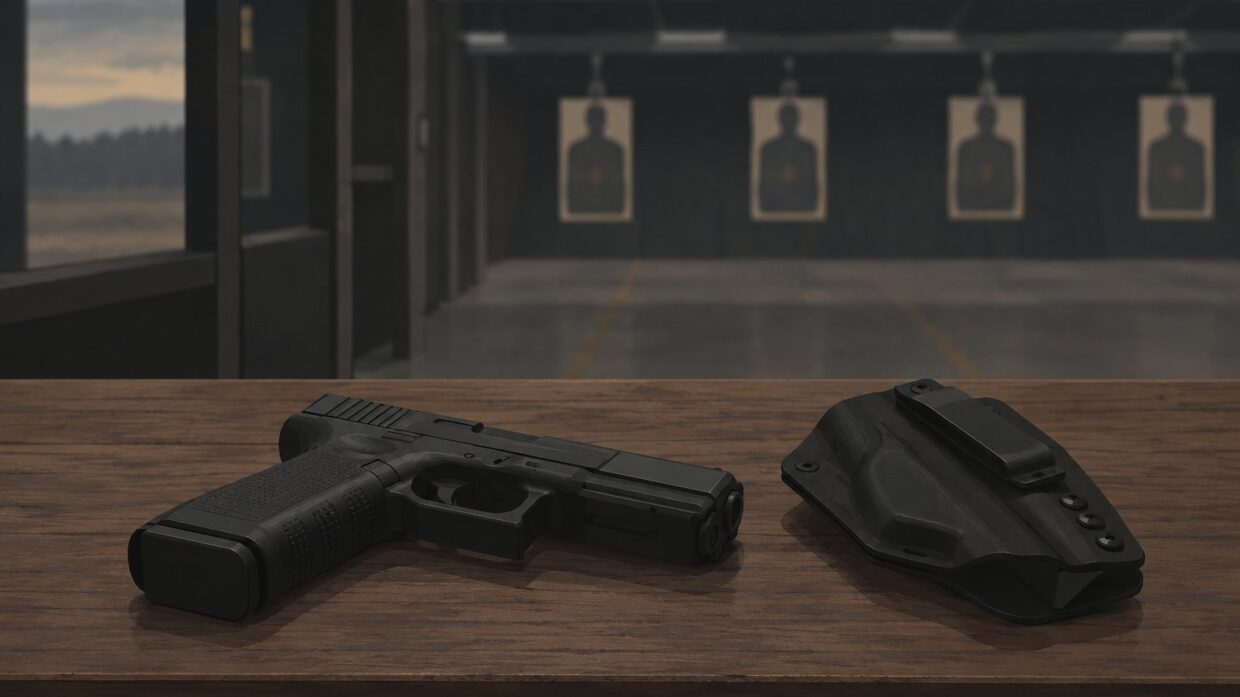
Photo: Well This Is News
Heat director Michael Mann briefly hospitalized after accidental shooting at L.A. gun range
Director Michael Mann accidentally shoots self in leg at Los Angeles gun range
We haven't found a neutral take on this story yet.
Breaking stories sometimes publish before every side has covered them. We'd rather show you that than invent a view.
The Analysis
Director Michael Mann was injured in an accidental weapon discharge at The Range L.A. on Saturday around 4 p.m. while holstering his handgun. Both the left and right framings agree on the basic facts but diverge sharply in what they emphasize and what they omit.
The documented facts are narrow: Mann was at a gun range, the discharge occurred during holstering, he sustained a leg injury, and he received hospital treatment and was released. The incident happened at a commercial, supervised firearm facility in Los Angeles. No other injuries were reported. Mann's representative confirmed the basic narrative. The time, location, and mechanism are consistent across both sources.
NBC News frames this as an injury requiring hospitalization at a public venue, emphasizing that even in a controlled environment, accidents occur. The language "accidental weapon discharge" is the clinical term used in firearms training and incident reporting, but the framing foregrounds the outcome: a director at a hospital. By leading with hospitalization and using the term "injury," the coverage invites readers to consider this as a cautionary tale about risk. The left frame does not explore Mann's experience with firearms, his safety record, or whether this was his first visit to the range. It emphasizes the vulnerability of the individual in a moment of error.
Breitbart frames this as Mann's personal error, not an institutional or environmental failure. The language "accidentally shoots self" assigns primary responsibility to the actor and the specific action, not to the range or circumstances. By specifying the mechanism (holstering) and the self-directed nature of the discharge, the framing treats this as a user error during a routine action. Breitbart does not foreground the hospitalization or explore what the injury entailed. The frame implies competence was the issue, not the venue or access.
What neither side establishes is Mann's prior firearms experience, whether he had used The Range L.A. before, or what specific circumstances led to the discharge during holstering. The public record does not confirm whether the range staff observed any safety violations before the incident or whether he completed required safety briefings. Neither source discloses whether Mann faced any charges or whether the range conducted an investigation. Both sources treat this as a private matter resolved through hospital treatment.
The omission by both sides is significant: Mann's status as a prominent filmmaker means this incident receives coverage it might not otherwise receive. A non-public figure experiencing the same injury at the same range would likely generate no reporting. The left frame uses the prominence to argue for caution about risk. The right frame uses the prominence to highlight personal responsibility. Neither addresses why a notable person's accident becomes news in the first place, or what that tells readers about how accidents are covered when celebrity is involved.
The underlying question is whether this incident reveals anything structural about gun range safety or firearm handling, or whether it is simply a notable person's personal mistake. The available evidence suggests the latter, but both framings avoid saying so directly. What neither side is saying is that this is a story primarily because of who Michael Mann is, not because of what happened or what it demonstrates.
Michael Mann's injury confirms that accidents at supervised gun ranges happen regardless of venue quality or user status, yet neither media frame examines the actual safety protocols at The Range L.A. or whether this incident prompted any regulatory review. What remains unreported is whether California's Department of Justice or Los Angeles County requested incident documentation from the range, or if the facility modified its holstering procedures following the discharge. The real institutional consequence has been erased: this story received coverage and column inches only because Mann directs films, not because it triggered safety investigations or policy changes at the range, within the industry, or among regulators. A civilian shooting themselves while holstering at the same location would vanish from public record entirely, revealing that media attention to firearms accidents correlates directly with celebrity status rather than with actual hazard severity or systemic failure.