Photo: Well This Is News
Trump rallies while fuel costs surge to historic levels
National diesel average reaches all-time high of $6.40 per gallon
Diesel prices hit record high as Trump campaigns in North Carolina
Key Takeaways
- Diesel prices are driven by global commodity markets, refinery capacity, geopolitical sanctions, and international supply conditions rather than by domestic political figures or campaign rallies.
- Neither major political framing addresses what policy levers actually exist to influence diesel prices or whether the current surge reflects temporary volatility or structural energy supply problems requiring intervention.
- The economic consequences of diesel hitting record highs extend across groceries, heating, trucking, and supply chains, yet neither side provides readers with enough context to assess whether this price movement is within normal market ranges or signals an unprecedented crisis.
The Analysis
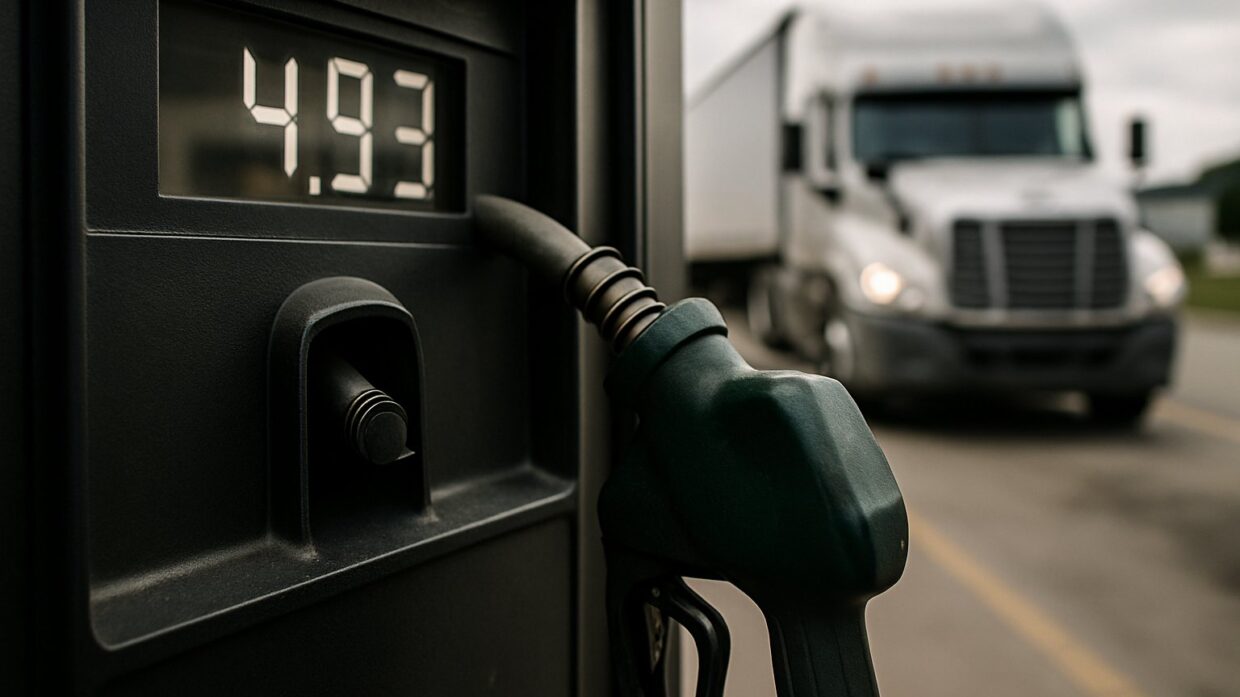
Diesel fuel reached $6.3956 per gallon on Thursday, the highest national average ever recorded by AAA, while President Trump was conducting a campaign rally in North Carolina. The left-leaning framing emphasizes the economic burden on working Americans and describes this as an "overlooked factor" making everything more expensive. The right-leaning framing reports the factual price increase and sequence without assigning blame or linking it directly to administration policy.
The actual facts are straightforward. AAA data establishes the price at $6.3956 per gallon Thursday, up from $3.7075 one year earlier. That is a 73 percent increase. Diesel is a commodity traded on global markets, and its price reflects international supply conditions, refinery capacity, geopolitical events, and demand. The timing of Trump's campaign rally appears incidental to the price movement itself, though both sides frame it differently.
The left's framing focuses attention on the pain point: American consumers and businesses paying more for fuel. By calling it an "overlooked factor," Vox's coverage implies that political coverage has neglected economic consequences while focusing on electoral theater. This framing serves a purpose: it emphasizes material conditions over campaign messaging. What this framing underplays is any analysis of what actually drove the price increase. A reader consuming only the left version would understand that diesel is expensive now but not why, and might reasonably infer that the Trump campaign's presence is somehow relevant to the problem.
The right's framing sticks to the price data and AAA attribution, establishing the factual record. It mentions Trump's rally as a concurrent event without claiming causation or connection. This avoids overreach. What the right-leaning version leaves out is any analysis of economic consequence or whose policies may have contributed to supply conditions. A reader consuming only the Daily Wire version would know the price is historically high but not what it means for transportation, supply chains, or inflation broadly.
What neither framing captures directly is the commodity market context that explains why diesel surged. Global crude oil prices, refinery outages, Russian crude sanctions, and seasonal demand patterns all shape diesel costs. Neither side fully addresses whether there are policy levers available to the administration, what those levers are, and what their likely effects would be. Neither acknowledges that diesel prices affect everything from groceries to heating fuel to trucking costs, making this legitimately significant economic data.
The unresolved question is whether this price movement reflects temporary market volatility or structural changes in energy supply that will persist. That matters for evaluating whether any candidate's policy proposals would materially affect the trajectory. The current coverage establishes that prices are historically high but leaves readers unable to assess whether that is predictable within the commodity market's normal range or signals something requiring policy intervention.
Record diesel prices ripple through supply chains that move nearly everything Americans consume, from groceries to construction materials to heating fuel. A 73 percent annual increase directly raises costs for trucking companies, which pass expenses to retailers and consumers through higher prices on goods. Refineries operating at constrained capacity and global crude markets shaped by sanctions mean diesel availability constrains economic activity independent of any single policy decision. Whether this represents temporary volatility or a structural shift in energy supply determines whether either candidate's proposals could meaningfully affect future prices. Without understanding the commodity mechanics driving the surge, voters cannot evaluate whose policies might actually address fuel costs or whether those costs will remain elevated regardless of who leads. The disconnect between campaign rhetoric and fuel market fundamentals leaves working Americans and businesses making pricing decisions without clear answers about what conditions to expect.