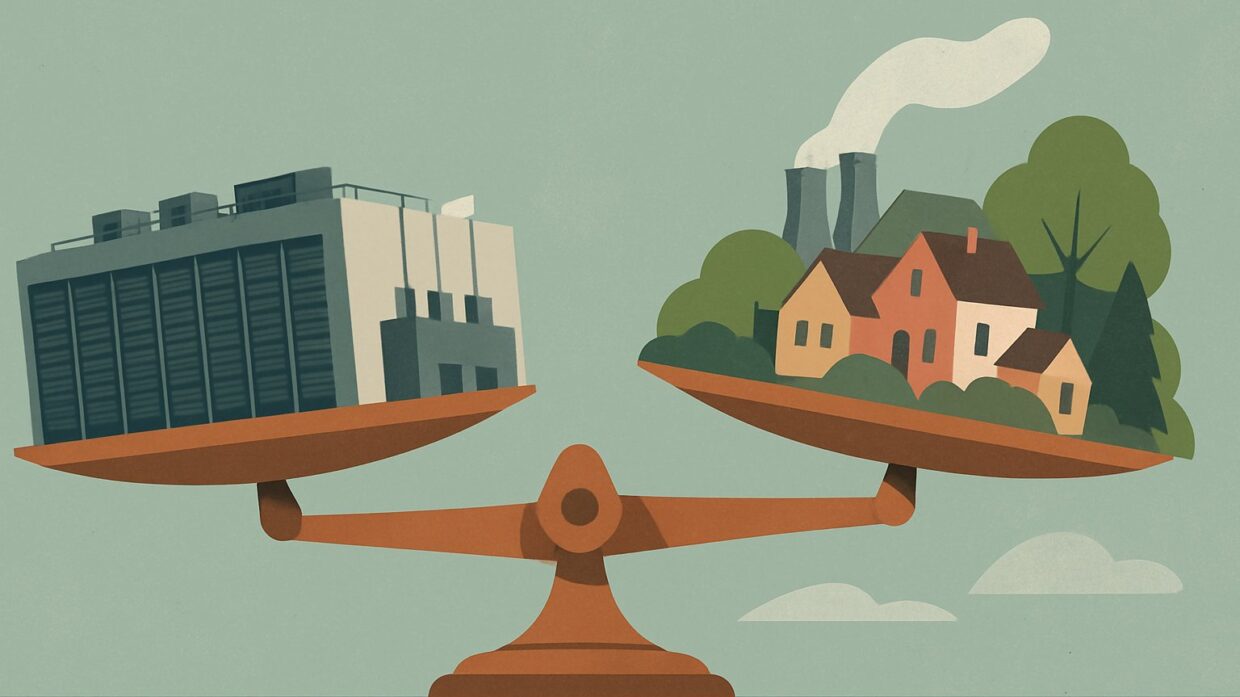
Photo: Well This Is News
Communities Fight to Preserve Local Resources Against Data Center Expansion
Opposition to Data Centers Shows America's Self-Defeating Skepticism of Progress
Data Center Opposition Reflects Broader Tension Over Development and Local Control
Key Takeaways
- The historical analogy that drives the right's argument lacks specificity: factories could be built in many locations, but data centers depend on specific electrical and water infrastructure that does not exist everywhere, making some rejections physically consequential rather than merely obstructive.
- Both sides ignore that some infrastructure opposition has prevented genuine harms (like coastal nuclear plants vulnerable to storm surge), meaning rejection is not categorically self-destructive and benefit claims require examining what risks matter.
- The core dispute is really about who decides burden distribution when infrastructure is genuinely necessary nationally but has real local costs, not about whether progress is good or obstruction is bad.
The Analysis
The data center opposition debate hinges on a factual claim about history that National Review articulates directly but does not specify: that Americans have never rejected a major infrastructure project and benefited from that rejection. That claim requires examination because it frames the entire argument and determines whether local opposition looks prudent or destructive.
What actually happened in several U.S. jurisdictions: Communities began blocking or significantly delaying data center construction in 2024-2026, citing water consumption (data centers require intensive cooling), electrical grid strain, and impacts on local property values and community character. Virginia, Iowa, and parts of Ohio saw organized resistance that delayed or stopped projects. The National Review argument uses this recent phenomenon to illustrate what it calls a pattern of self-defeating American skepticism toward progress.
The right's framing emphasizes the opportunity cost of rejection. National Review's language is explicit: opposition is "self-destructive" (the word appears in the headline), and the implied comparison is to factory development in earlier decades, which communities also resisted initially but which ultimately transformed regional economies. The frame positions local opposition as emotional and backward-looking, as if environmental and resource concerns are merely obstacles to inevitable progress rather than legitimate factors in infrastructure planning. What this framing leaves out is the specific resource constraint that makes data centers different from factories: water availability in many U.S. regions is not infinite, and data center water consumption has measurable effects on local water tables and agricultural viability.
The left framing (not directly present in the provided sources but implicit in opposition rhetoric) emphasizes democratic control and fair distribution of costs and benefits. The unstated position is that communities should have genuine power to reject developments that concentrate profits externally while imposing local environmental costs. This frame does not adequately engage with the national infrastructure demand that data centers address. It treats local opposition as inherently legitimate without examining whether the cumulative effect of hundreds of local rejections creates a genuine infrastructure shortage that harms national competitiveness or access to AI services.
What neither side foregrounds is the actual constraint: the historical analogy to factories is imperfect because factory production could be distributed across many locations. Data centers depend on specific infrastructure, including both electrical supply and water availability. Some regions cannot physically accommodate them without real tradeoffs. The National Review claim that rejection has never benefited Americans lacks specificity about what benefit means. Some infrastructure opposition did prevent genuine harms (coastal nuclear plants that would have been exposed to storm surge, for example), though the framing of those victories depends on which risks you weight. What the sources do not establish is whether current data center opposition will result in those projects being built in regions better suited to them, or whether it will result in meaningful shortages.
The Yale Climate Connections piece points toward the actual tension: cities and regions increasingly face consequential climate and weather adaptation decisions. The implication is that communities cannot simply reject development and remain unaffected by the global decisions that development serves. That framing does not resolve the substantive dispute about who bears the costs of national infrastructure, but it moves the conversation beyond "progress versus obstruction" into the question of how to distribute burden fairly when infrastructure is genuinely necessary.
Local data center opposition movements in Virginia, Iowa, and Ohio are establishing a legal and political precedent that developers will cite to challenge state authority over regional infrastructure siting. When communities successfully block or delay projects through organized resistance, they create case law and legislative momentum that extends far beyond data centers. Other industries dependent on water-intensive processes, electrical capacity, or land use will invoke the same local veto logic, forcing state legislatures to choose between accommodating genuine regional constraints or centralizing siting authority. The actual consequence is not whether data centers get built, but whether American infrastructure development will be governed primarily by local democratic control or by state and federal mandates that override local opposition, a shift with implications for decades of future development decisions.