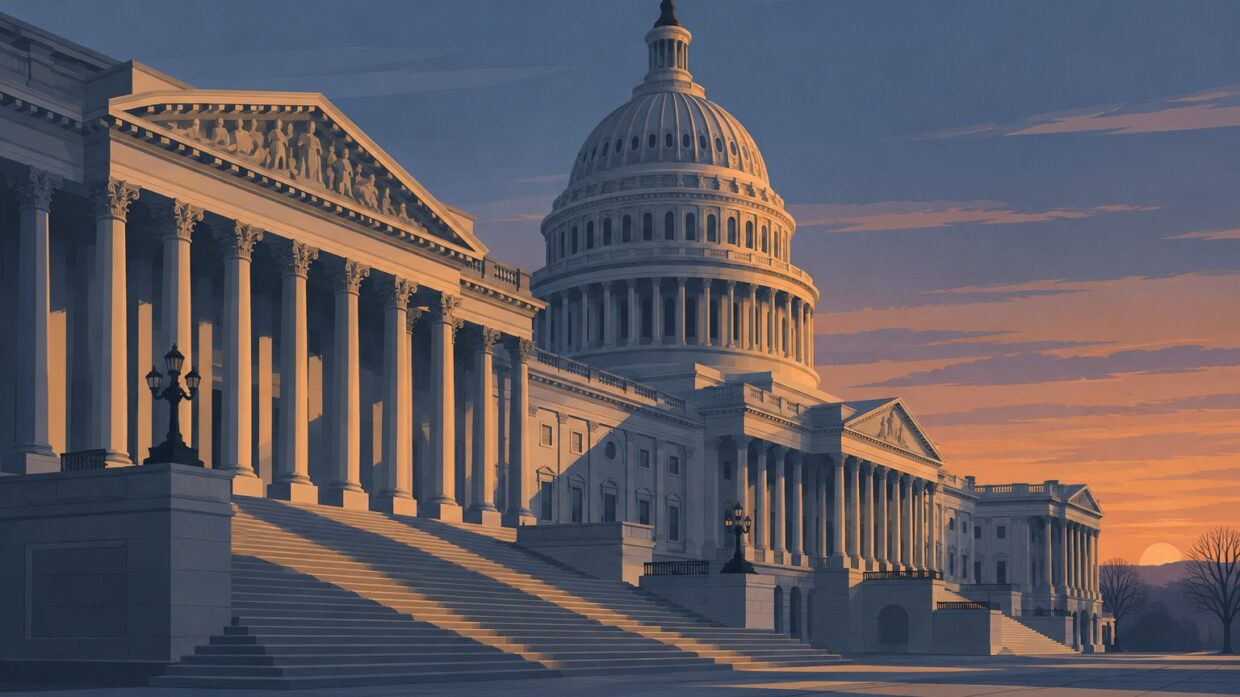
Photo: Well This Is News
Trump Backs Huang Amid Spy Scandal as Congress Returns After GOP Election Disaster
We haven't found a right-leaning take on this story yet.
Breaking stories sometimes publish before every side has covered them. We'd rather show you that than invent a view.
Congress Returns as GOP Faces Midterm Losses; Trump Shapes White House Leadership
Key Takeaways
- No reporting has established whether Senate Republicans' anger at Trump reflects genuine strategic calculation about electoral losses or factional positioning for 2024.
- Republican midterm losses correspond with multiple documented causes including inflation, abortion policy concerns, and recruitment problems, yet outlets present Trump as the primary explanation without examining the evidence.
- News coverage emphasizes personality conflict and blame allocation rather than the specific legislative votes and policy choices Congress must make in the coming weeks.
The Analysis
Congress returns this week to a Washington substantially reshaped by midterm results that Republicans did not anticipate. The documented fact is straightforward: voters reduced Republican representation in both chambers. What is worth examining is not what happened, but how different outlets are framing its causes and consequences, and what those framings omit.
The HuffPost framing leads with Trump backing Huang amid "alleged spy affair scrutiny," grafting a personal-conduct story onto the return of Congress itself. This construction serves a specific narrative: Trump's judgment and character are the central issue, not legislative capacity or policy disagreement. The frame emphasizes loyalty over institutional norms. What it leaves out is the degree to which Republican losses were driven by specific policy positions versus candidate quality versus anti-Trump sentiment. The framing does not foreground whether Senate Republicans themselves believe Trump's endorsement decisions materially cost them seats.
The Hill's framing emphasizes GOP fracture: "Senate Republicans, in particular, are furious with President Trump, whom they blame for the loss of both chambers." This is a directly sourced claim. The framing centers on intraparty conflict and attribution of blame. It does not, however, establish whether that blame is empirically supported by electoral data or represents post-hoc explanation by members seeking to distance themselves from the losses. The framing also emphasizes the "long to-do list" facing Congress, which shifts focus to legislative mechanics rather than the political earthquake that produced the new alignment.
Bloomberg's language, "both parties are gearing up for a rocky ride," is symmetric but vague. It does not specify what the actual disagreements are or where the points of negotiation exist. The term "battle" in the headline suggests conflict without specifying its content or stakes.
What neither framing adequately captures is the sequence of events that produced this moment. The midterm results did not emerge from a single cause. Republican losses corresponded with high inflation, voter concerns about abortion policy following the Supreme Court's Dobbs decision, and candidate recruitment problems in specific districts. Some Republican candidates Trump endorsed won; others lost. The available reporting does not establish a clear causal mechanism linking Trump's specific actions to the scale of GOP losses, yet multiple outlets present Republican anger at Trump as established fact without examining whether that anger reflects strategic calculation or factional positioning ahead of 2024.
The other major omission across all three frames is the actual legislative agenda. Congress returns with appropriations decisions pending, judicial confirmations to process, and a compressed timeline before year-end. The reporting emphasizes personality and blame rather than the specific policy choices that will define the next weeks. A reader consuming only these headlines would not know what Congress is actually preparing to vote on or what the concrete stakes are for different constituencies.
The underlying question this moment raises is whether the midterm losses represent a repudiation of Trump specifically or a reflection of broader economic and cultural conditions that any Republican candidate would have faced. The reporting has largely chosen to emphasize the former because it is more dramatic and produces clearer attribution. The evidence may not support that framing.
Republican losses in the midterms have created a structural problem for GOP legislative unity that will directly determine whether Congress can pass appropriations bills, judicial confirmations, and other measures before year-end. The reporting frames these losses as primarily a Trump judgment problem rather than examining whether specific policy positions on abortion or inflation drove voter behavior across districts. This distinction matters because if losses stem from Trump-endorsed candidate recruitment failures, Senate Republicans face a different 2024 calculation than if losses reflect constituent rejection of GOP economic policy or abortion restrictions. Congress returns with a compressed calendar and divided caucus, yet reporting emphasizes factional blame rather than the concrete legislative votes and budget deadlines that will test whether Republican divisions can actually block governance. The framing omission ensures readers cannot assess whether Republican anger at Trump reflects genuine strategic disagreement or performative distance-taking before the next primary cycle.