Photo: Well This Is News
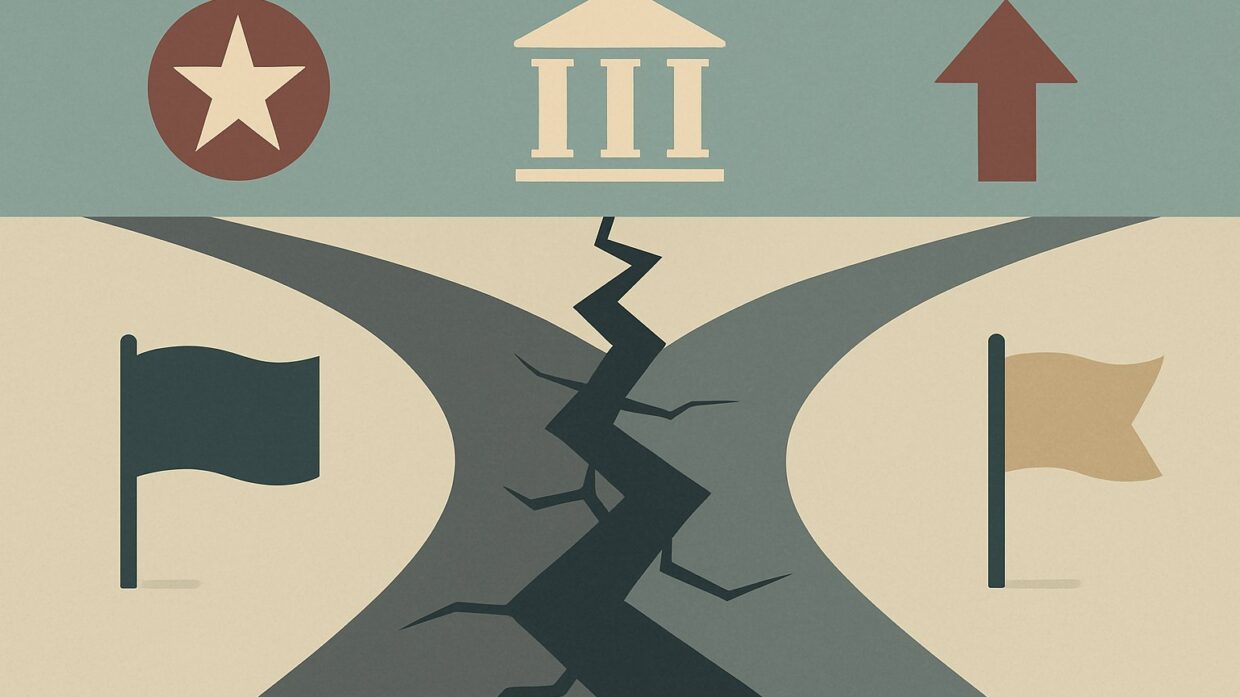
MAGA Movement Fractures as Figures Clash Over Kirk's Legacy
Charlie Kirk's Death Marks Generation's 9/11, Exposes 25 Years of National Decline
Charlie Kirk Death Reshapes MAGA Movement as Right Invokes 9/11 Memory
Key Takeaways
- Neither side has established whether Kirk actually held formal institutional power within MAGA or functioned primarily as a media amplifier, making claims about his centrality to the movement's future unverified.
- The Atlantic presents internal feuds as evidence of structural fragmentation without showing whether MAGA supporters feel organizationally untethered or whether grassroots funding and engagement have measurably declined.
- The Federalist's comparison of Kirk's death to 9/11 depends on the claim holding that his death resulted from coordinated attack or foreign adversary action, but available reporting has not disclosed the full circumstances of how he was killed.
The Analysis
Charlie Kirk's death has triggered starkly different interpretations of what his absence means for American politics and national security, but both the left and right framings omit the same critical question: whether Kirk's political significance was proportional to his actual institutional power or whether both sides have inflated his importance to serve competing narratives.
The Atlantic's reporting focuses on documented feuds among MAGA figures over the past year, arguing the movement's survival depends on whether other personalities can consolidate the influence Kirk held. The framing emphasizes fragmentation, infighting, and the absence of an organizing center. This narrative leaves out what it would require to verify: whether the feuds reflect structural weakening of the movement or normal internal competition within any political coalition. The Atlantic does not establish whether MAGA supporters themselves report feeling untethered or whether grassroots funding and engagement have declined. The coverage treats Kirk's personal role as self-evidently central without presenting evidence of what specific institutional functions he performed that others cannot replicate.
The Federalist's framing invokes Kirk's death as equivalent to the September 11 attacks, an analogy that serves multiple functions simultaneously. The publication uses the 25th anniversary of 9/11 to argue that America has systematically failed to secure itself, has surrendered sovereignty through immigration and surveillance technology, and has lost cultural coherence through what it characterizes as forced multiculturalism. The headline states directly: Kirk's assassination was this generation's 9/11. This equivalence claim does not require Kirk to have been a government official, military figure, or institutional leader. It requires only that his death be traumatic to his audience. The Federalist does not explain why a political activist's death should carry the symbolic weight of an attack that killed nearly 3,000 people, but the comparison serves to reframe immigration, surveillance, and cultural integration as security failures comparable to terrorism.
What neither side addresses is the prior question: what was Kirk's actual role in MAGA's organizational structure? Was he a decision-maker within Trump's apparatus, a media figure who amplified pre-existing trends, or both? The Atlantic assumes his personal role was central to movement coherence without presenting internal communications, funding flows, or documented decision-making authority. The Federalist assumes his death should be nationally defining without establishing that his political functions cannot be performed by other figures already in the movement ecosystem.
The right's 9/11 framing also serves a specific rhetorical function unavailable to the left: it places Kirk's death within a narrative of national decline and allows the Federalist to argue that 25 years of post-9/11 policy has failed. This is a legitimate political argument about the consequences of immigration and surveillance policy. But the framing depends on the 9/11 analogy holding, which the evidence does not establish. Kirk was not killed by a foreign adversary or as part of a coordinated attack. The reported circumstances, which the available coverage does not fully disclose, matter to whether the comparison holds.
The underlying question is whether Kirk's death represents a genuine inflection point for MAGA's political future or whether both sides are using his death to advance pre-existing arguments about movement fragmentation and national decline. The public record does not yet establish whether MAGA's organizational capacity or financial base has been materially damaged or whether the feuds the Atlantic describes are substantively different from normal internal competition.
Kirk's actual institutional role within MAGA infrastructure remains deliberately obscured by both interpretations, allowing his death to become a mirror for unrelated political arguments. The Atlantic treats his influence as self-evidently central to movement coherence without documenting what specific organizational functions he performed that others cannot replicate, while The Federalist's 9/11 comparison depends entirely on symbolic weight rather than structural analysis. Neither publication addresses the testable question: has MAGA's documented funding mechanisms, internal decision-making structures, or grassroots mobilization capacity actually diminished, or are both sides projecting their preferred narratives of fragmentation and decline onto an event whose organizational consequences remain unmeasured. This gap matters because it determines whether Kirk's absence will force substantive changes to how the movement operates or whether existing figures will seamlessly absorb his functions, making today's coverage less journalism than competing posthumous mythmaking.