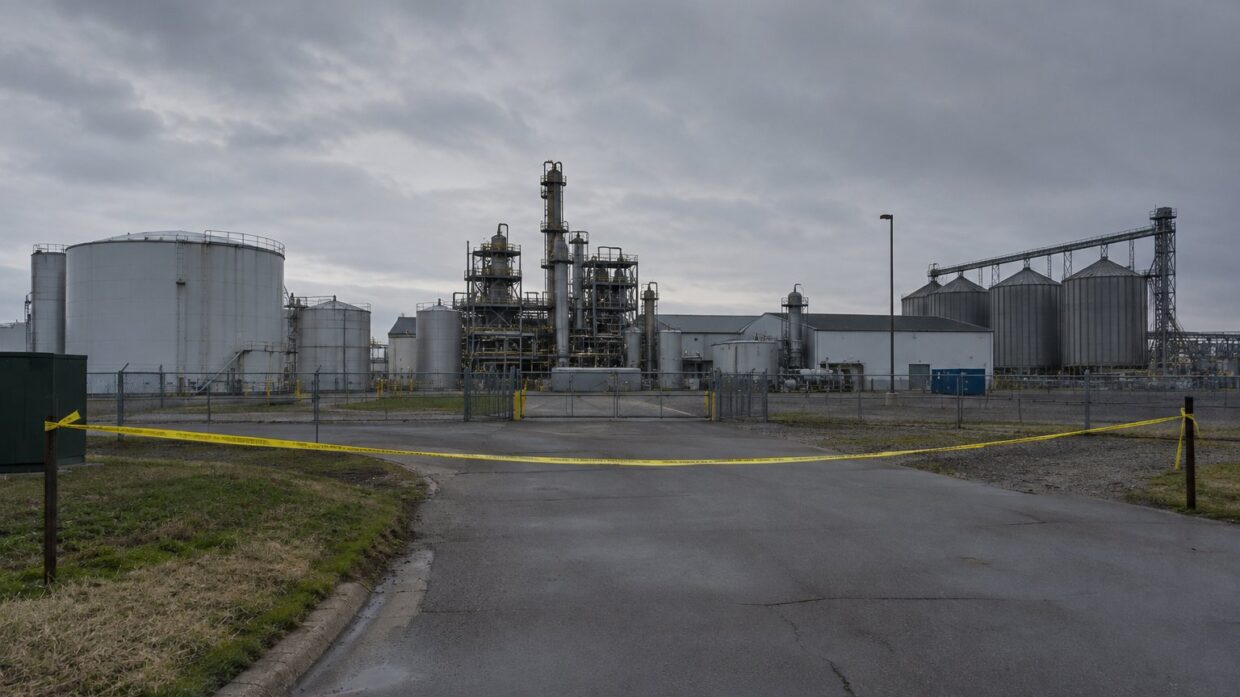
Photo: Well This Is News
Credible bomb threat forces evacuation near Peoria ethanol plant as FBI investigates
Credible bomb threat near chemical plant prompts evacuation and Illinois city shutdown
Bomb discovered near Illinois ethanol plant, prompts evacuation and FBI investigation
Key Takeaways
- No reporting reveals who placed the device, whether it follows a pattern of threats against energy infrastructure, or what motivated the threat.
- Critical infrastructure security procedures that allowed the device to reach the ethanol plant perimeter are not discussed in any available coverage.
- The timeline of discovery, who found the device, and whether it was placed during operating hours or overnight remain unspecified across all sources.
The Analysis
A suspicious device discovered Friday at the BioUrja Renewables ethanol plant in Peoria, Illinois, has been rendered safe by authorities but triggered immediate evacuations and an FBI investigation. What the public record establishes is straightforward: a credible threat was identified, a one-mile evacuation radius was imposed, and federal investigators are now examining the device and circumstances surrounding its placement.
The factual details both sides report are largely consistent. NPR and NBC News describe the device as a "credible threat" that authorities confirmed posed genuine danger. Breitbart uses similar language, referencing "credible bomb threat" and the evacuation protocol. All three sources note the Friday afternoon timing and the one-mile evacuation perimeter. The FBI investigation is confirmed across reporting.
What distinguishes the framing is vocabulary choice and emphasis. NPR and NBC News foreground the technical rendering-safe of the device and the investigative process underway, using language like "rendered safe" and "deemed credible threat." This framing emphasizes the authorities' competent response and the ongoing federal investigation. Breitbart's headline uses the phrase "chemical plant" rather than the reported facility type, ethanol plant, and includes "city's shutdown" as the lead consequence. This reframing shifts emphasis from the device itself to the broader disruption and scale of impact on Peoria residents. The word choice difference is minor but notable: NPR says the bomb was "found," Breitbart says a "suspicious package" was "found," which are equivalent, but Breitbart's emphasis on "shutdown" rather than "evacuation" suggests broader civic disruption.
Neither framing addresses several unresolved questions that the current reporting does not establish. The public record does not disclose who placed the device, whether this follows a pattern of threats against energy infrastructure, what the device's composition reveals, or whether authorities have identified any motive or suspect. No reporting mentions whether this reflects broader security concerns at renewable fuel facilities or whether the plant had received prior threats. The absence of this context appears in all three sources equally.
What the reporting does not emphasize is the institutional implication for critical infrastructure security. An ethanol plant is classified as chemical and hazardous materials infrastructure under federal regulatory frameworks, yet the baseline security procedures that allowed this device to reach the perimeter are not discussed in any of the available coverage. No reporting confirms whether this represents a failure in screening protocols, whether the device was placed overnight or during operating hours, or whether facility personnel or external parties discovered it. The timeline between discovery and evacuation order is not specified in the summaries provided.
The most honest version of this headline acknowledges what occurred without speculation: Federal authorities are investigating a credible explosive device discovered at a Peoria ethanol plant that prompted emergency evacuation of surrounding neighborhoods. What distinguishes the versions is not accuracy but rather which details each outlet places in focus and which details all outlets leave unexamined. Neither side's framing is false, but neither frames the story in ways that illuminate the security or investigative dimensions that context would require.
Critical infrastructure protection protocols face immediate scrutiny after a credible explosive device reached the perimeter of an Illinois ethanol plant classified under federal hazardous materials regulatory frameworks. The incident exposes gaps in security screening at facilities handling volatile chemical processes, yet no reporting has established whether the device was discovered during operating hours, how it bypassed facility protocols, or whether this represents a pattern of threats against renewable fuel infrastructure. The FBI investigation will determine motive and suspect identification, but the underlying question of baseline security adequacy at similar plants nationwide remains unaddressed. If investigators find that standard perimeter protocols failed, expect federal mandates requiring enhanced screening procedures across the ethanol production industry, fundamentally altering operational costs and liability frameworks for renewable fuel facilities.