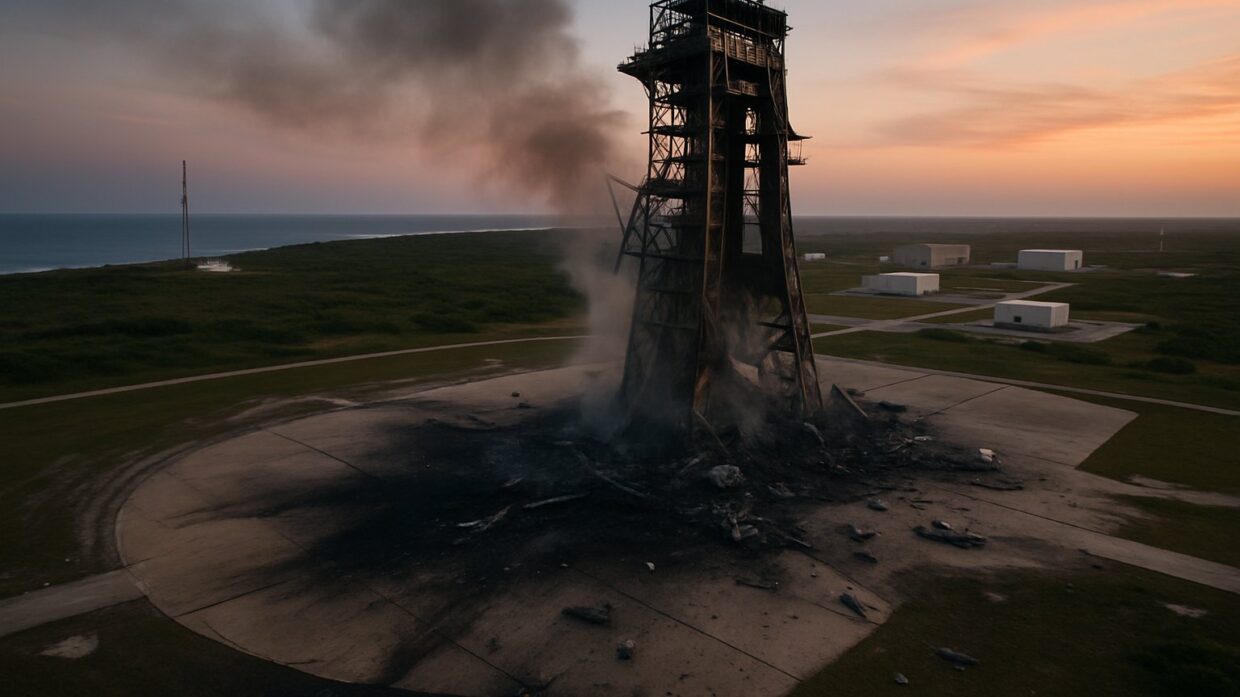
Photo: Well This Is News
Jeff Bezos' Blue Origin rocket explodes during engine test in Florida
Bezos-Owned Rocket Explodes at Cape Canaveral, Damages Billion-Dollar Launch Pad
Blue Origin's New Glenn rocket explodes during Florida ground test
Key Takeaways
- Ground test explosions are routine in rocket development across the industry, yet neither side reported that SpaceX, United Launch Alliance, and other providers have experienced similar events without widespread coverage.
- The reporting establishes the explosion occurred and caused damage but does not specify whether it was a deliberate destructive test designed to understand failure limits or an unexpected failure.
- Blue Origin's actual repair timeline, the specific contract terms governing NASA's recourse if schedules slip, and what engineering improvements result from this test remain completely undisclosed by all sources.
The Analysis
Blue Origin's New Glenn rocket exploded during a ground test at Cape Canaveral Space Force Station on Thursday night, damaging the launch facility and raising immediate questions about the company's readiness for crewed missions NASA depends on for lunar operations. The explosion was significant enough to be felt miles away in nearby residential areas, yet the available reporting establishes very little about what specifically failed or what the damage assessment reveals about the vehicle's design.
Blue Origin released a statement saying the vehicle "experienced an anomaly" during the test and committed to providing updates. That language, "anomaly," is standard aerospace terminology for any unplanned event, from minor sensor errors to catastrophic structural failure. The company did not specify whether the explosion occurred during engine ignition, during sustained firing, or at shutdown. The available reporting does not confirm the cause, the extent of damage to the launch pad infrastructure, or whether any structural or design defects are suspected. What the record does establish is that the test occurred at a government-controlled facility, that nearby residents reported feeling the blast, and that the facility sustained damage significant enough to affect Blue Origin's launch timeline.
The left-leaning coverage in MSNBC emphasizes the accident itself and Blue Origin's minimal public disclosure. The framing foregrounds Jeff Bezos' ownership and the company's brief statement, implying opacity. This framing leaves out the context that aerospace testing failures, especially during ground tests, are relatively common and often designed into test protocols to understand failure modes. It also does not establish whether the explosion occurred as intended during a deliberate structural limit test or whether it was unexpected.
The right-leaning coverage in The Daily Wire uses language describing the explosion as resembling "a nuclear bomb" and emphasizes damage to a "billion-dollar launch pad" and complications for "NASA's plans to build a base on the moon." This framing dramatizes the visual scale of the event and links it to broader NASA objectives. It does not establish the actual repair timeline, whether the damage is to the launch pad structure itself or to the rocket, or whether the facility remains serviceable for other missions in the interim.
Neither frame addresses what the testing program was designed to establish or whether the test revealed information Blue Origin and its contractors now use to improve the design. Neither specifies whether this was a planned destructive test or an unplanned failure. Neither explains the typical schedule for ground testing before orbital flight or whether this delay materially affects NASA's lunar timeline. Neither names the specific contract terms between Blue Origin and NASA that may govern liability or schedule adjustments following test anomalies.
The underlying question is whether this was a setback that will be resolved through normal engineering iteration or a signal of more fundamental design problems. The available reporting does not yet establish that distinction. A reader seeing only these headlines would not know that ground test explosions, while dramatic, are common in rocket development and that SpaceX, United Launch Alliance, and other providers have experienced similar events. What remains undisclosed is the specific failure mode, the engineering response, and what Blue Origin's revised timeline now is.
Cape Canaveral's New Glenn explosion directly threatens NASA's Artemis lunar program timeline because Blue Origin holds the contract to supply cargo landers for moon base operations, and the damage assessment will determine whether the launch pad sits idle for months or years while redesigns proceed. If structural or engine design flaws caused this failure rather than a deliberate test limit, NASA faces either accepting a delayed lunar architecture or redirecting development contracts to competing providers, fundamentally altering the agency's return-to-moon schedule and cost projections. The silence from both Blue Origin and NASA about whether this was a planned destructive test or unexpected failure obscures whether the company's vehicle design itself requires major revision before any crewed missions can proceed.