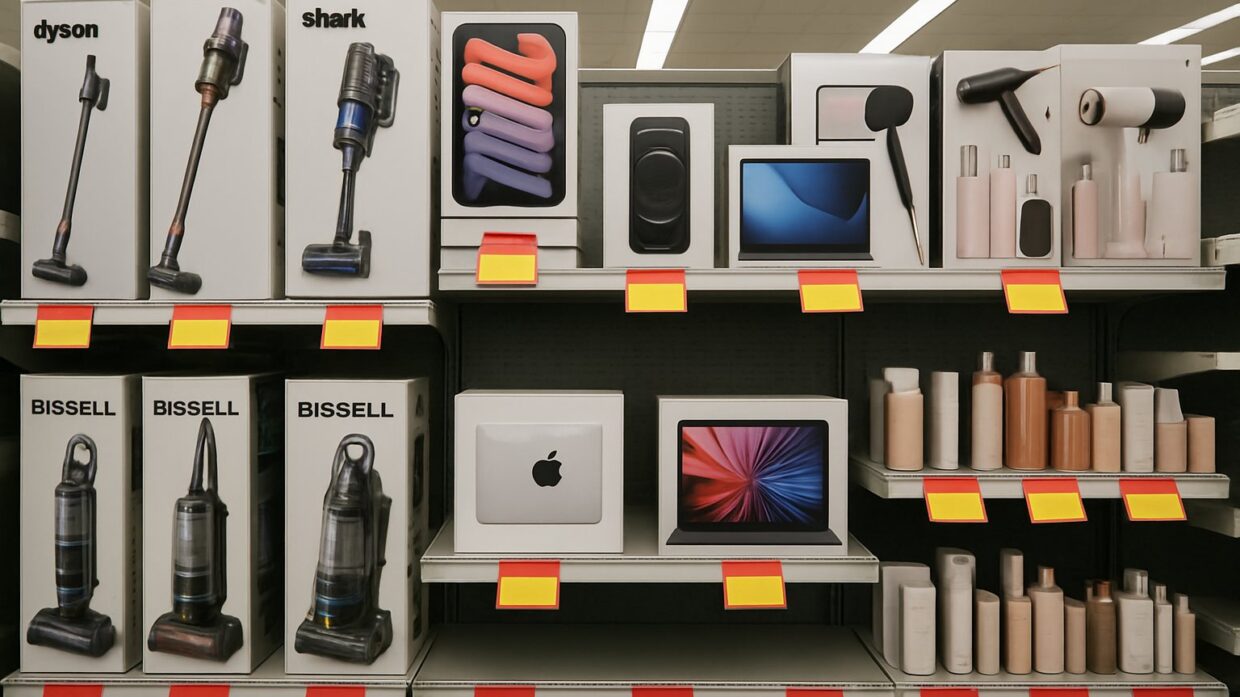
Photo: Well This Is News
Score up to 50% off vacuums, Apple products and beauty deals before Prime Day officially launches
Apple approaches $5 trillion valuation as foldable iPhone and AI strategy drive stock surge
Amazon begins early discounts weeks before October Prime Day official start
Key Takeaways
- Amazon formally announced an extended two-month promotional period called Prime Big Deal Days in October 2024, meaning the current early deals are part of an official structural shift, not unexpected previews.
- The compression of Prime Day from a single event into a multi-week promotional window serves Amazon's goal of smoothing customer demand across a longer calendar period and extending Prime membership value.
- Neither retailers nor financial analysts have documented whether Amazon's extended promotional calendar results in lower absolute prices for consumers or primarily spreads Amazon's promotional reach across more calendar days.
The Analysis
Amazon's promotional calendar no longer waits for official event dates. The pattern is documented across three separate NBC Select shopping guides published within the same week: vacuum discounts up to 50% off, Apple product deals, and beauty discounts, all framed as "early" or "already live" despite Prime Day being weeks away. This compresses what used to be a discrete event into an extended promotional window, which serves a specific framing function.
The left-leaning shopping guides emphasize one narrative: deals are available now, curated by expert editors, and shopping early avoids missing out. The language is consistent across all three: "already started," "haven't started but," "already live." The framing emphasizes urgency and value discovery rather than the structural shift occurring. What the shopping guides leave out is that this early-deal pattern may indicate Amazon is redistributing traffic across a longer period rather than concentrating it on a single event day. That omission is commercially convenient for promoting multiple shopping guides rather than a single event page.
The right-leaning framing, represented by MarketWatch's focus on Apple's valuation trajectory, tells a different story entirely. The narrative centers on Apple's corporate strategy: a foldable iPhone (product innovation) and disciplined AI spending (capital allocation). The $5 trillion club reference frames Apple as an elite performer. This reporting does not address consumer deals or shopping behavior at all. Instead, it emphasizes investor confidence and stock performance. What this framing leaves out is the relationship between Apple's valuation surge and its role as a major player in retail events like Prime Day. The exclusion is not necessarily deliberate, but it reflects a market-focused rather than consumer-focused perspective.
What neither framing addresses is Amazon's reported strategy shift. In October 2024, Amazon extended Prime Day into a two-month promotional period called "Prime Big Deal Days," which runs beyond the traditional October event window. The current early deals are consistent with that documented change, not an anomaly. The left framing treats early deals as discovery opportunities without naming the structural cause. The right framing ignores retail strategy entirely in favor of stock market commentary. A more complete picture requires naming that Amazon has already formally announced an extended promotional calendar, making "early" deals part of the official structure rather than an unexpected preview.
The available evidence suggests Amazon is attempting to smooth demand across a longer period and extend Prime membership value by creating multiple deal windows throughout the promotional season. The shopping guides capitalize on that by creating multiple content pages, each framed around specific product categories. Neither framing discloses whether this benefits consumers through lower absolute prices or primarily extends Amazon's promotional reach across more of the calendar year. That question remains unresolved in the available reporting. What the record does establish is that Prime Day, as a discrete event, has ceased to exist as a single moment and has become a seasonal promotional framework.
Amazon has formally restructured Prime Day from a single event into a multi-month promotional calendar, and the early discounts now appearing are part of that official strategy rather than unexpected previews. This transformation redistributes customer traffic across weeks instead of concentrating it on one day, fundamentally changing how Amazon manages inventory, staffing, and marketing spend. The shift also allows Amazon to extend the perceived value of Prime membership by creating multiple deal windows throughout the season, making cancellation less attractive during crucial retention periods. Shopping guides and retail coverage that frame early deals as surprising opportunities obscure this structural shift, preventing consumers from understanding whether extended promotional periods actually lower absolute prices or simply spread Amazon's marketing advantage across more calendar days. This matters because the death of discrete retail events represents a permanent change in how major platforms extract consumer attention and spending data, yet the industry reporting treats it as a series of individual discovery moments rather than a documented business model transformation.