Photo: Well This Is News
Alan Greenspan Dies; Legacy Defined by 2008 Financial Crisis
Former Federal Reserve Chairman Alan Greenspan Dies at 100
Alan Greenspan, Federal Reserve Chair for 18 Years, Dies at 100
Key Takeaways
- Economists remain genuinely divided on how much responsibility Greenspan bears for the 2008 crisis, with some attributing it primarily to housing policy and mortgage lending practices beyond Fed control while others emphasize his monetary and regulatory decisions.
- The specific policy disagreements that underpin the crisis debate such as opposition to derivatives regulation, resistance to subprime lending restrictions, and choices about credit growth in the early 2000s are largely absent from mainstream coverage on both sides.
- Greenspan's legacy has become politically useful as shorthand for either deregulation's dangers or as a respected figure whose death warrants acknowledgment, but neither framing engages with the actual economic mechanisms at stake.
The Analysis
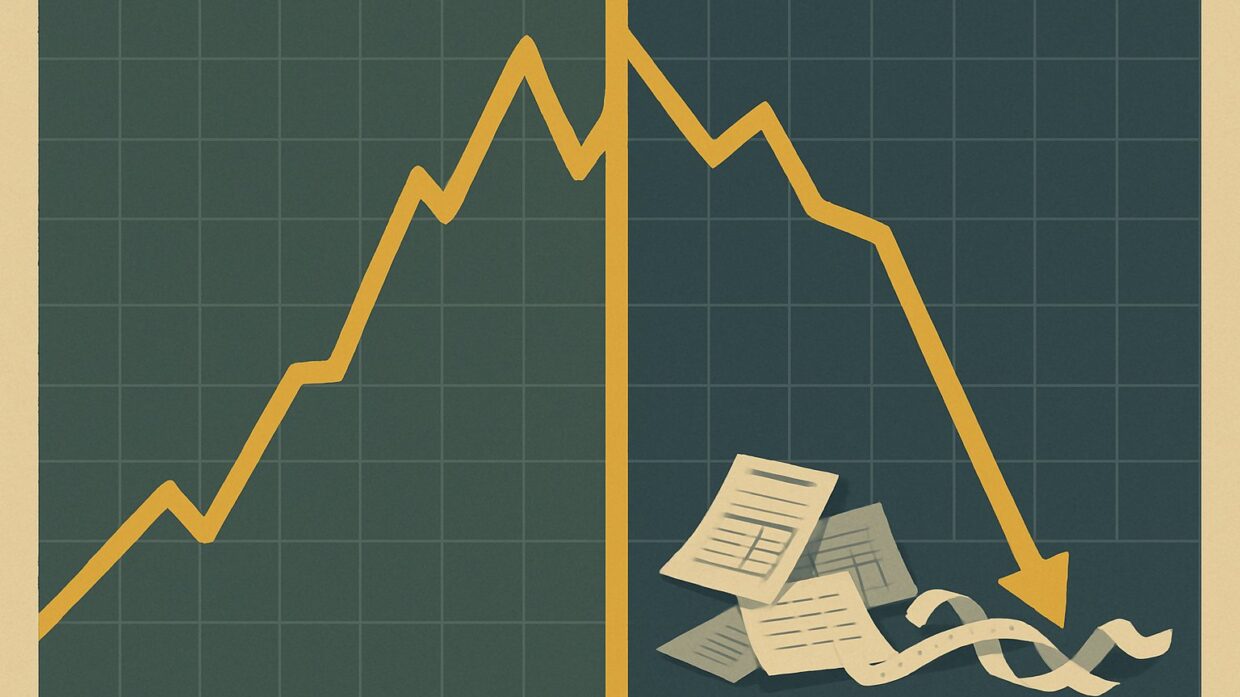
Alan Greenspan's death at 100 closes a chapter in American economic history that remains sharply contested. The available reporting establishes a basic fact set: Greenspan served as Federal Reserve chairman from 1987 to 2006, presided over an extended economic expansion in the 1990s, and died on June 22 from Parkinson's complications. What differs across the coverage is not the timeline but the framing of what his tenure meant.
The left-leaning outlets lead with the 2008 financial crisis and its connection to Greenspan's regulatory philosophy. NPR's language is representative: his reputation was "tarnished" and later "marred" by the crisis. MSNBC uses the phrase "indelibly marred for some." This framing assumes a causal narrative: Greenspan's actions contributed to conditions that produced the crisis. The language choice matters. "Tarnished" suggests a reputation that was earned but later damaged by revelation of failure. The coverage does not specify which actions the outlets believe caused the crisis, only that his regulatory record and support for deregulation are the relevant context.
The right-leaning outlets do not lead with the 2008 crisis at all. Breitbart's coverage is factual and spare: Greenspan served as Fed chairman and died at 100. The Washington Examiner includes a biographical detail absent from left outlets: his wife, Andrea Mitchell, announced his death, and he died at home. The framing is not that the crisis didn't happen but that it is not the primary lens through which to understand his death. The absence of crisis mention is itself a framing choice.
The center outlets split the difference. Bloomberg and MarketWatch note both the expansion Greenspan is credited with and the financial crisis, presenting them as sequential facts rather than as a causal relationship. Bloomberg uses the phrase "his legacy was later dimmed," which is softer than "tarnished" but still acknowledges a decline in reputation. The center framing treats both elements as true without assigning blame.
What neither side fully captures is the specific policy disagreements that underpin the crisis debate. Left outlets imply Greenspan supported deregulation but do not detail the specific decisions: opposition to regulating derivatives, resistance to restricting subprime lending, the resistance to constraining credit growth in the early 2000s. Right outlets do not engage with the substantive question of whether those decisions were sound or mistaken. The reporting treats the crisis as either a referendum on Greenspan or as a separate chapter from his biography, but does not address the actual economic mechanisms.
A more complete picture requires noting that economists continue to disagree on how much responsibility Greenspan bears for crisis conditions. Some scholarship attributes the crisis primarily to housing policy and mortgage lending practices beyond Fed control. Other analyses place significant weight on Greenspan's monetary decisions and regulatory choices. The public record does not establish a consensus verdict. What the framing differences reveal is that Greenspan's legacy remains politically useful to both sides: as an example of deregulation's dangers on the left, as a respected economic figure whose death merits neutral acknowledgment on the right, and as a complex historical figure requiring both context and caveats in the center.
Greenspan's death will crystallize the Fed's regulatory role as a central political battlefield for the next decade. His tenure became a proxy war over whether central banks should actively constrain asset bubbles and financial leverage or trust market discipline. The left will invoke his legacy to argue for stricter Fed oversight of derivatives and credit markets; the right will defend his market-oriented approach as superior to the heavy-handed regulation that followed. This disagreement will directly shape how the Biden and future administrations staff the Federal Reserve, what lending powers the Fed retains, and whether Congress attempts to restructure the institution. Greenspan's death removes the man but not the unresolved question of what caused 2008 or how to prevent the next crisis. That ambiguity makes him a durable weapon in ongoing fights over financial regulation.