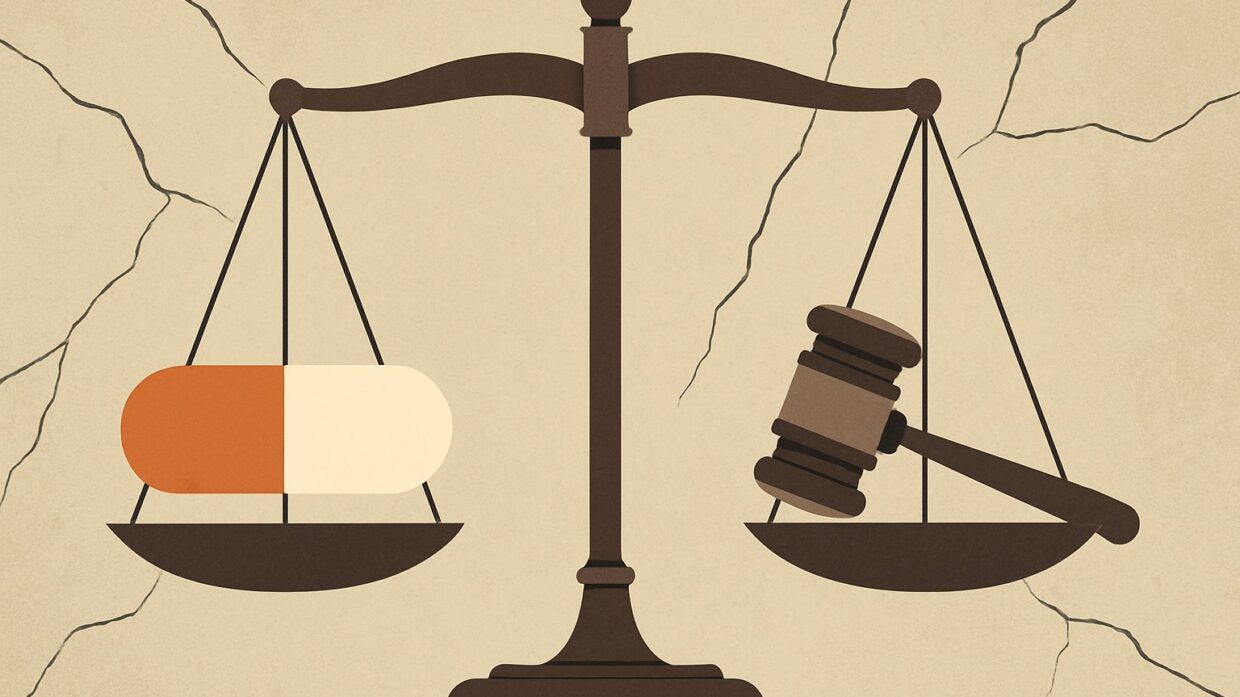
Photo: Well This Is News
Supreme Court Rejects Attempt to End Mail-Order Abortion Pills
SCOTUS Keeps Abortion Pill Access For Now While Larger Fight Looms
Supreme Court Preserves Abortion Pill Access Via Telehealth as Legal Battle Continues
Key Takeaways
- The Supreme Court issued a one-paragraph stay maintaining current mifepristone access rules rather than ruling on the merits, meaning it punted the fundamental legal question to future briefing and arguments.
- The underlying dispute centers on whether the FDA's 2016 and 2021 decisions to loosen mifepristone restrictions were lawful regulatory adjustments based on scientific evidence or unlawful overreach of agency authority.
- The Court's choice to issue a stay instead of immediately ruling suggests skepticism of the appeals court's position, but this procedural decision reveals nothing definitive about how the justices will ultimately rule on the FDA's regulatory power.
The Analysis
The Supreme Court's Thursday order preserving mifepristone access via telehealth appears to be a decisive pro-choice victory. It is not. What the Court actually did was issue a one-paragraph stay that keeps the status quo in place while the case proceeds, and that technical distinction reveals what neither side is telling you: this decision settles nothing and guarantees another battle in months.
Here is what happened in sequence. A federal appeals court ruled in May that the FDA exceeded its authority when it loosened mifepristone restrictions in 2016 and 2021, and that court attempted to roll back access to the more restrictive 2000 rules, which required in-person doctor visits and prohibited mail delivery. The Biden administration and pro-choice groups immediately appealed to the Supreme Court seeking emergency relief. Thursday afternoon, SCOTUS issued an order that rejected the appeals court ruling and said access continues as it currently exists, pending full briefing and oral arguments on the underlying merits.
The left is calling this a win because the headline reads: Supreme Court Blocks Abortion Pill Restrictions. Mother Jones used the phrase hit pause on a showdown, suggesting the larger conflict is deferred. NPR and the networks followed suit. What they omit is that this is an ordinary stay, not a ruling on the merits. The Court made no determination about whether the FDA actually had the authority to expand mifepristone access. It simply said: things stay the way they are until we decide the real case. This is significant for access, yes. But it is not a victory for the legal theory that mifepristone restrictions are unconstitutional or beyond FDA authority.
The right is framing this as a temporary loss in a war that will be won later. The Federalist headline was Women, Babies At Risk After SCOTUS Authorizes Mail-Order Abortion, and Justice Alito's concurrence criticizing the decision as an unreasoned order gives that framing credibility among conservative readers. The Federalist is correct that this is not a final ruling, but it obscures something: the Court's decision to issue a stay rather than overturn it suggests at least five justices were unwilling to rule the FDA overstepped. A stay does not require that. The Court could have ruled on the merits immediately if the votes were there.
What both sides are quietly omitting is the actual legal dispute buried in the procedural language. This case hinges on whether the FDA's 2016 and 2021 decisions to expand mifepristone access were lawful exercises of regulatory authority or overreach. Conservative groups argued the FDA ignored safety data and violated the Administrative Procedure Act by loosening restrictions without adequate justification. The FDA argued its decisions reflected current scientific evidence and the regulatory standard allowed it to adjust restrictions as new data emerged. The appeals court sided with the conservative argument. The Supreme Court, by staying that decision, rejected that logic at least temporarily, but the Court's order reveals nothing about how it will rule when it actually decides the question. The coming briefs will determine whether mifepristone access survives the full legal test.
The real headline: The Supreme Court has punted the abortion pill fight to a full briefing schedule, keeping access intact for now but leaving the FDA's authority to expand it genuinely unresolved. Access is preserved. The legal basis for that access remains contested. Expect another decision within the year.
The Supreme Court's stay preserves mifepristone access without resolving whether the FDA possessed authority to expand it in the first place. When the justices issue a full decision on the merits, they will determine the regulatory power the FDA wields over abortion medication for the next decade. A ruling against FDA authority would not merely restrict mifepristone but would constrain how federal agencies can modernize drug policies across medicine. The stay buys time for abortion access advocates but leaves the institutional question of regulatory flexibility fundamentally unsettled, guaranteeing that whoever loses at the merits stage will have grounds to claim the decision overreached and poisoned future agency policymaking.