Photo: Well This Is News
Supreme Court Blocks Far-Right Fifth Circuit's Abortion Pill Ban
Supreme Court Temporarily Revives FDA Rule Allowing Mail-In Abortion Drug
Supreme Court Temporarily Restores Mifepristone Access, Setting Up Major Legal Showdown
Key Takeaways
- The Comstock Act of 1873, not state abortion bans or the Dobbs decision, has become the actual legal battleground for nationwide mifepristone access, but neither side is clearly explaining this shift.
- This is the second time in less than two years the Supreme Court has intervened in the same mifepristone case against the same Fifth Circuit panel, revealing a pattern of recurring legal failure rather than a new crisis as both sides are framing it.
- The Supreme Court has not resolved whether the 2023 FDA rule change loosening mifepristone restrictions was lawful or whether the Comstock Act applies to FDA-approved medications, leaving the core legal question suspended indefinitely.
The Analysis
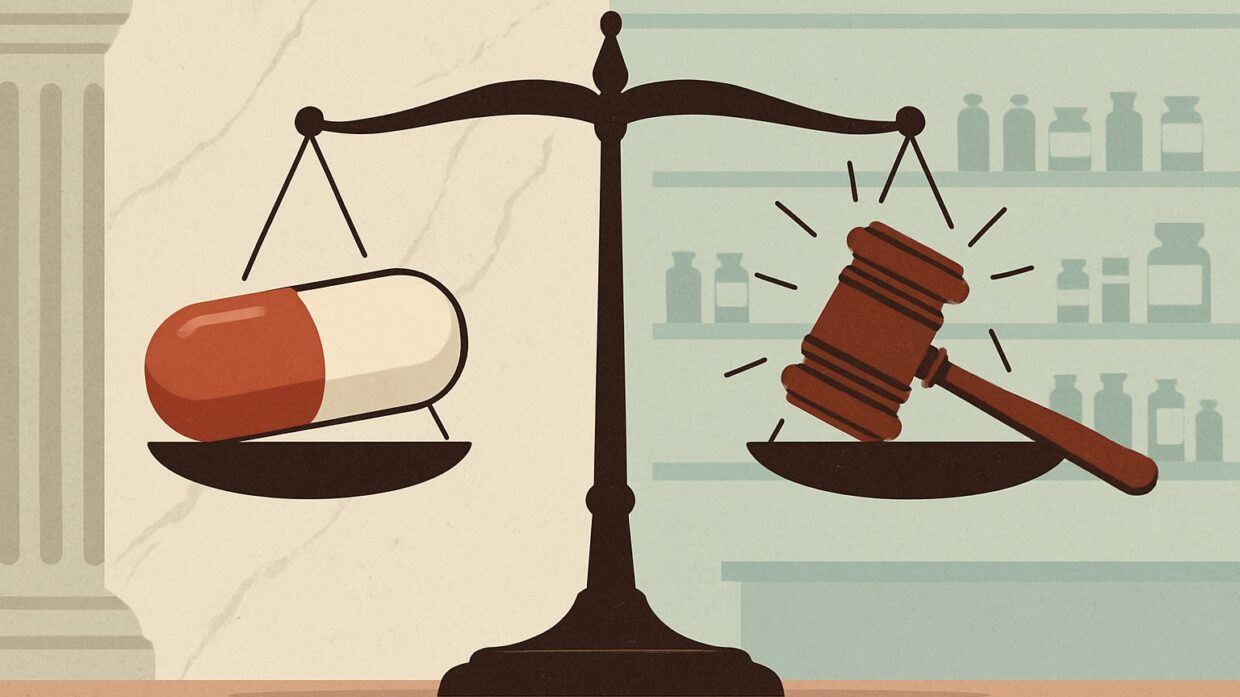
The Supreme Court temporarily restored access to mifepristone on Monday while a Fifth Circuit panel moved to restrict it on Friday, meaning the nation's highest court just blocked its own lower court from implementing restrictions on a drug that remains illegal in multiple states. This sequence reveals what everyone is avoiding: the judiciary is now operating in direct contradiction with itself, and nobody is explaining why.
Vox and Mother Jones used the phrase "far-right United States Court of Appeals for the Fifth Circuit" to describe the panel that attempted the Friday restriction. This is editorializing disguised as fact. The Fifth Circuit is conservative-majority, but "far-right" carries meaning beyond ideological description. By using it, Vox signals that the court's reasoning is not merely conservative but ideologically extreme. What Vox omits: the Fifth Circuit panel cited specific statutory language from the Comstock Act of 1873, a 150-year-old federal law that prohibits mailing "any drug or medicine for producing abortion." Whether that interpretation is correct is the actual legal question. Vox never names the statute.
The Daily Wire and Fox News called the Supreme Court's move "unusual" and "unprecedented." This word choice is accurate but reveals nothing about what makes it unusual. They do not explain that the Supreme Court invoked an emergency stay, typically reserved for imminent irreparable harm. By calling it "unusual" without context, both outlets avoid saying: the Supreme Court acted as though it believed the Fifth Circuit's ruling would cause constitutional injury severe enough to warrant extraordinary intervention before the merits were briefed. The Federalist used the phrase "harmful abortion drugs," applying a moral judgment that frames the medication as dangerous rather than medically indicated. It is the only outlet that did so explicitly.
Neither side names what preceded this collision: In 2016, the FDA approved mifepristone under specific risk evaluation and mitigation strategies (REMS). In 2023, Biden's FDA loosened those restrictions, allowing mail distribution and telehealth prescription. Republican-led states and anti-abortion groups immediately challenged this change. The Fifth Circuit ruled this week that the 2023 FDA action violated the Comstock Act. The Supreme Court's temporary block does not resolve whether the Comstock Act actually applies to FDA-approved drugs or whether the 2023 rule change was lawful. It simply froze the status quo while the case proceeds.
What is being quietly omitted by both sides: This fight is not new. It is a continuation of a 2023 Fifth Circuit case the Supreme Court already declined to fully resolve, instead allowing the drug to remain available pending further litigation. The outlets covering this story present it as a fresh crisis rather than a recurring legal battle with the same parties, the same drug, the same statute, and now a Supreme Court forced to intervene twice. The reason for the silence is obvious: it undermines the framing on both sides. For the left, it means the legal question has been unresolved for years despite promises of resolution. For the right, it reveals the Fifth Circuit's first attempt failed and must be tried again.
The real headline: The Comstock Act of 1873 is now the central legal battleground in abortion access, not the Dobbs decision or state law. Federal statute written in the 19th century for a different medical context has become the mechanism by which abortion restriction occurs nationally. Until the Supreme Court rules on whether Compton applies to FDA-approved medications, both sides remain locked in procedural combat, and access to mifepristone will depend on whatever emergency order the justices issue next.
The Comstock Act of 1873, a 150-year-old federal statute originally designed to prevent mailing obscene materials, has become the functional mechanism restricting abortion access nationwide, replacing state-by-state Dobbs litigation as the actual legal battlefield. The Supreme Court's temporary restoration of mifepristone access does not resolve whether this archaic law applies to FDA-approved medications, meaning the Court will face repeated emergency stay requests until it rules on the merits. This procedural loop will persist through multiple election cycles, leaving access dependent on which judicial emergency order remains in force, transforming a 19th-century postal regulation into the governing framework for 21st-century reproductive medicine across all fifty states regardless of their abortion laws.